- Animals
- ›Arthropods
- ›Hexapods
- ›Insects
- ›Winged and Once-winged Insects
- ›Beetles
- ›Water, Rove, Scarab, Long-horned, Leaf, and Snout Beetles
- ›Cucujiform Beetles
- ›Darkling Beetles and Allies
- ›Blister Beetles
- ›Meloinae
- ›Meloini

Oil Beetles
Meloe
Meloe is a genus of blister beetles commonly referred to as oil beetles. The name derives from their defensive strategy: when threatened they release oily droplets of hemolymph from their joints (legs, neck, and antennae). This fluid is bright orange and contains cantharidin, a poisonous chemical compound. Wiping the chemical on skin can cause blistering and painful swelling of the skin. This defensive strategy is not exclusive to this genus; all meloids possess and exude cantharidin upon threat.
13 branches of this genus, most-observed first

Meloe
subgenusMeloe
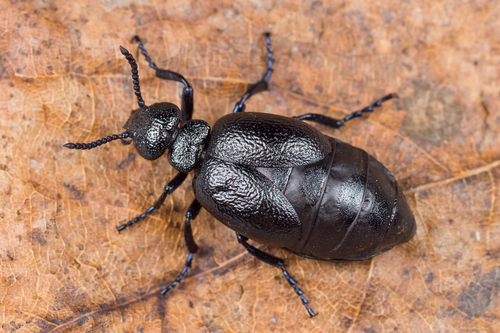
Eurymeloe
subgenusEurymeloe
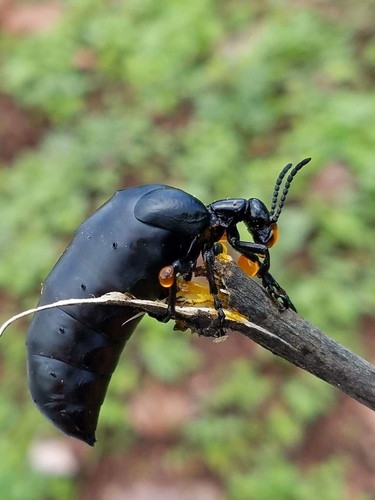
Treiodous
subgenusTreiodous
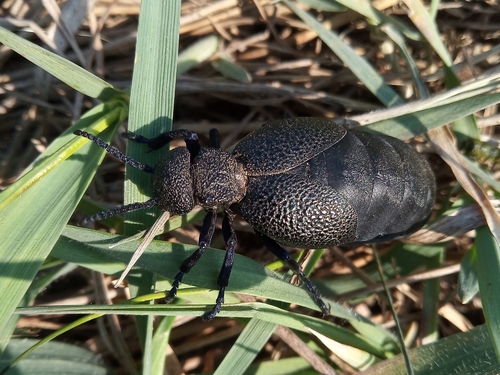
Meloegonius
subgenusMeloegonius

Micromeloe
subgenusMicromeloe
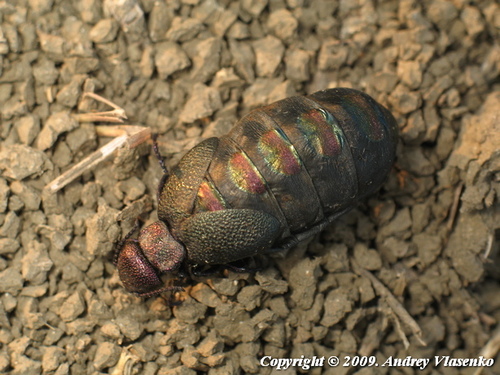
Lampromeloe
subgenusLampromeloe

Meloe hungarus
speciesMeloe hungarus
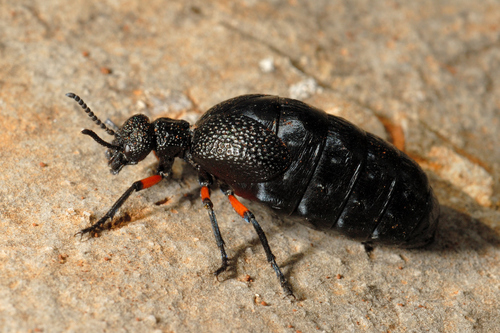
Meloe erythrocnemus
speciesMeloe erythrocnemus

Afromeloe
subgenusAfromeloe
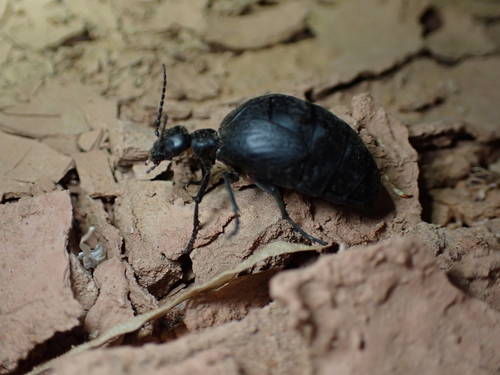
Mesomeloe
subgenusMesomeloe
Desertimeloe
subgenusDesertimeloe
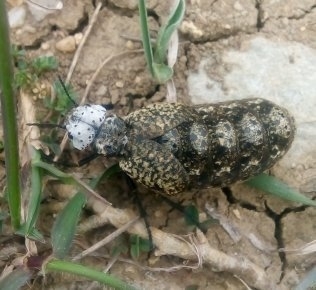
Meloe olivieri
speciesMeloe olivieri
Meloe exiguus
speciesMeloe exiguus
Where it lives
Recorded sightings
—
geo-referenced records in GBIF, from museums, herbaria and field observers.
Drag the globe to turn it. Dots are where records exist, not a range map; darker means more records.
In the old herbals & bestiaries

In the stacks
Searching the stacks…
Every page naming Meloe in the Biodiversity Heritage Library →
This page is assembled live from iNaturalist, GBIF, Wikipedia, the Source Library and the Internet Archive. It is not yet part of the hand-edited codex. iNaturalist taxon 68006.