- Plants
- ›Vascular Plants
- ›flowering plants
- ›Dicots
- ›myrtles, evening primroses, and allies
- ›Melastomes
- ›Melastomatoideae
- ›Dissochaeteae
- ›Medinilla
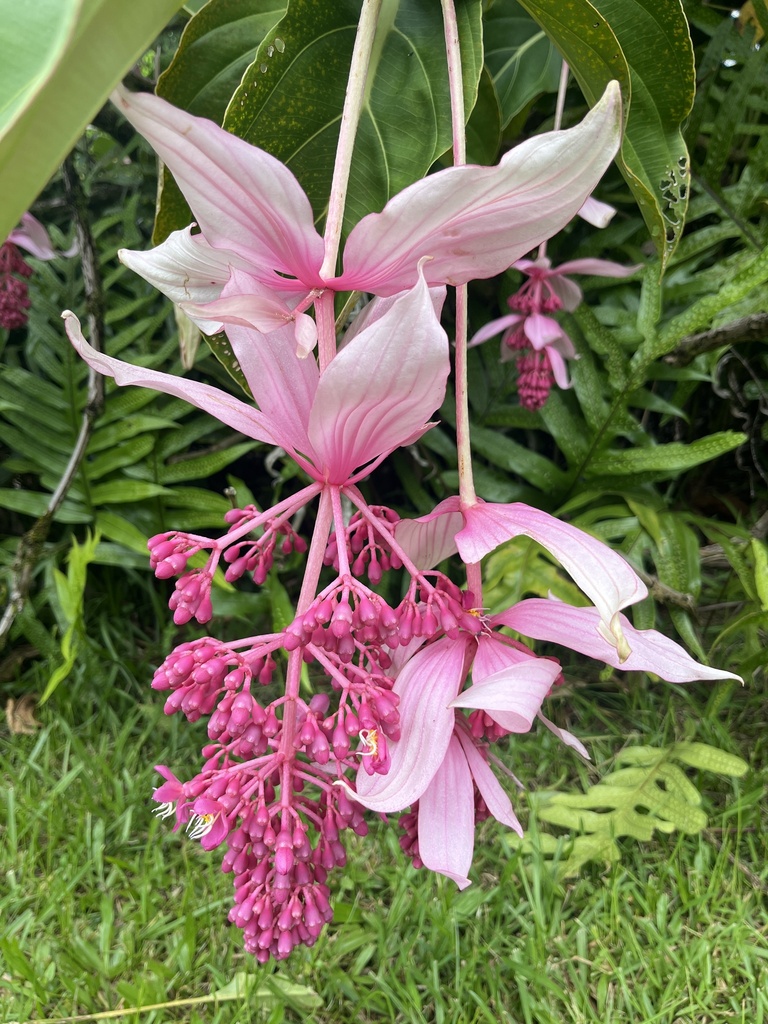
Rose Grape
Medinilla magnifica
Medinilla magnifica, showy medinilla, is a species in the genus Medinilla native to the Philippines. This species of Medinilla is also commonly known as the Philippine orchid, and it is an epiphyte. Various species and hybrids in this family are well known and popular with plant collectors with Medinilla speciosa or the Showy Asian Grape plant being found almost identical.
From the article Medinilla magnifica on Wikipedia (CC BY-SA), quoted section by section
Description
The plant grows up to 3 m tall, with opposite, firm, leathery leaves, which grow to 20–30 cm long in an ovate shape with a short point. The flowers grow in panicles up to 50 cm long, with ovid pink bracts. The individual flowers are up to 25 mm in size, and are pink, red or violet. The fruits are violet, fleshy berries, about 1 cm wide. In the Philippines M. magnifica grows in the forks of large trees. It is an epiphyte, which is a plant that grows on other trees but does not withdraw its food from those trees as parasites do. As a fertilized seed, the plant initially finds itself deposited, or landing, into an area of accumulated leaf debris, moss and other plant detritus in the crook of a larger tree or plant. From there, it sprouts new growth and begins to root and anchor itself, drawing nutrition from the decaying detritus around its base.
How it is grown
In the tropics, it is grown as a perennial. It is also a common house plant in cooler climes. King Baudouin of Belgium was a big devotee of Medinilla. He grew them in the royal conservatories and they were depicted on the bank note of 10,000 Belgian francs. In temperate zones, medinillas must be grown as indoor houseplant specimens or kept under protection all year round, as they will not survive temperatures dropping below 15 °C (59 °F). In USDA hardiness zones 10–12, it is possible to keep them outside all year, albeit under protection from excess hot sun, wind and cold. The plant requires high humidity levels, and prefers bright but indirect light, with shading and protection from the sun (especially at the hottest time of the day). It has gained the Royal Horticultural Society's Award of Garden Merit.
Wikipedia: “Cultivation”
In human culture
Medinilla is named for José de Medinilla y Pineda, who was governor of Mauritius (then known as the Marianne Islands) in 1820. Magnifica means 'magnificent', 'great', 'eminent', or 'distinguished'.
== References ==
Wikipedia: “Etymology”
Where it lives
Recorded sightings
—
geo-referenced records in GBIF, from museums, herbaria and field observers.
Drag the globe to turn it. Dots are where records exist, not a range map; darker means more records.
In the stacks
Searching the stacks…
Every page naming Medinilla magnifica in the Biodiversity Heritage Library →
This page is assembled live from iNaturalist, GBIF, Wikipedia, the Source Library and the Internet Archive. It is not yet part of the hand-edited codex. iNaturalist taxon 68319.