- Animals
- ›Arthropods
- ›Crustaceans
- ›Typical Crustaceans
- ›Malacostracans
- ›Decapods, Isopods, and allies
- ›Decapods and Krill
- ›Decapods
- ›Crabs, Lobsters, Shrimps, and Allies
- ›True Crabs
- ›Eubrachyuran Crabs
- ›Heterotrematan Crabs
- ›Hexapodoidea
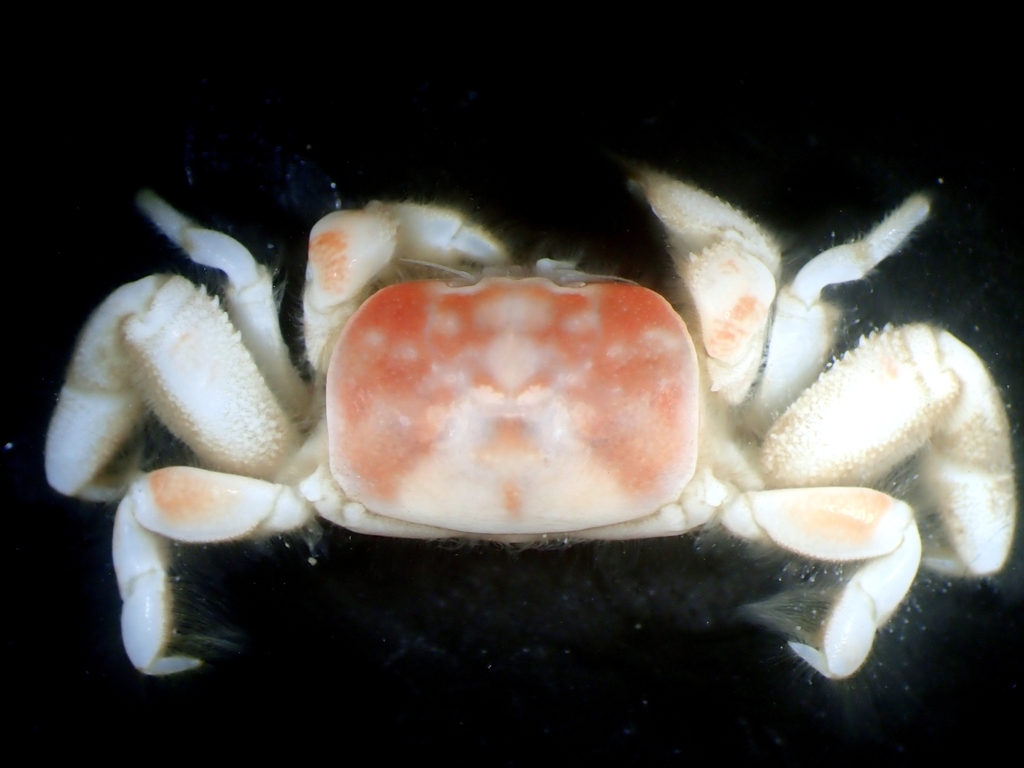
Hexapodidae
Hexapodidae is a family of crabs, the only family in the superfamily Hexapodoidea. It has traditionally been treated as a subfamily of the family Goneplacidae, and was originally described as a subfamily of Pinnotheridae. Its members can be distinguished from all other true crabs by the reduction of the thorax, such that only seven sternites are exposed, and only four pairs of pereiopods are present. Not counting the enlarged pair of claws, this leaves only six walking legs, from which the type genus Hexapus, and therefore the whole family, takes its name. Some anomuran "crabs", such as porcelain crabs and king crabs also have only four visible pairs of legs. With the exception of Stevea williamsi, from Mexico, all the extant members are found either in the Indo-Pacific oceans, or around the coast of Africa.
16 branches of this family, most-observed first

Mariaplax
genusMariaplax
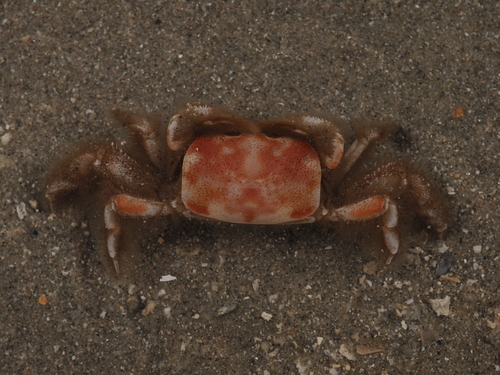
Hexalaughlia
genusHexalaughlia
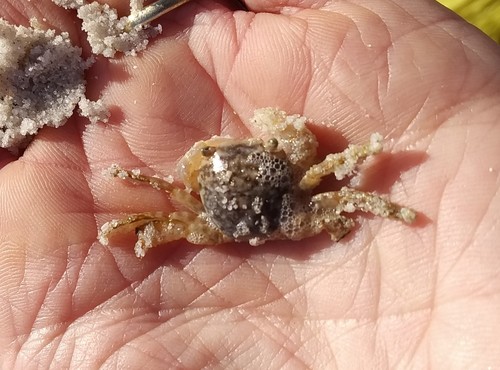
Spiroplax
genusSpiroplax
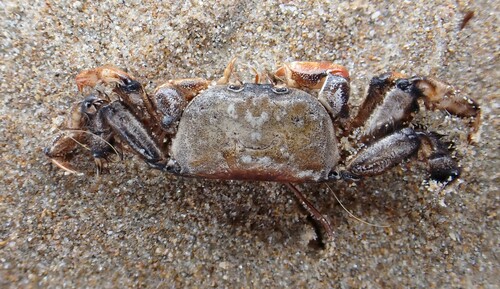
Hexapinus
genusHexapinus
Tritoplax
genusTritoplax
Theoxapus
genusTheoxapus
Thaumastoplax
genusThaumastoplax
Stevea
genusStevea
Rayapinus
genusRayapinus
Pseudohexapus
genusPseudohexapus
Parahexapus
genusParahexapus
Paeduma
genusPaeduma
Latohexapus
genusLatohexapus
Lambdophallus
genusLambdophallus
Hexaplax
genusHexaplax
Hexapus
genusHexapus
Where it lives
Recorded sightings
—
geo-referenced records in GBIF, from museums, herbaria and field observers.
Drag the globe to turn it. Dots are where records exist, not a range map; darker means more records.
In the stacks
Searching the stacks…
Every page naming Hexapodidae in the Biodiversity Heritage Library →
This page is assembled live from iNaturalist, GBIF, Wikipedia, the Source Library and the Internet Archive. It is not yet part of the hand-edited codex. iNaturalist taxon 699363.