- Plants
- ›Vascular Plants
- ›flowering plants
- ›Dicots
- ›myrtles, evening primroses, and allies
- ›evening primrose family
- ›Ludwigia
- ›Oligospermum
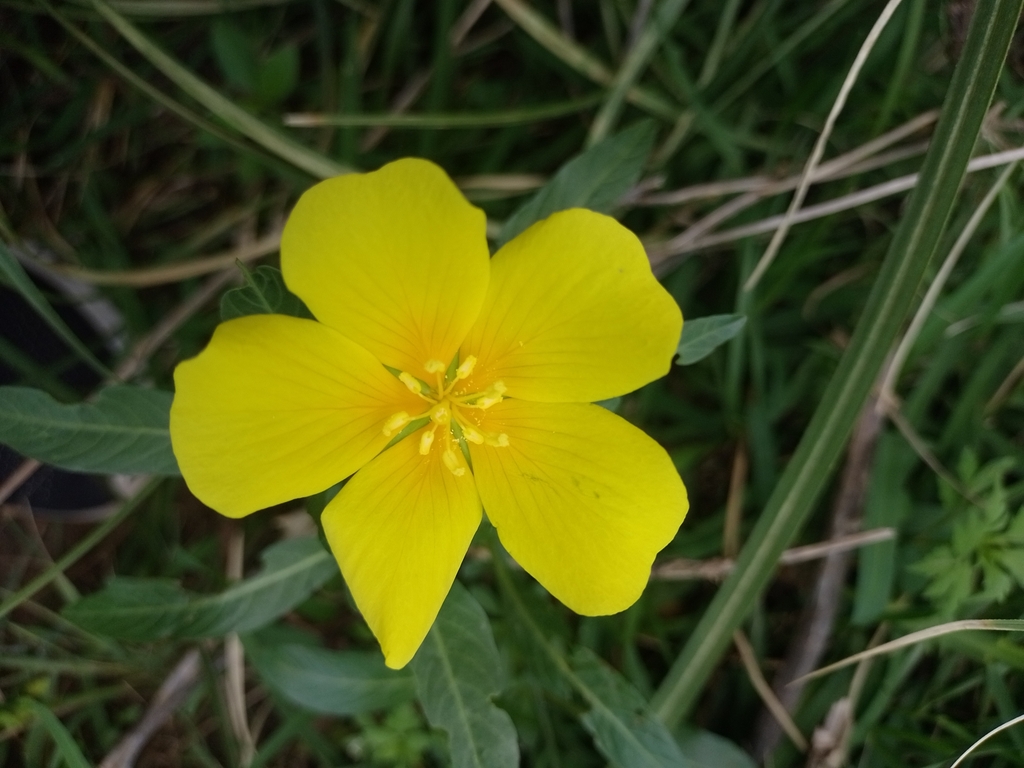
water primrose
Ludwigia hexapetala
Ludwigia hexapetala, the water primrose, is a herbaceous perennial plant of the family Onagraceae. Native to Central and South America, its habitat includes the margins of lakes, ponds, ditches, and streams. Its stems may be immersed or fully emergent. It is a noxious invader of aquatic ecosystems in North America.
From the article Ludwigia hexapetala on Wikipedia (CC BY-SA), quoted section by section
Range & habitat
Ludwigia hexapetala is native to Latin America. It occurs naturally in swampier regions, such as those of lakes, ponds, and other areas of low intensity/stagnant water. It grows in mats of up to three feet tall, and in doing so, it crowds and/or shades out the other, more native species. This species is invasive in the Southeast United States, Midwest United States, Pacific Coast, and parts of New England.
Wikipedia: “Habitat”
Where it lives
Recorded sightings
—
geo-referenced records in GBIF, from museums, herbaria and field observers.
Drag the globe to turn it. Dots are where records exist, not a range map; darker means more records.
In the stacks
Searching the stacks…
Every page naming Ludwigia hexapetala in the Biodiversity Heritage Library →
This page is assembled live from iNaturalist, GBIF, Wikipedia, the Source Library and the Internet Archive. It is not yet part of the hand-edited codex. iNaturalist taxon 70020.