- Plants
- ›Vascular Plants
- ›flowering plants
- ›Dicots
- ›Legumes, Milkworts, and Allies
- ›Legumes
- ›Faboideae
- ›Sophoreae
- ›Sophora
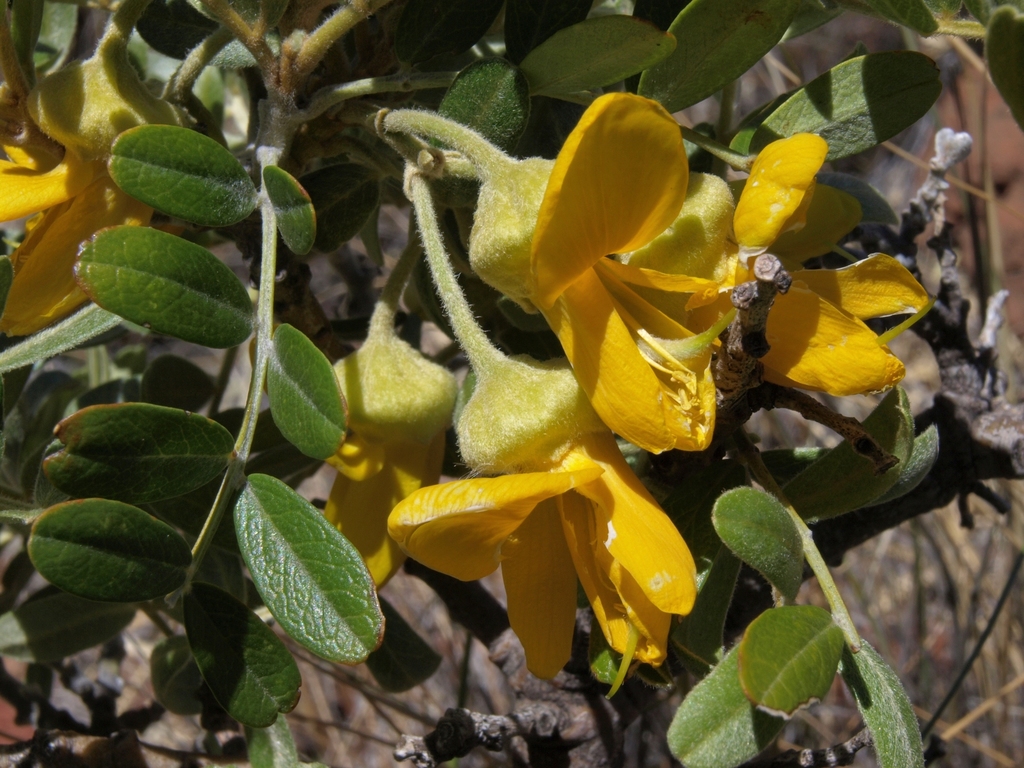
Māmane
Sophora chrysophylla
Sophora chrysophylla, known as Māmane in Hawaiian, is a species of flowering plant in the pea and bean family, Fabaceae, that is endemic to Hawaii. It is highly polymorphic, growing as a shrub or tree, and able to reach a height of 15 m (49 ft) in tree form. Yellow flowers are produced in winter and spring.
From the article Sophora chrysophylla on Wikipedia (CC BY-SA), quoted section by section
Range & habitat
Māmane is an endemic species of Hawaii, and can be found on all main islands except Niʻihau and Kahoʻolawe. It inhabits low shrublands, high shrublands, dry forests, mixed mesic forests, and, rarely, wet forests. It can grow at elevations of 30–2,900 m (98–9,514 ft), being limited by the tree line. Māmane is most common and grows the tallest in montane dry forests at elevations of 1,220–2,440 m (4,000–8,010 ft). Māmane and naio (Myoporum sandwicense) define a dry woodland ecotone on the subalpine areas of East Maui (Haleakalā) and the Island of Hawaiʻi.
Wikipedia: “Habitat”
What it does
Māmane is essential for the endangered palila (Loxioides bailleui), which feeds almost exclusively on the plants' immature seeds when these are in season. It also nests in the māmane branches. Caterpillars of Cydia moths also eat the māmane's seeds, and in turn are eaten by the palila. Both the bird and the larvae utilize the embryo only, leaving the seed coat untouched. To other animals, māmane seeds are highly poisonous. House finches die within minutes after eating the seeds. The māmane employs a two-layered biochemical defence system: The seed coats contain some 4% phenolic compounds, which give them a vile taste. They are also somewhat toxic and have a high fibre content. Seed predators trying to eat the seeds will probably not be killed but at least have a nasty experience. Should a predator be able to penetrate the seed coat, the embryo contains deadly quantities (>4% of dry weight) of quinolizidine alkaloids. The palila and the moths, however, have evolved the ability to deal with the poisonous compounds. The palila, for example, can deal with dozens of times the dose of cytisine that would kill a laboratory mouse. Both seed predators seem to be able to recognize and avoid the most poisonous trees. Cydia caterpillars are able to break up the toxic compounds. …
Wikipedia: “Ecology and conservation”
At the table
The hard, durable wood of māmane was used by the Native Hawaiians for pou (house posts) and kaola (beams) up to 5 cm (2.0 in) in diameter, ʻōʻō (digging sticks), spears, kope (spades), papa hōlua (sled) runners, papa olonā (Touchardia latifolia scrapers), ʻau koʻi (adze handles), and wahie (firewood). Cattle ranchers used it as fence posts. In herbal medicine, the flowers are used as an astringent. The wood was also used in religious rituals to ward off evil. A kahuna nui (high priest) would wrap a piece of māmane wood in a dark kapa cloth and hold it up to symbolize authority. Sophora chrysophylla contains the alkaloids Mamanine and Pohakuline.
Wikipedia: “Uses”
Where it lives
Recorded sightings
—
geo-referenced records in GBIF, from museums, herbaria and field observers.
Drag the globe to turn it. Dots are where records exist, not a range map; darker means more records.
In the stacks
Searching the stacks…
Every page naming Sophora chrysophylla in the Biodiversity Heritage Library →
This page is assembled live from iNaturalist, GBIF, Wikipedia, the Source Library and the Internet Archive. It is not yet part of the hand-edited codex. iNaturalist taxon 70036.