- Animals
- ›Arthropods
- ›Hexapods
- ›Insects
- ›Winged and Once-winged Insects
- ›True Bugs, Hoppers, Aphids, and allies
- ›True Bugs
- ›Pentatomomorph Bugs
- ›Stink Bugs, Shield Bugs, and Allies
- ›Stink Bugs
- ›Predatory Stink Bugs
- ›Supputius
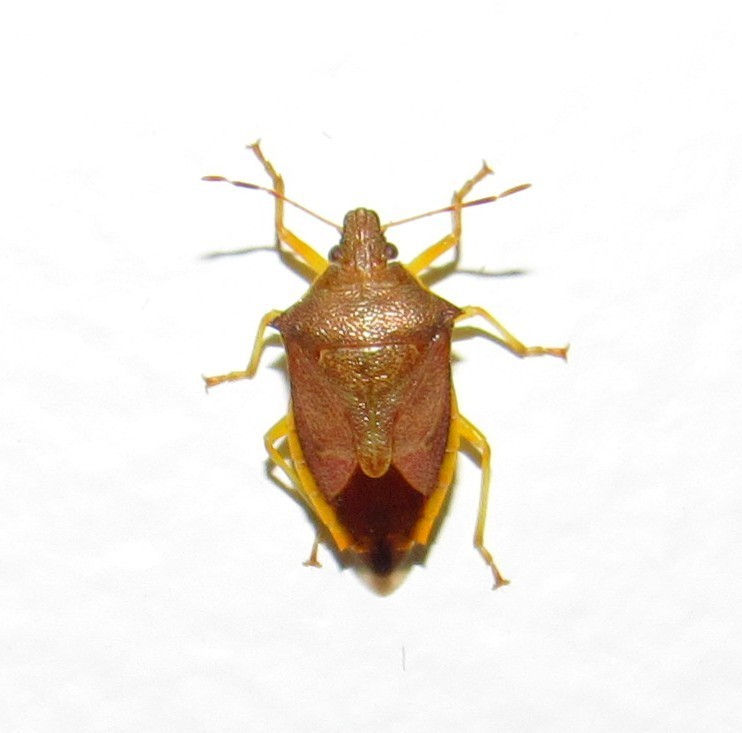
Supputius cincticeps
The Pentatomoidea are a superfamily of insects in the suborder Heteroptera of the order Hemiptera. As hemipterans, they possess a common arrangement of sucking mouthparts. The roughly 7000 species under Pentatomoidea are divided into 21 families (16 extant and 5 extinct). Among these are the stink bugs and shield bugs, jewel bugs, giant shield bugs, and burrower bugs.
From the article Pentatomoidea on Wikipedia (CC BY-SA), quoted section by section
Description
The Pentatomoidea are characterised by a well-developed scutellum (the hardened extension of the thorax over the abdomen). It can be triangular to semielliptical in shape. The antennae typically have five segments. The tarsi usually have two or three segments. Shield bugs have glands that produce a foul-smelling liquid, which is used defensively to deter potential predators. Nymphs have glands on the dorsal surface of the abdomen (dorsal abdominal scent glands). These are often present in adults as well, but adults also develop a pair of glands on the metathorax (third segment of the thorax), these being the metathoracic scent glands. The nymphs and adults have distinctive piercing mouthparts, with mandibles and maxillae modified to form a piercing stylet sheathed within a modified labium. The stylet is used to suck sap from plants, or in some cases to suck blood from other animals, such as in the predatory subfamily Asopinae. Pentatomoidea are mostly phytophagous, although some (the Asopinae or predatory stink bugs) are zoophagous. They can become significant pests (e.g. the brown marmorated stink bug), causing economic damage to certain crops.
Listen
Looking for field recordings…
Where it lives
Recorded sightings
—
geo-referenced records in GBIF, from museums, herbaria and field observers.
Drag the globe to turn it. Dots are where records exist, not a range map; darker means more records.
In the stacks
Searching the stacks…
Every page naming Supputius cincticeps in the Biodiversity Heritage Library →
This page is assembled live from iNaturalist, GBIF, Wikipedia, the Source Library and the Internet Archive. It is not yet part of the hand-edited codex. iNaturalist taxon 706140.