- Animals
- ›Arthropods
- ›Hexapods
- ›Insects
- ›Winged and Once-winged Insects
- ›Beetles
- ›Water, Rove, Scarab, Long-horned, Leaf, and Snout Beetles
- ›Cucujiform Beetles
- ›Darkling Beetles and Allies
- ›Darkling Beetles
- ›Long-jointed Beetles
- ›Lupropini
- ›Luprops
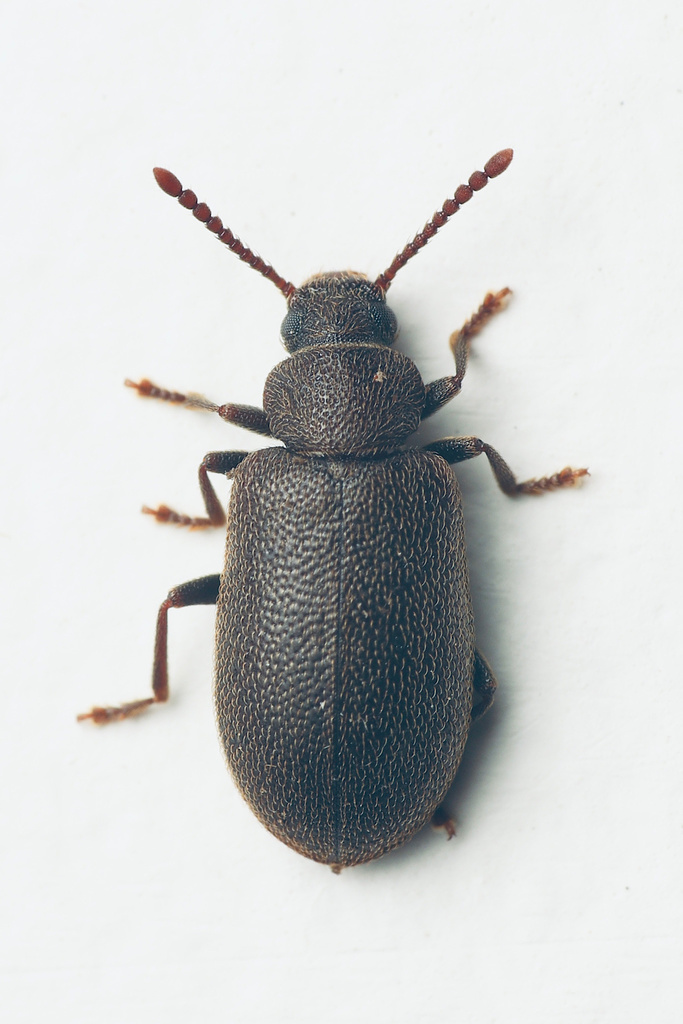
Rubber plantation litter beetle
Luprops tristis
The Mupli beetle, Luprops tristis, is a plant detritus eating darkling beetle found in parts of India. The adult beetle is black and around 8 millimetres (0.31 in) long. While they are usually harmless to humans, when squeezed or picked up, they produce a defensive phenolic secretion that causes skin burns. Luprops beetles have a notorious reputation since they can make life difficult when large populations invade farm houses, as reported in some parts of southern India,...
From the article Luprops tristis on Wikipedia (CC BY-SA), quoted section by section
Description
Luprops tristis goes through five larval instar stages and a pupal stage before the adult stage. The adult beetle is colored black. There is very little sexual dimorphism, and males and females overlap in size. After a month of active feeding in the adult form, they go into a lengthy dormant period in a suitable undisturbed dark location in response to the first summer rains before emerging again to feed and reproduce.
Listen
Looking for field recordings…
Where it lives
Recorded sightings
—
geo-referenced records in GBIF, from museums, herbaria and field observers.
Drag the globe to turn it. Dots are where records exist, not a range map; darker means more records.
In the stacks
Searching the stacks…
Every page naming Luprops tristis in the Biodiversity Heritage Library →
This page is assembled live from iNaturalist, GBIF, Wikipedia, the Source Library and the Internet Archive. It is not yet part of the hand-edited codex. iNaturalist taxon 710801.