- Plants
- ›Vascular Plants
- ›flowering plants
- ›monocots
- ›Agaves, Orchids, Irises, and Allies
- ›iris family
- ›Crocoideae
- ›Ixieae
- ›Freesiinae
- ›Freesia
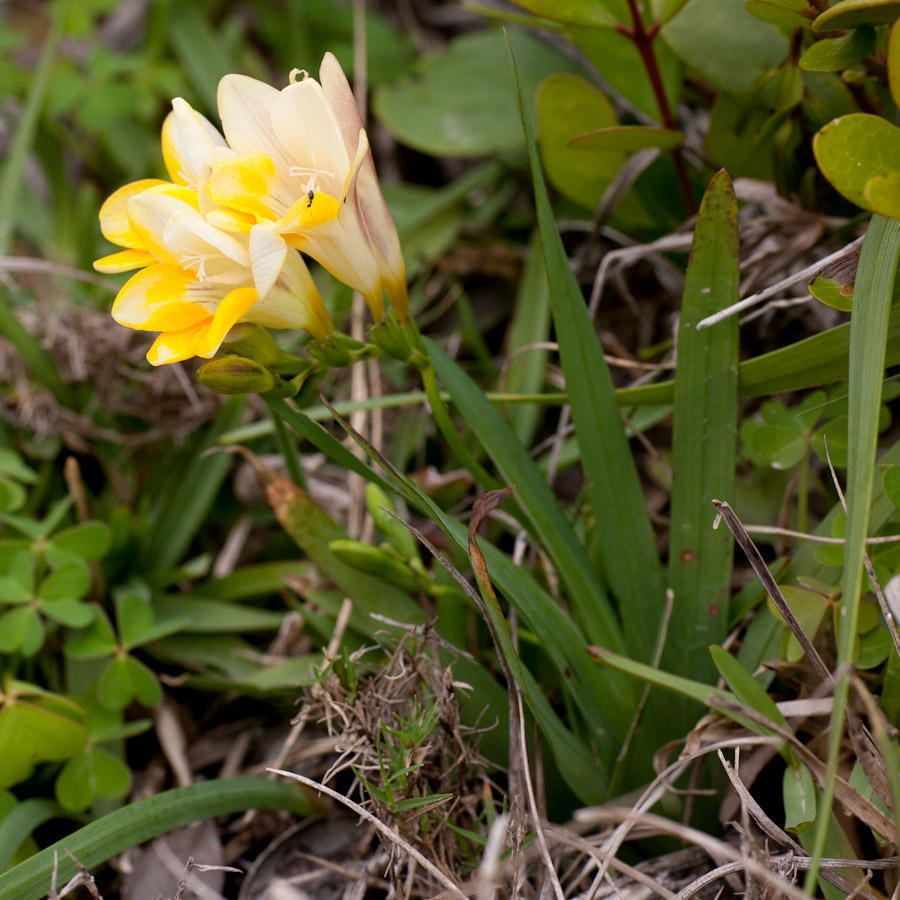
Dune Kammetjie
Freesia leichtlinii
Freesia leichtlinii is a species of herb in the family Iridaceae, native to the Cape Provinces of South Africa. It is most widely known in its subspecies F. leichtlinii subsp. alba, commonly called Antique White Freesia, which has naturalized in California, the Mediterranean Basin, and parts of the Southern Hemisphere.
From the article Freesia leichtlinii on Wikipedia (CC BY-SA), quoted section by section
Toxicity
No part of the plant is considered harmful for human contact or ingestion. Freesia is listed by the American Society for the Prevention of Cruelty to Animals (ASPCA) among plants that are generally safe for dogs and cats. However, ingestion of the above-ground parts (leaves, stems, flowers) may cause mild gastrointestinal upset in sensitive animals. The corms are more irritating than the above-ground portions and can cause more significant gastrointestinal distress if consumed. Pet owners are advised to discourage animals from digging up and chewing on corms.
Where it lives
Recorded sightings
—
geo-referenced records in GBIF, from museums, herbaria and field observers.
Drag the globe to turn it. Dots are where records exist, not a range map; darker means more records.
In the stacks
Searching the stacks…
Every page naming Freesia leichtlinii in the Biodiversity Heritage Library →
This page is assembled live from iNaturalist, GBIF, Wikipedia, the Source Library and the Internet Archive. It is not yet part of the hand-edited codex. iNaturalist taxon 714939.