- Plants
- ›Vascular Plants
- ›flowering plants
- ›Dicots
- ›Sunflowers, Bellflowers, Fanflowers, and Allies
- ›Sunflowers, Daisies, Asters, and Allies
- ›chicories, dandelions, and allies
- ›Lettuce, Chicory, Dandelion and Salsify Tribe
- ›Microseridinae
Munzothamnus
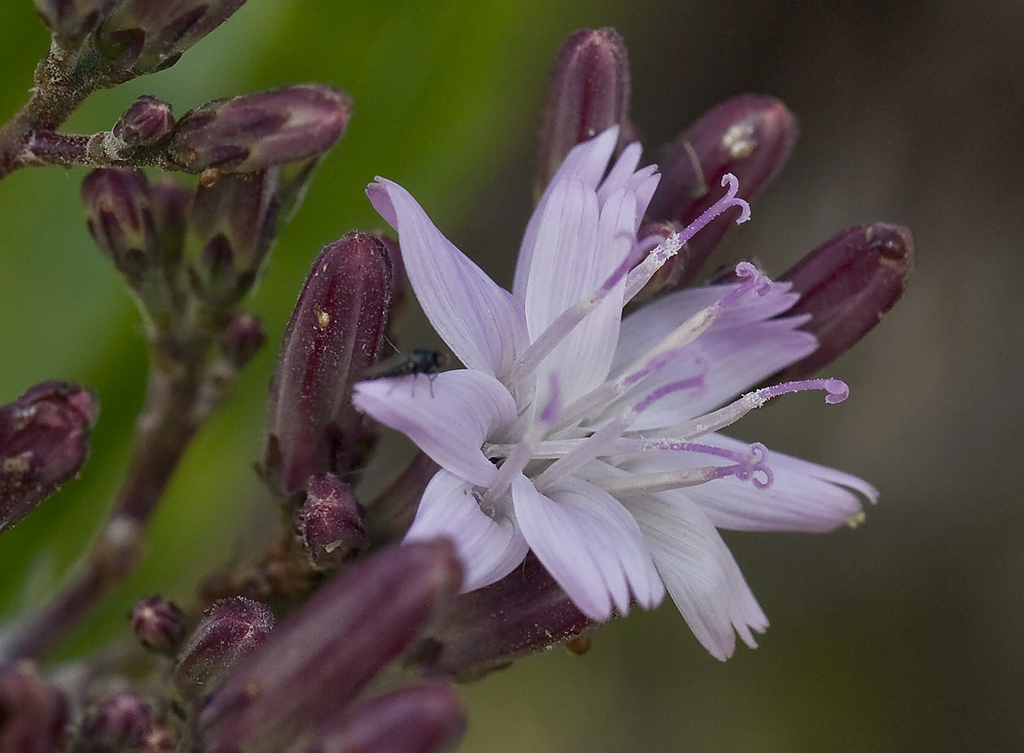
Munzothamnus is a monotypic genus of flowering plants in the family Asteraceae containing the single species Munzothamnus blairii, which is known by the common name Blair's wirelettuce, or Blair's munzothamnus. It is endemic to San Clemente Island, one of the Channel Islands of California. It grows along steep, rocky cliffsides and canyons on the island. It is a shrub producing a fleshy, woolly stem usually over a meter in height, often approaching two meters. Leaves occur in tufts at the ends of the stem branches. They are up to 15 centimeters long, oblong in shape, and sometimes very shallowly lobed. They are woolly when new but lose their hairs and become shiny green with age. The inflorescence is a large array of up to 35 flower heads. Each head has a cylindrical base under a centimetre long and contains 9 to 12 light lavender or pinkish flowers. Each flower is a ray floret with an erect tube and a strap-shaped ligule with a toothed tip. The ligule is just under a centimetre long. The fruit is a cylindrical, ribbed achene with a white pappus.
Like many Channel Islands endemics, this plant was reduced to rarity by the presence of feral goats on the islands; the goats have been removed.
1 branches of this genus, most-observed first
See this branch on the Wheel of Life →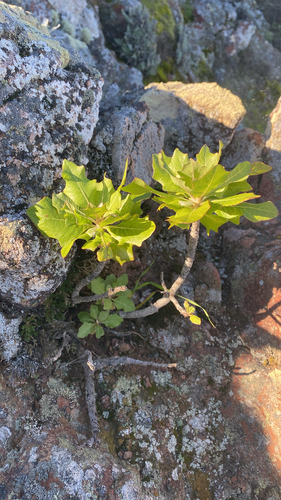
Where it lives
Recorded sightings
—
geo-referenced records in GBIF, from museums, herbaria and field observers.
Drag the globe to turn it. Dots are where records exist, not a range map; darker means more records.
In the stacks
Searching the stacks…
Every page naming Munzothamnus in the Biodiversity Heritage Library →
This page is assembled live from iNaturalist, GBIF, Wikipedia, the Source Library and the Internet Archive. It is not yet part of the hand-edited codex. iNaturalist taxon 72247.