- Animals
- ›Arthropods
- ›Hexapods
- ›Insects
- ›Winged and Once-winged Insects
- ›Beetles
- ›Water, Rove, Scarab, Long-horned, Leaf, and Snout Beetles
- ›Cucujiform Beetles
- ›Darkling Beetles and Allies
- ›Darkling Beetles
- ›Diaperinae
- ›Diaperini
- ›Diaperina
- ›Ulomoides
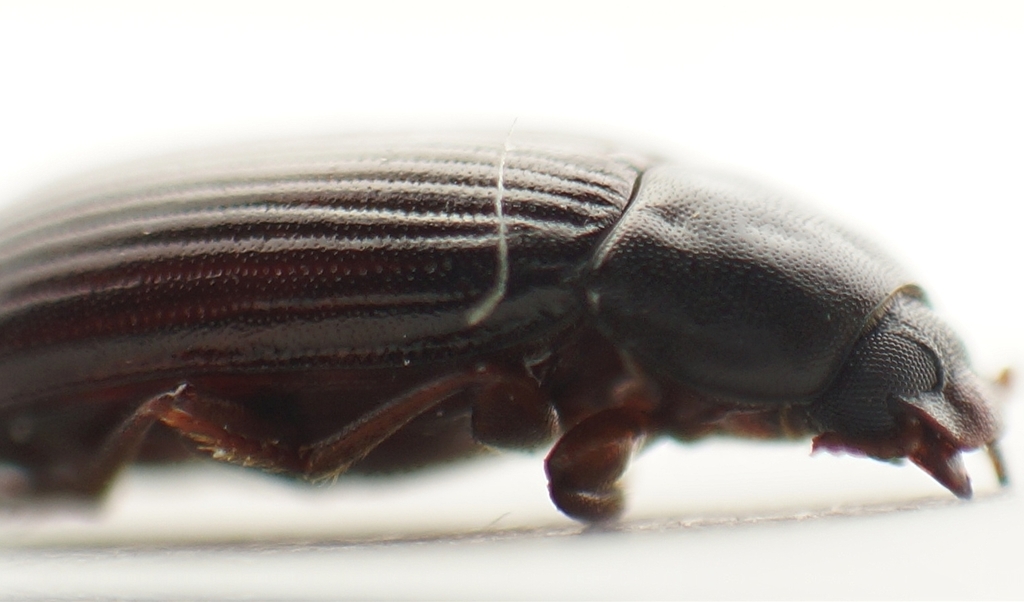
Peanut Beetle
Ulomoides dermestoides
Ulomoides dermestoides is a species of beetle in the family Tenebrionidae, known under a variety of common names, such as Chinese beetle, Chinese weevil, peanut beetle, cancer beetle, or asthma beetle. While native to Asia, it has been spread worldwide due to the belief that it has medicinal properties.
From the article Ulomoides dermestoides on Wikipedia (CC BY-SA), quoted section by section
In medicine
Given that thousands of people were consuming large numbers of these beetles (several thousand per person), the medical community responded with numerous studies, with a variety of results, though none confirming the claims of curative properties. The chemicals, primarily quinones, that the beetles produce as defensive compounds are capable of killing cells (significant cytotoxicity), affecting both healthy and cancerous tissues, and overconsumption of beetles can lead to serious health complications such as pneumonia, and thus contraindicated as a medical treatment. Diluted extract from these beetles has been found to have anti-inflammatory properties, but at higher doses the toxic effects predominate.
== References ==
Wikipedia: “Medical studies”
In human culture
Like other members of the genus Ulomoides, U. dermestoides is a pest of grain and grain products, and is easily reared on bread and similar foodstuffs. Ulomoides dermestoides was widely applied in Japanese and Chinese folk medicines in the treatment of low back pain, cough, and respiratory disorders such as asthma. The beetle primarily came to international attention around 2000, when news reports emerged that it was being imported and eaten in Argentina and Brazil; beetles were reared at home and distributed through a community network that promoted the consumption of live beetles, with the purpose of alleviating or curing "diseases such as asthma, Parkinson's, diabetes, arthritis, HIV and cancer." At that time, it was commonly called "the chinese weevil" (or "gorgojo chino"), although it is not related to true weevils.
Wikipedia: “History”
Listen
Looking for field recordings…
Where it lives
Recorded sightings
—
geo-referenced records in GBIF, from museums, herbaria and field observers.
Drag the globe to turn it. Dots are where records exist, not a range map; darker means more records.
In the stacks
Searching the stacks…
Every page naming Ulomoides dermestoides in the Biodiversity Heritage Library →
This page is assembled live from iNaturalist, GBIF, Wikipedia, the Source Library and the Internet Archive. It is not yet part of the hand-edited codex. iNaturalist taxon 735468.