- Plants
- ›Vascular Plants
- ›flowering plants
- ›Dicots
- ›begonias, gourds, and allies
- ›gourd family
- ›Sicyoeae
- ›Trichosanthes
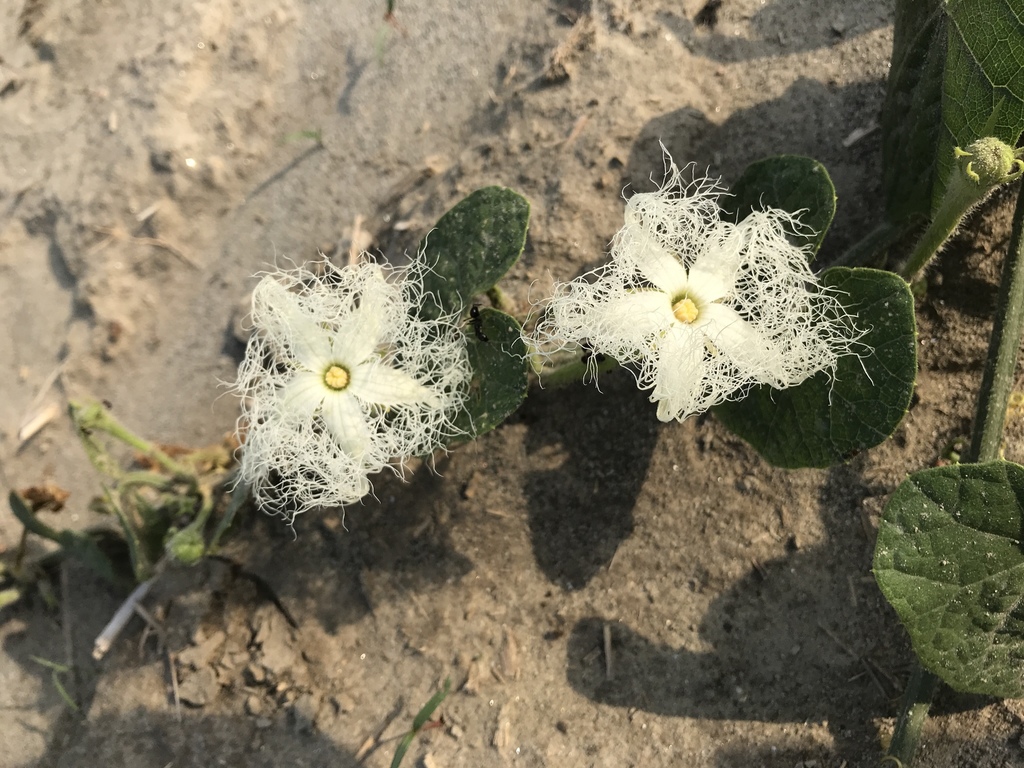
Pointed Gourd
Trichosanthes dioica
Trichosanthes dioica, also known as pointed gourd, is a tropical perennial cucurbit plant with its origin in the Indian subcontinent. The plant propagated vegetatively and grows with training on a support system (e.g., trellis) as pencil-thick vines (creepers) with dark-green cordate (heart-shaped) simple leaves. It is a well-developed dioecious plant having distinct male and female flowers on staminate and pistillate plants, respectively. The fruits are green with white or no stripes' and have unpalatable seeds. Size can vary from small and round to thick and long &ndash. 5–15 centimetres (2–6 inches). It thrives well under a hot to moderately warm and humid climate. The plant remains dormant during the winter season and prefers fertile, well-drained sandy loam soil due to its susceptibility to water-logging.
From the article Trichosanthes dioica on Wikipedia (CC BY-SA), quoted section by section
In human culture
The fifteenth-century Hatha Yoga Pradipika 1.61–65 recommends Parwal as one of the foods suitable for yogins.
Where it lives
Recorded sightings
—
geo-referenced records in GBIF, from museums, herbaria and field observers.
Drag the globe to turn it. Dots are where records exist, not a range map; darker means more records.
In the stacks
Searching the stacks…
Every page naming Trichosanthes dioica in the Biodiversity Heritage Library →
This page is assembled live from iNaturalist, GBIF, Wikipedia, the Source Library and the Internet Archive. It is not yet part of the hand-edited codex. iNaturalist taxon 735996.