- Animals
- ›Arthropods
- ›Crustaceans
- ›Typical Crustaceans
- ›Malacostracans
- ›Decapods, Isopods, and allies
- ›Decapods and Krill
- ›Decapods
- ›Crabs, Lobsters, Shrimps, and Allies
- ›True Crabs
- ›Eubrachyuran Crabs
- ›Thoracotrematan Crabs
- ›Ghost, Fiddler, Sand Bubbler Crabs and Allies
- ›Ghost and Fiddler Crabs
- ›American Narrow-fronted and East Atlantic Fiddler Crabs
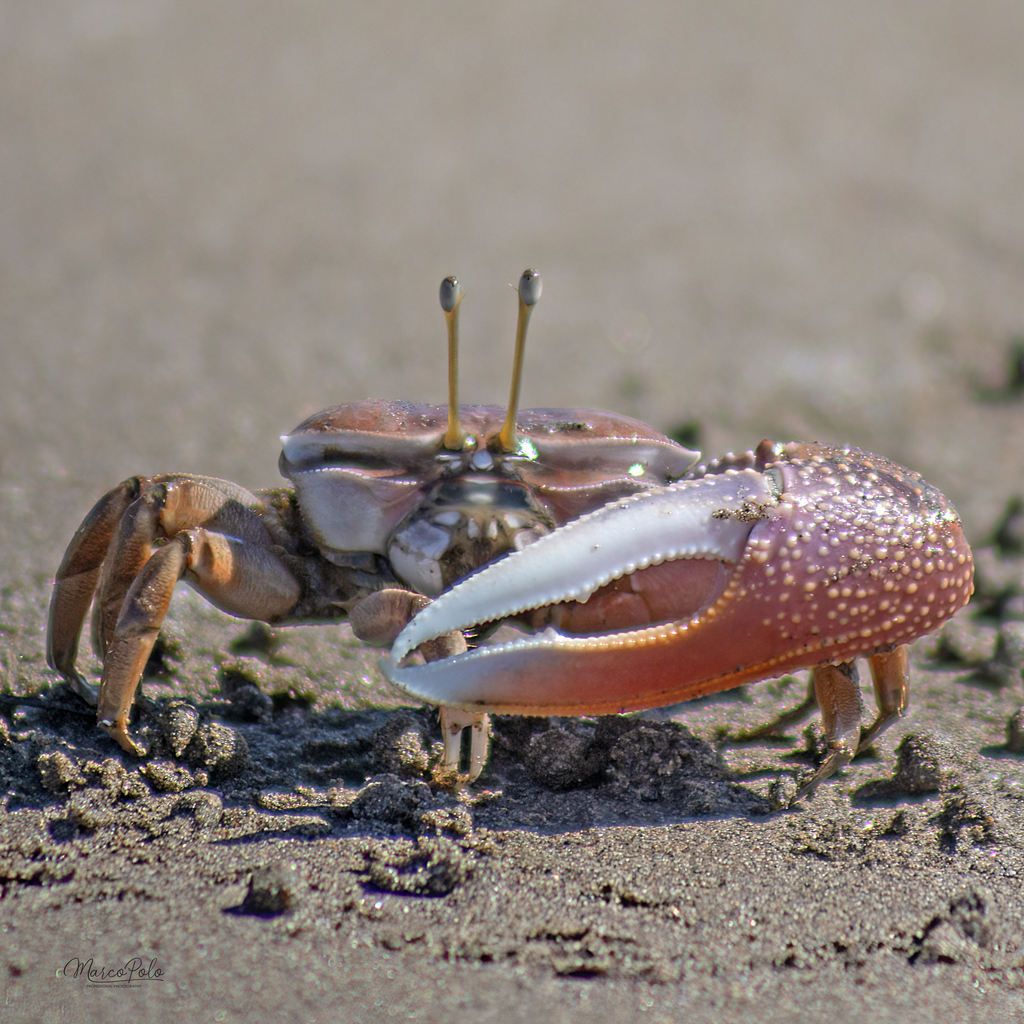
Narrow-fronted Fiddler Crabs
Uca
The fiddler crab or calling crab is any of the hundred species of semiterrestrial marine crabs in the family Ocypodidae. These crabs are well known for their extreme sexual dimorphism, where the male crabs have a major claw significantly larger than their minor claw, whilst females' claws are both the same size. The name fiddler crab comes from the appearance of their small and large claw together, looking similar to a fiddle.
A smaller number of ghost crab and mangrove crab species are also found in the family Ocypodidae. This entire group is composed of small crabs, the largest being Afruca tangeri which is slightly over two inches (5 cm) across. Fiddler crabs are found along sea beaches and brackish intertidal mud flats, lagoons, swamps, and various other types of brackish or salt-water wetlands. Whilst fiddler crabs are currently split into two subfamilies of Gelasiminae and Ucinae, there is still phylogenetic and taxonomical debate as to whether the movement from the overall genus of Uca to these subfamilies and the separate 11 genera.
9 branches of this genus, most-observed first

Large Mexican Fiddler Crab
speciesUca princeps

Brazilian Fiddler Crab
speciesUca maracoani
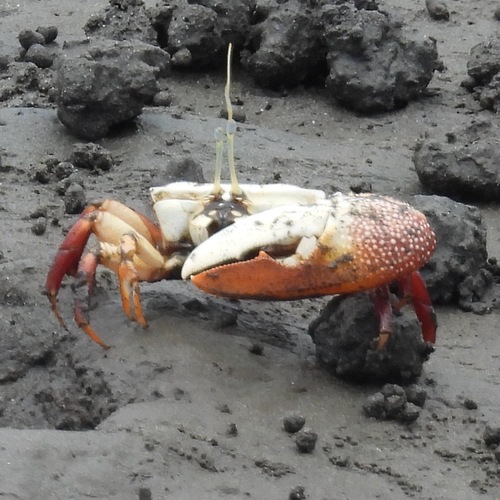
Styled Fiddler Crab
speciesUca stylifera

Ornate Fiddler Crab
speciesUca ornata
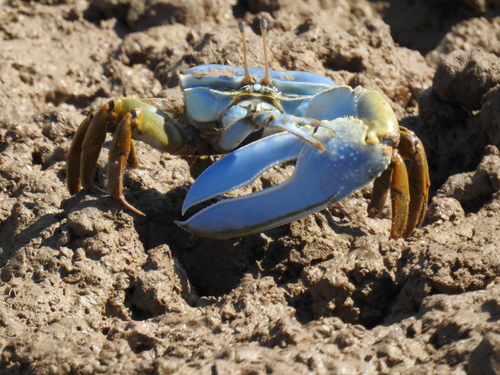
Necklaced Fiddler Crab
speciesUca monilifera
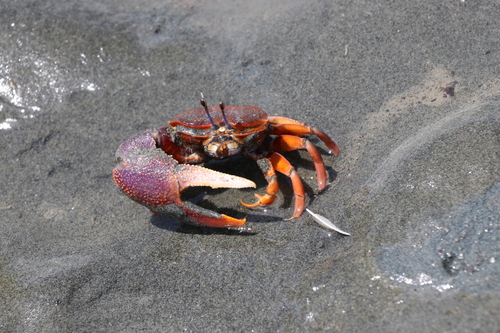
American Red Fiddler Crab
speciesUca heteropleura

Greater Fiddler Crab
speciesUca major
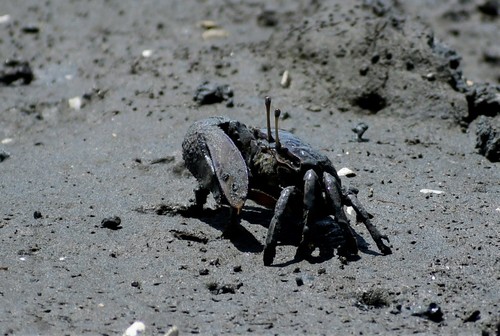
Distinguished Fiddler Crab
speciesUca insignis
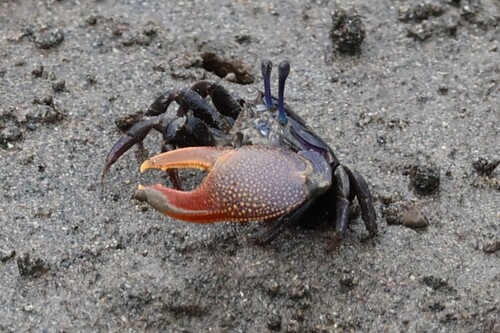
Intermediate Fiddler Crab
speciesUca intermedia
Where it lives
Recorded sightings
—
geo-referenced records in GBIF, from museums, herbaria and field observers.
Drag the globe to turn it. Dots are where records exist, not a range map; darker means more records.
In the stacks
Searching the stacks…
Every page naming Uca in the Biodiversity Heritage Library →
This page is assembled live from iNaturalist, GBIF, Wikipedia, the Source Library and the Internet Archive. It is not yet part of the hand-edited codex. iNaturalist taxon 739327.