- Plants
- ›Vascular Plants
- ›flowering plants
- ›Dicots
- ›Mallows, Rock Roses, and Allies
- ›Mallow and Hibiscus Family
- ›Malvoideae
- ›Malveae
- ›Anisodontea
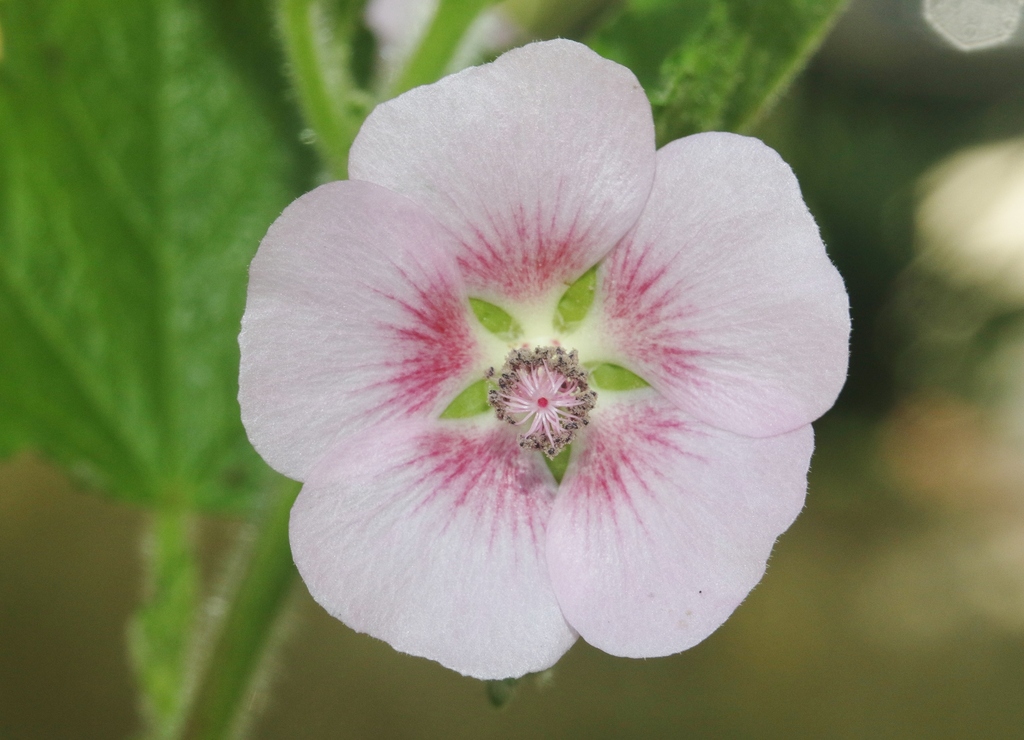
Cape Mallow
Anisodontea capensis
Anisodontea capensis, known as African mallow, dwarf hibiscus, Cape mallow and false mallow, is a species in the tribe Malveae in the family Malvaceae that is native to the Cape Provinces of South Africa. It has gained the Royal Horticultural Society's Award of Garden Merit as an ornamental.
From the article Anisodontea capensis on Wikipedia (CC BY-SA), quoted section by section
Description
It is an upright, dense subshrub that grows 1m to 1.5m tall and 90cm wide, and is found at altitudes of 670 to 2167 meters. It features green, hairy branches 2mm in length that age to brownish grey. Leaves are simple and ovate, palmately veined and three-lobed, 1mm in length. It has a woody base, so it is not a true herbaceous plant. During a cold spell, it may lose some of its leaves. From late winter or early spring to the first frost, it would display fuchsia, mauve or pink flowers with red centres that are borne in clusters with 5 petals, 1mm in diameter, resembling a hibiscus.
How it is grown
The plant does well in Mediterranean style gardens, in containers and as a hedge. They thrive in well-drained soils with organic matter and must be watered regularly during hot and dry spells. Some light pruning is encouraged to promote bushy and compact growth. It can be propagated from tip cuttings done in the summer, and as well by seed (which should be sown on the surface). It can bloom all year long provided it is protected from frost.
Wikipedia: “Cultivation”
Where it lives
Recorded sightings
—
geo-referenced records in GBIF, from museums, herbaria and field observers.
Drag the globe to turn it. Dots are where records exist, not a range map; darker means more records.
In the stacks
Searching the stacks…
Every page naming Anisodontea capensis in the Biodiversity Heritage Library →
This page is assembled live from iNaturalist, GBIF, Wikipedia, the Source Library and the Internet Archive. It is not yet part of the hand-edited codex. iNaturalist taxon 75454.