- Plants
- ›Vascular Plants
- ›flowering plants
- ›Dicots
- ›Mustards, Capers, and Allies
- ›mustard family
- ›Brassicoideae
- ›Brassicodae
- ›Brassiceae
- ›Brassica
- ›Brassica
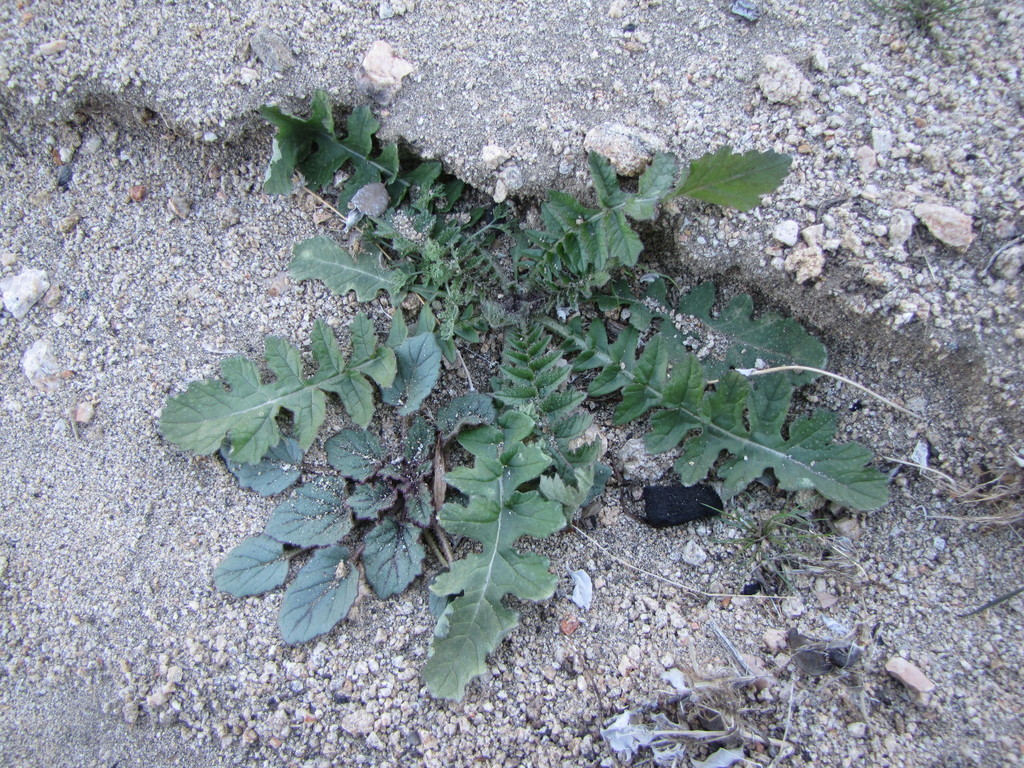
Saharan Mustard
Brassica tournefortii
Brassica tournefortii is a species of plant known by the common names Asian mustard, pale cabbage, African mustard, Sahara mustard, and Aslooz.
Brassica tournefortii is also used in North African cuisine. In Libya, it is known as Aslooz (Arabic: عسلوز, romanized: ‘Asalūz) and is commonly incorporated into traditional dishes such as Couscous bil Aslooz.
From the article Brassica tournefortii on Wikipedia (CC BY-SA), quoted section by section
Description
The plant is generally similar to other mustards, but the yellow flowers are not as bright and flashy as closely related species. It is a spreading annual herb with long stems up to 100 centimetres (40 inches) in length.
Range & habitat
This mustard is native to the deserts of North Africa and the Middle East. It became notorious during the twentieth century after it invaded the deserts of the United States and Mexico. Recently it has become an abundant weed of low deserts including the Sonoran and Mojave Deserts, plus the desert valleys such as the Coachella and Imperial Valleys of southern California. The plant disperses easily at the first hint of rain. When the seed coats are moistened they form a gel and become very sticky and readily adhere to people, animals, and objects. Seeds easily take hold along roadsides and arid desert lands, especially in disturbed habitats. The plant disperses 750 to 9,000 seeds which stay viable for several years in soil, contributing to its status as an invasive species.
Wikipedia: “Distribution and habitat”
Where it lives
Recorded sightings
—
geo-referenced records in GBIF, from museums, herbaria and field observers.
Drag the globe to turn it. Dots are where records exist, not a range map; darker means more records.
In the stacks
Searching the stacks…
Every page naming Brassica tournefortii in the Biodiversity Heritage Library →
This page is assembled live from iNaturalist, GBIF, Wikipedia, the Source Library and the Internet Archive. It is not yet part of the hand-edited codex. iNaturalist taxon 75870.