- Plants
- ›Vascular Plants
- ›flowering plants
- ›Dicots
- ›myrtles, evening primroses, and allies
- ›myrtle family
- ›Myrtoideae
- ›Chamelaucieae
- ›Chamelauciinae
- ›Chamelaucium
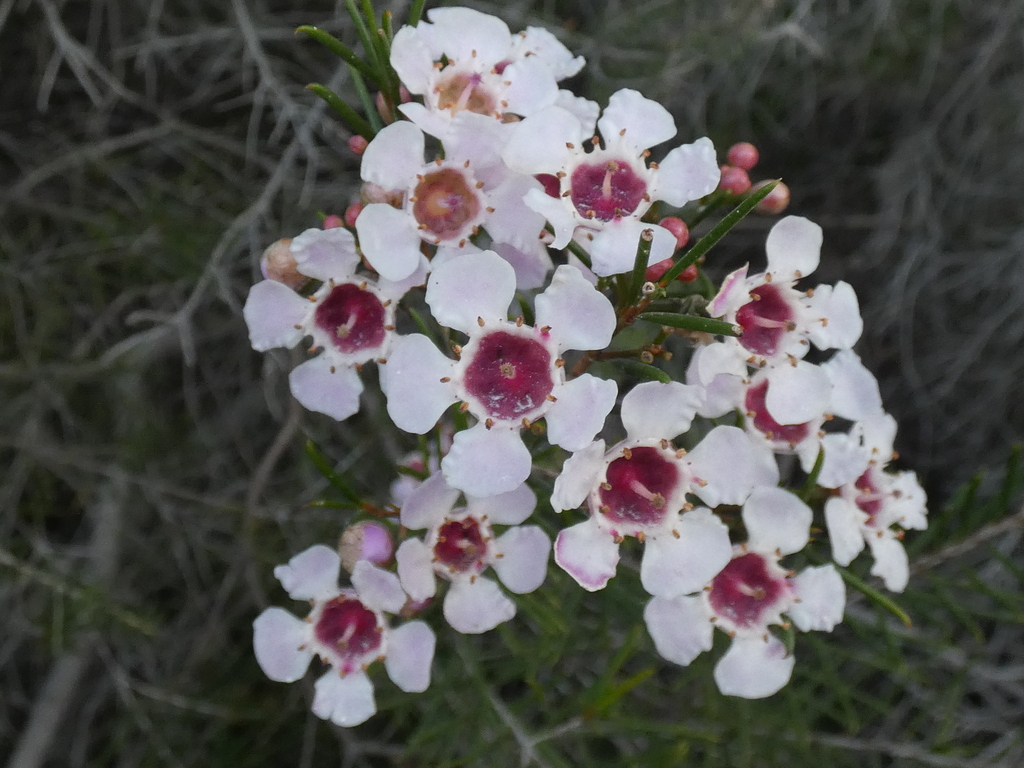
Geraldton Wax
Chamelaucium uncinatum
Chamelaucium uncinatum, the Geraldton waxflower, Geraldton wax, is a flowering plant endemic to Western Australia. It is an erect shrub 0.5 to 4 meters high, bearing white or pink flowers June–November. The name uncinatum means "hooked" in Latin, in reference to the tips of the leaves.
The flowers (somewhat resembling those of the tea tree) last a relatively long time after cutting, making the plant popular in horticulture. It is widely cultivated throughout Australia, both in home gardens and in the cut flower industry. Purple-flowering cultivars have been developed.
From the article Chamelaucium uncinatum on Wikipedia (CC BY-SA), quoted section by section
How it is grown
Geraldton waxflower is relatively hardy and fairly easy to grow in a Mediterranean climate with well-drained sandy soil and a sunny aspect. It can be grown in areas of higher humidity, such as Sydney, but tends to be short lived. It is also good in pots. It has the tendency to 'fall over' and may need support. It is very drought-tolerant and has aromatic leaves. The hardy characteristics have led to its use as a root stock species for grafting species of the closely related featherflowers of genus Verticordia.
Wikipedia: “Cultivation”
Where it lives
Recorded sightings
—
geo-referenced records in GBIF, from museums, herbaria and field observers.
Drag the globe to turn it. Dots are where records exist, not a range map; darker means more records.
In the stacks
Searching the stacks…
Every page naming Chamelaucium uncinatum in the Biodiversity Heritage Library →
This page is assembled live from iNaturalist, GBIF, Wikipedia, the Source Library and the Internet Archive. It is not yet part of the hand-edited codex. iNaturalist taxon 76261.