- Plants
- ›Vascular Plants
- ›flowering plants
- ›Dicots
- ›Roses, Elms, Figs, and Allies
- ›rose family
- ›brambles, roses, strawberries, and allies
- ›strawberries, cinquefoils, and allies
- ›strawberry subtribe
- ›Drymocallis
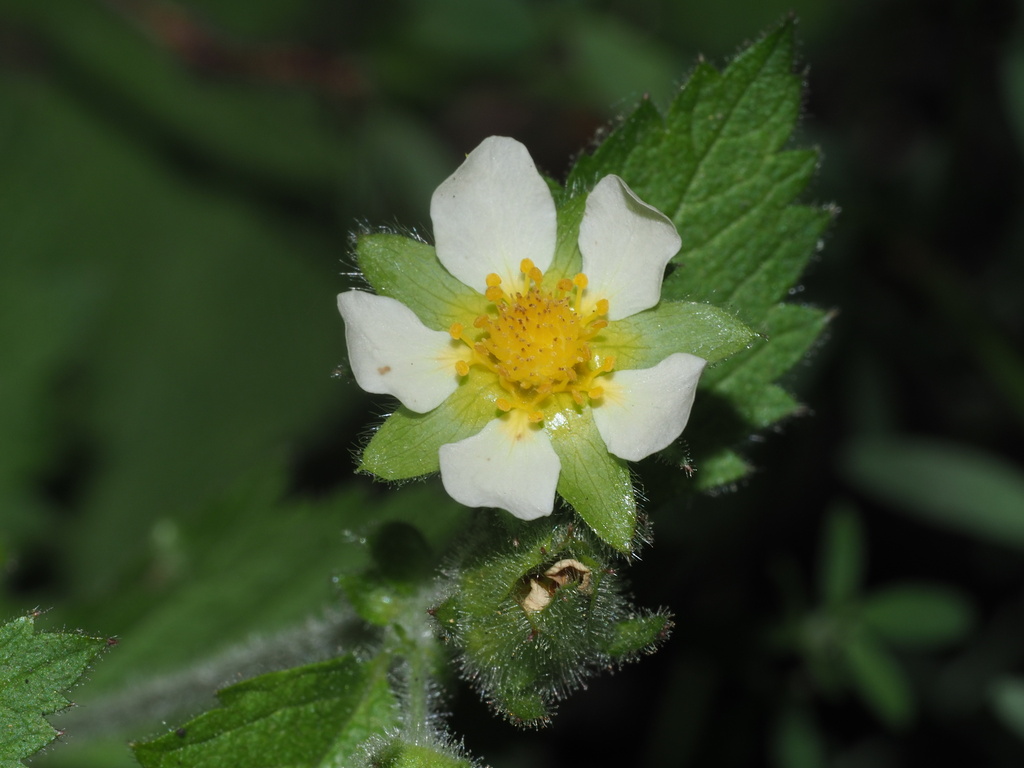
sticky cinquefoil
Drymocallis glandulosa
Drymocallis glandulosa, formerly Potentilla glandulosa, known by the common names Douglas' wood beauty and sticky cinquefoil, is a plant species in the family Rosaceae.
It is native to western North America from southwestern Canada through the far western United States and California, into Baja California. It is widespread and can be found in many types of habitats.
From the article Drymocallis glandulosa on Wikipedia (CC BY-SA), quoted section by section
Description
Drymocallis glandulosa is generally erect in form but it may be small and tuftlike, measuring just a few centimeters high, or tall and slender, approaching 1 metre (3.3 ft) in height. It may or may not have rhizomes. It is usually coated in hairs, many of which are glandular, giving the plant a sticky texture. The leaves are each divided into several leaflets, with one long terminal leaflet and a few smaller ones widely spaced on each side. The inflorescence is a cyme of 2 to 30 flowers which are variable in color and size. Each has usually five petals up to a centimeter long which may be white to pale yellow to gold.
Varieties. It is highly variable and there are many varieties and subspecies, some of which intergrade and are not clearly defined. They include:
Drymocallis glandulosa var. glandulosa Drymocallis glandulosa var. reflexa Drymocallis glandulosa var. viscida Drymocallis glandulosa var. wrangelliana
What it does
The plant is more common after its habitat is cleared or disturbed, such as by wildfire, clearcutting, or heavy grazing. It is an important food for several species of mice, including the western harvest mouse, cactus mouse, and California mouse.
Wikipedia: “Ecology”
Where it lives
Recorded sightings
—
geo-referenced records in GBIF, from museums, herbaria and field observers.
Drag the globe to turn it. Dots are where records exist, not a range map; darker means more records.
In the stacks
Searching the stacks…
Every page naming Drymocallis glandulosa in the Biodiversity Heritage Library →
This page is assembled live from iNaturalist, GBIF, Wikipedia, the Source Library and the Internet Archive. It is not yet part of the hand-edited codex. iNaturalist taxon 76716.