- Plants
- ›Vascular Plants
- ›flowering plants
- ›Dicots
- ›Sunflowers, Bellflowers, Fanflowers, and Allies
- ›Sunflowers, Daisies, Asters, and Allies
- ›Asteroideae
- ›asters and allies
- ›Pentachaetinae
- ›Ericameria
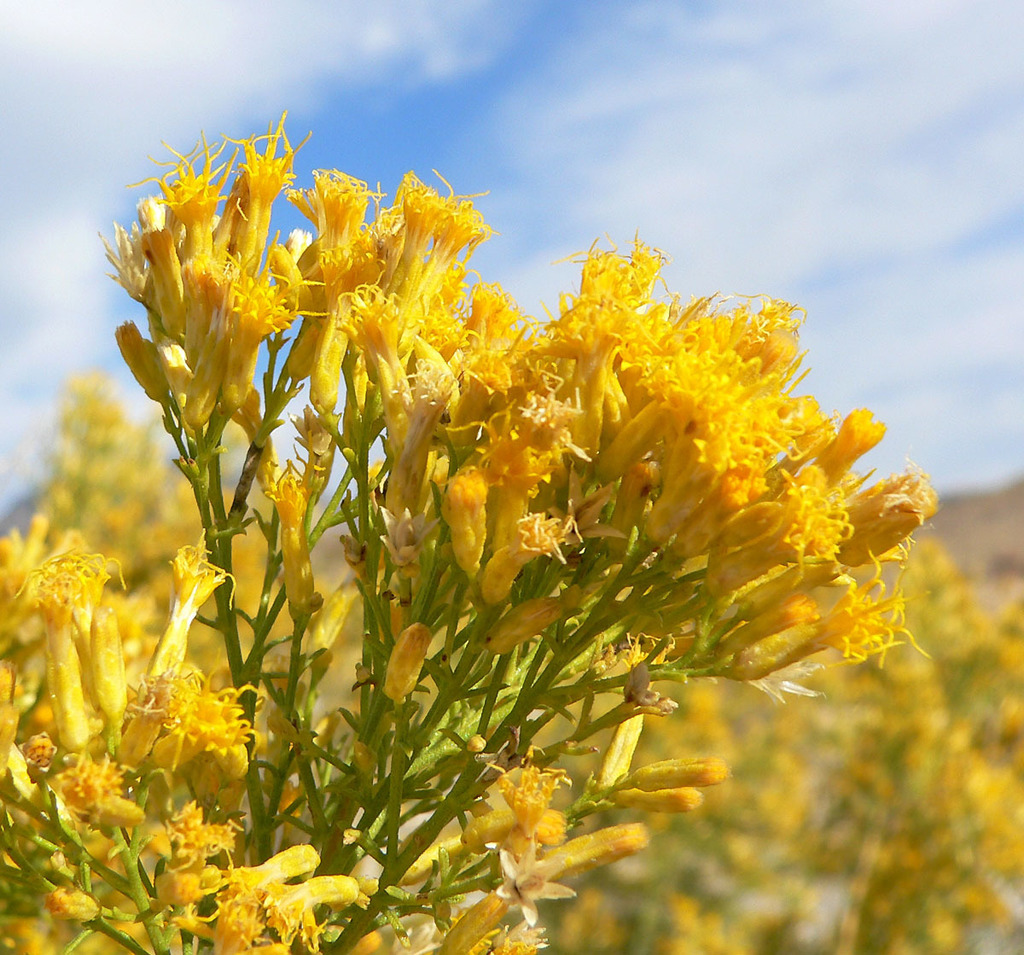
Black-banded Rabbitbrush
Ericameria paniculata
Ericameria paniculata (formerly Chrysothamnus paniculatus) is a species of flowering plant in the sunflower family Asteraceae, native to the
southwestern United States. It is an evergreen yellow-flowered desert shrub.
From the article Ericameria paniculata on Wikipedia (CC BY-SA), quoted section by section
Description
Ericameria paniculata is a branching shrub reaching up to 2 meters (80 inches) tall. The spreading or erect stems are glandular and resinous and are often banded or splotched with black from a smut fungus Puccinia splendens. The glandular leaves are filiform (thread-shaped or narrowly oblanceolate) up to 3.5 centimeters (1.4 inches) in length. The inflorescence is an array of small, yellow flower heads, each of which contains 5 to 8 disc florets but no ray florets. The fruit is up to a centimeter (0.4 inches) long including its long pappus. They are wind-dispersed. It flowers from June to December.
Range & habitat
Ericameria paniculata is native to the deserts of Arizona, Nevada, southern California, southwestern Utah. It is particularly common in the Mojave Desert. It is found in a great variety of habitats, including disturbed areas such as roadsides. It tolerates poor soils. Its companions may include Larrea tridentata (creosote), Yucca brevifolia (Joshua tree), Baccharis, Hymenoclea salsola (white burrobush), Atriplex polycarpa (desert saltbush), and Acacia greggii (catclaw acacia).
Wikipedia: “Range and habitat”
Where it lives
Recorded sightings
—
geo-referenced records in GBIF, from museums, herbaria and field observers.
Drag the globe to turn it. Dots are where records exist, not a range map; darker means more records.
In the stacks
Searching the stacks…
Every page naming Ericameria paniculata in the Biodiversity Heritage Library →
This page is assembled live from iNaturalist, GBIF, Wikipedia, the Source Library and the Internet Archive. It is not yet part of the hand-edited codex. iNaturalist taxon 76889.