- Plants
- ›Vascular Plants
- ›flowering plants
- ›Dicots
- ›Mustards, Capers, and Allies
- ›mustard family
- ›Brassicoideae
- ›Camelinodae
- ›Boechereae
- ›Phoenicaulis
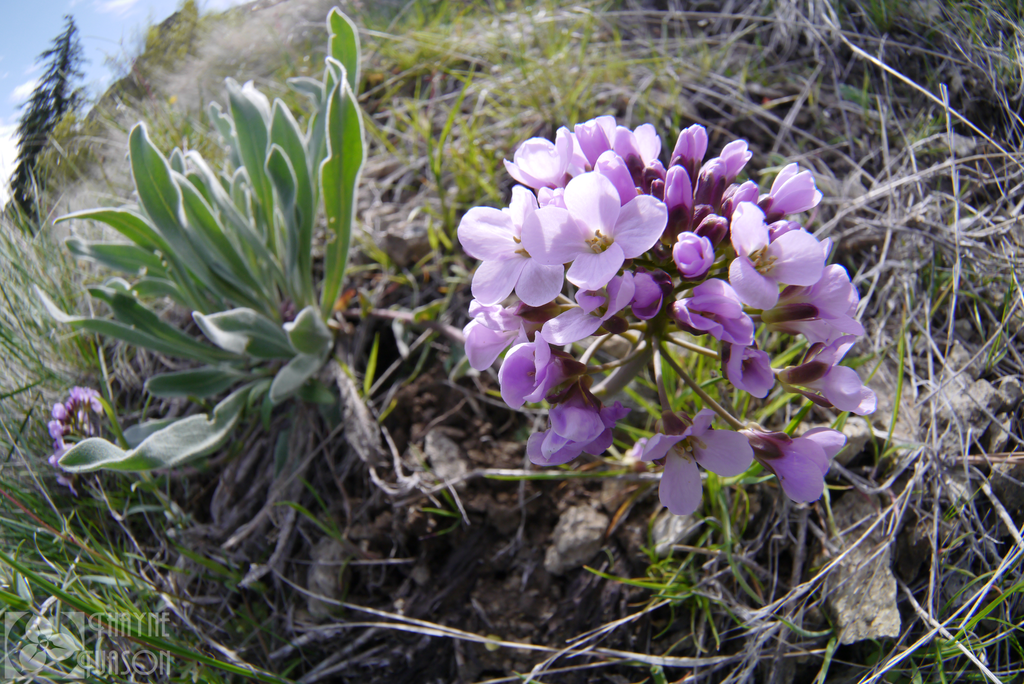
daggerpod
Phoenicaulis cheiranthoides
Phoenicaulis is a monotypic genus of flowering plants in the family Brassicaceae found in western North America. It contains the single species Phoenicaulis cheiranthoides, which is known by the common names daggerpod and wallflower phoenicaulis. The genus name means 'reddish-purple stems', probably in reference to the tendency for the stems to take on such a color, and the species name means 'hand of flowers'.
From the article Phoenicaulis on Wikipedia (CC BY-SA), quoted section by section
Description
The species is a perennial herb producing one or more stems up to 25 to 30 centimetres (9+7⁄8 to 11+3⁄4 in) tall from a caudex. The basal leaves are narrowly lance-shaped to teardrop-shaped, up to 10 cm long, and woolly in texture. Leaves higher on the stem are shorter and usually less hairy. The inflorescence is a raceme of flowers with purple or pink petals up to about 1.5 cm long. The fruits are narrow, hairless siliques up to 9 cm long, and stick out from the stem on pedicels. The fruits are shaped like a dagger, giving the common name daggerpod.
Range & habitat
The plant grows in many types of habitat, especially rocky areas. It occurs in sagebrush scrub, scree, exposed volcanic and clay slopes, rock outcrops, hills, banks, and meadows. In the southern part of its range it also grows in the alpine climate of high mountains. It grows at up to 3200 meters in elevation and flowers early in spring.
Wikipedia: “Range and habitat”
Where it lives
Recorded sightings
—
geo-referenced records in GBIF, from museums, herbaria and field observers.
Drag the globe to turn it. Dots are where records exist, not a range map; darker means more records.
In the stacks
Searching the stacks…
Every page naming Phoenicaulis cheiranthoides in the Biodiversity Heritage Library →
This page is assembled live from iNaturalist, GBIF, Wikipedia, the Source Library and the Internet Archive. It is not yet part of the hand-edited codex. iNaturalist taxon 78553.