- Plants
- ›Vascular Plants
- ›Ferns
- ›Adder's-tongues, Fork Ferns, and Allies
- ›adder's-tongues and allies
- ›adder's-tongue family
- ›Botrychioideae
- ›Sceptridium
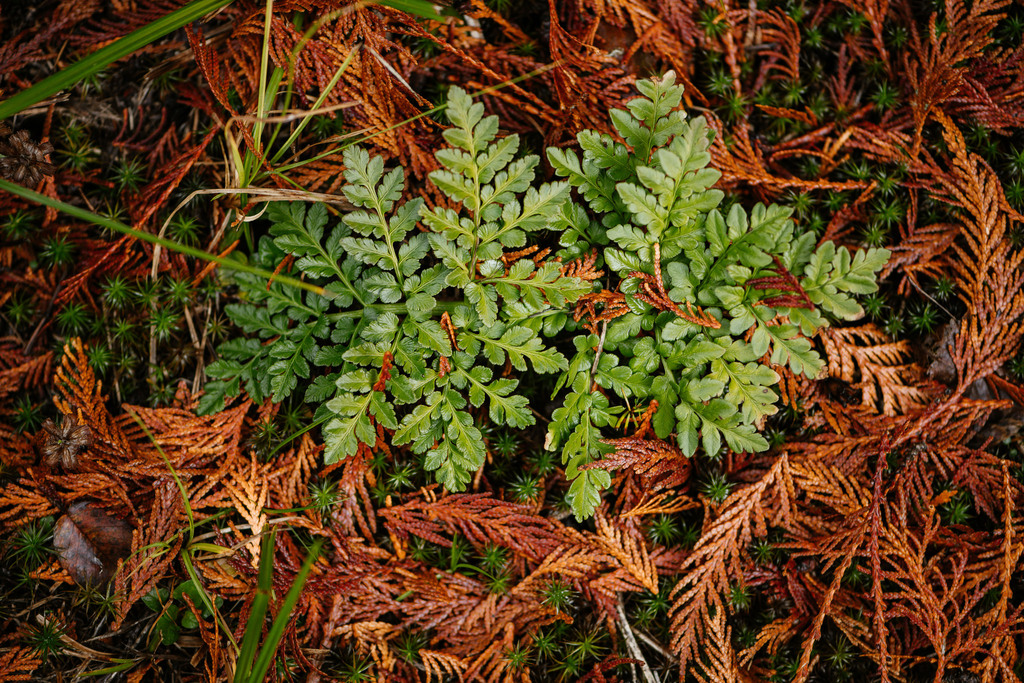
leathery grapefern
Sceptridium multifidum
Sceptridium multifidum is a fern species in the Ophioglossaceae (Adder's tongue family), known by the common names leathery grapefern and leathery moonwort. It is native to Europe, Asia, and North America, where it is widespread and grows in moist areas in many habitat types. This is a fleshy, leathery plant growing from a small caudex with thin, corky roots. It produces a single leaf which emerges directly from the ground. It is divided into a sterile...
From the article Sceptridium multifidum on Wikipedia (CC BY-SA), quoted section by section
Description
This is a fleshy, leathery plant growing from a small caudex with thin, corky roots. Unlike most ferns, S. multifidum has contractile roots, which are thought to help anchor the plant in the soil. It produces a single leaf which emerges directly from the ground. It is divided into a sterile and a fertile part. The sterile part of the leaf is wide and has rounded or oval-shaped leaflets. The fertile part of the leaf is very different in shape, with grape-like clusters of sporangia by which it reproduces. The gametophytes develop from these spores in the soil, and are thought to associate with an endophytic fungus like the gametophytes of other members of this genus. While the gametophytes have not been observed in nature, they have been grown under lab conditions.
Range & habitat
It is native to Europe, Asia, and North America including Greenland, where it is widespread and grows in moist areas in many habitat types.
Wikipedia: “Distribution”
Where it lives
Recorded sightings
—
geo-referenced records in GBIF, from museums, herbaria and field observers.
Drag the globe to turn it. Dots are where records exist, not a range map; darker means more records.
In the stacks
Searching the stacks…
Every page naming Sceptridium multifidum in the Biodiversity Heritage Library →
This page is assembled live from iNaturalist, GBIF, Wikipedia, the Source Library and the Internet Archive. It is not yet part of the hand-edited codex. iNaturalist taxon 78990.