- Plants
- ›Vascular Plants
- ›flowering plants
- ›monocots
- ›grasses, sedges, cattails, and allies
- ›grasses
- ›Chloridoideae
- ›Cynodonteae
- ›Scleropogoninae
- ›Swallenia
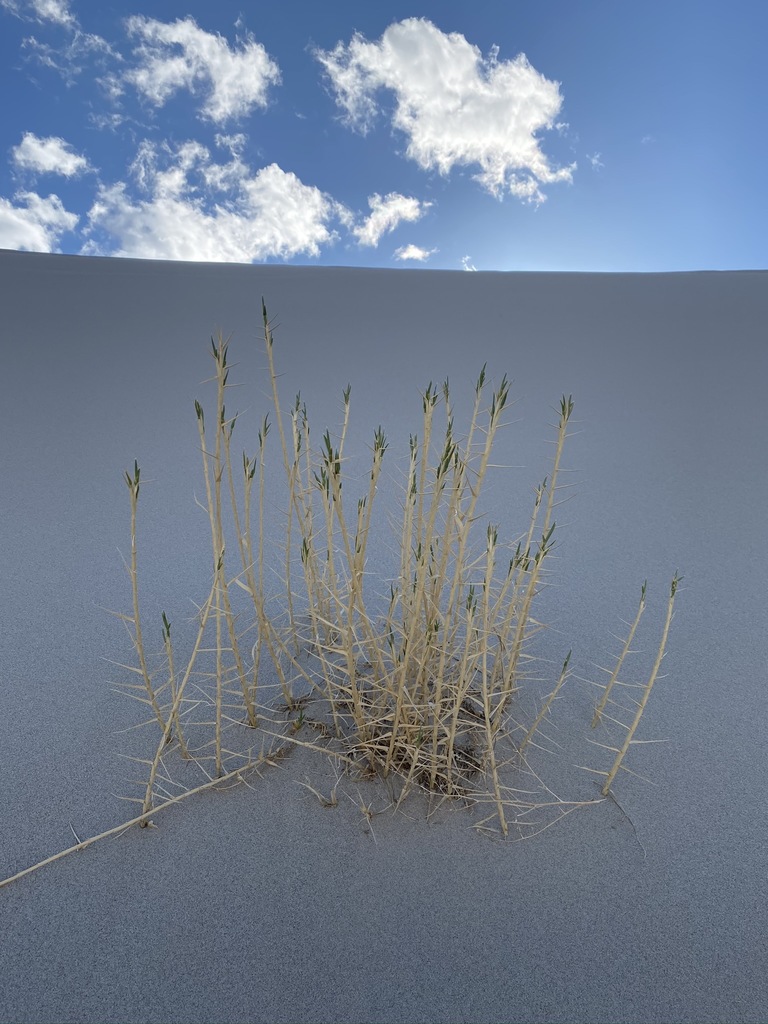
Eureka Valley dune grass
Swallenia alexandrae
Swallenia is a rare monotypic genus of plants in the grass family, found only in Death Valley National Park, California.
The only known species is Swallenia alexandrae, known by the common names Eureka dunegrass and Eureka Valley dune grass. This genus was named for American botanist Jason Richard Swallen (who specialized in grasses), while the species name was in honor of American philanthropist, museum founder, and paleontologist Annie Montague Alexander.
From the article Swallenia on Wikipedia (CC BY-SA), quoted section by section
Description
Swallenia alexandrae is a coarse, tufted perennial grass which grows in sand from thick rhizomes. Its stiffly erect clums, sharp-leafed blades, and erect pale-colored panicle inflorescences are diagnostic.
Endangered status. Eureka dunegrass is a federally listed threatened species of the United States. The main threat to the species' survival has been off-roading, which is no longer permitted in its habitat. Trespassing off-roaders and campers are still a threat to the five remaining occurrences.
Range & habitat
Eureka dunegrass is a rare plant that is endemic to Inyo County, California, where it can be found on a single isolated dune system: the Eureka Valley Sand Dunes in the Eureka Valley of the Mojave Desert, within the boundaries of Death Valley National Park. Only five occurrences are known for this species.
Wikipedia: “Distribution”
Where it lives
Recorded sightings
—
geo-referenced records in GBIF, from museums, herbaria and field observers.
Drag the globe to turn it. Dots are where records exist, not a range map; darker means more records.
In the stacks
Searching the stacks…
Every page naming Swallenia alexandrae in the Biodiversity Heritage Library →
This page is assembled live from iNaturalist, GBIF, Wikipedia, the Source Library and the Internet Archive. It is not yet part of the hand-edited codex. iNaturalist taxon 79290.