- Plants
- ›Vascular Plants
- ›flowering plants
- ›Dicots
- ›Sunflowers, Bellflowers, Fanflowers, and Allies
- ›Sunflowers, Daisies, Asters, and Allies
- ›Thistles and Allies
- ›Cardueae
- ›Knapweeds and Allies
- ›Rhaponticum
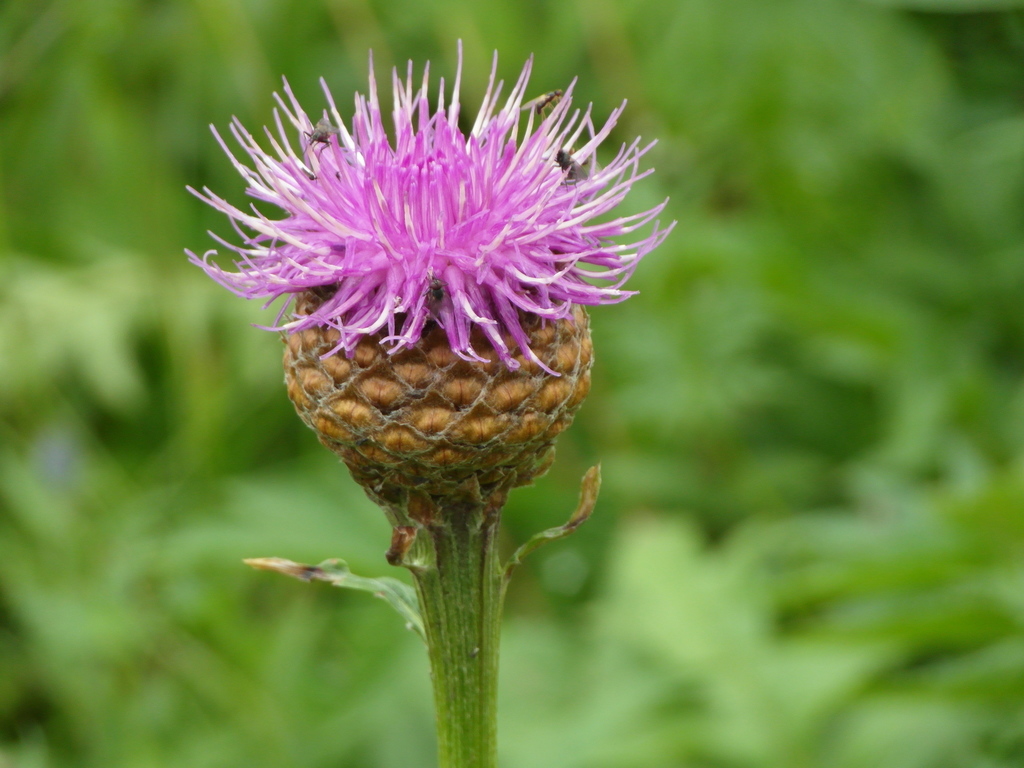
Rhaponticum carthamoides
Rhaponticum carthamoides, synonym Leuzea carthamoides, is a species of herbaceous perennial plant in the family Asteraceae. It is known as maral root or rhaponticum. It inhabits the sub-alpine zone (4,500–6,000 ft (1,400–1,800 m) above sea level) as well as alpine meadows. It can be found growing wild in Southern Siberia, Kazakhstan, the Altay region, and Western Sayan Mountains. Maral root is widely cultivated throughout Russia and Eastern Europe. This plant derives its traditional name maral root (maralu) from the maral deer that fed on it.
R. carthamoides is high in 20-hydroxyecdysone, a steroidal substance that can disrupt the molting and reproduction of arthropods.
Where it lives
Recorded sightings
—
geo-referenced records in GBIF, from museums, herbaria and field observers.
Drag the globe to turn it. Dots are where records exist, not a range map; darker means more records.
In the stacks
Searching the stacks…
Every page naming Rhaponticum carthamoides in the Biodiversity Heritage Library →
This page is assembled live from iNaturalist, GBIF, Wikipedia, the Source Library and the Internet Archive. It is not yet part of the hand-edited codex. iNaturalist taxon 793348.