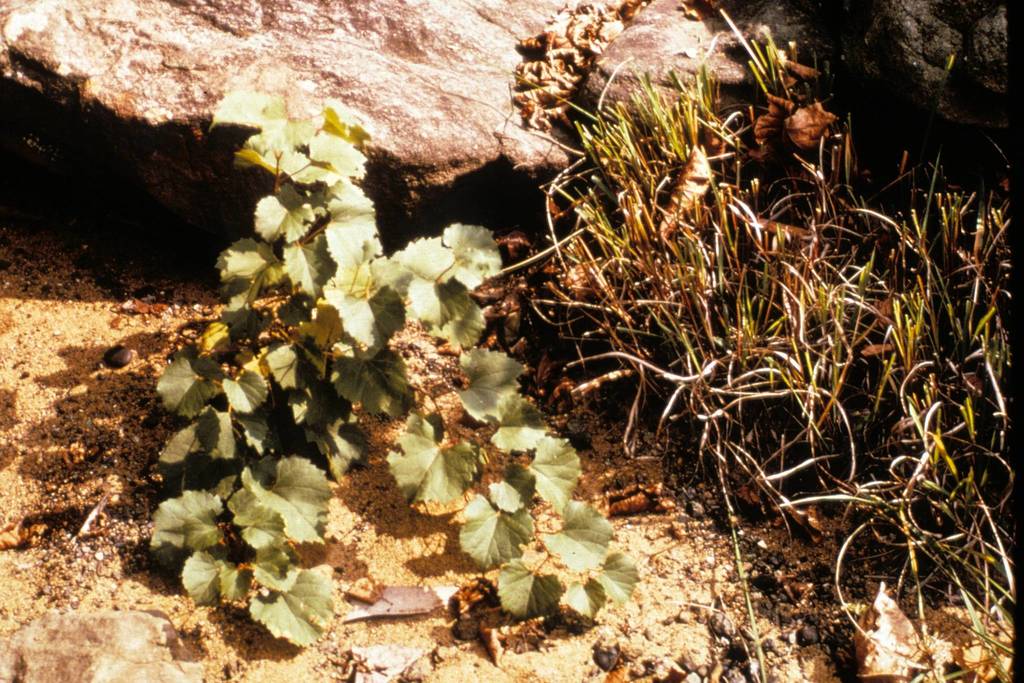
sand grape
Vitis rupestris
Vitis rupestris is a species of grape native to the United States that is known by many common names including July, sand, sugar, beach, bush, currant, ingar, rock, and mountain grape. It is used for breeding several French-American hybrids as well as many root stocks. The cultivar known as Rupestris St. George has been widely used in breeding and as a root stock; it is perhaps the best known.
From the article Vitis rupestris on Wikipedia (CC BY-SA), quoted section by section
Range & habitat
The natural distribution of Vitis rupestris is concentrated in the Ozark Hills of Missouri and Arkansas. The species is less common in scattered populations east as far as Pennsylvania and southwest into Oklahoma and Texas. There are a few reports of the species occurring in the San Francisco Bay area of California, but these are most likely escapes from cultivation. Vitis rupestris is a self-supporting bushy plant that does not grow in the shade, and is found only on rocky riverbanks and streambanks. Much of its habitat has been destroyed due to damming of rivers and destruction of islands for navigation. Vitis rupestris has been listed as threatened or endangered by Indiana, Kentucky, Pennsylvania, and Tennessee. Known locations of wild Vitis rupestris are quickly disappearing, which may threaten the future of this grape species. It is found hybridized in parts of its range with the Riverbank grape and other Vitis species.
Wikipedia: “Distribution and ecology”
Where it lives
Recorded sightings
—
geo-referenced records in GBIF, from museums, herbaria and field observers.
Drag the globe to turn it. Dots are where records exist, not a range map; darker means more records.
In the stacks
Searching the stacks…
Every page naming Vitis rupestris in the Biodiversity Heritage Library →
This page is assembled live from iNaturalist, GBIF, Wikipedia, the Source Library and the Internet Archive. It is not yet part of the hand-edited codex. iNaturalist taxon 79518.