- Animals
- ›Molluscs
- ›Bivalves
- ›Autobranchia
- ›Pteriomorphia
- ›Ark Shells and Allies
- ›Arks, Bittersweet Clams and allies
- ›Bittersweet Clams
- ›Glycymeris
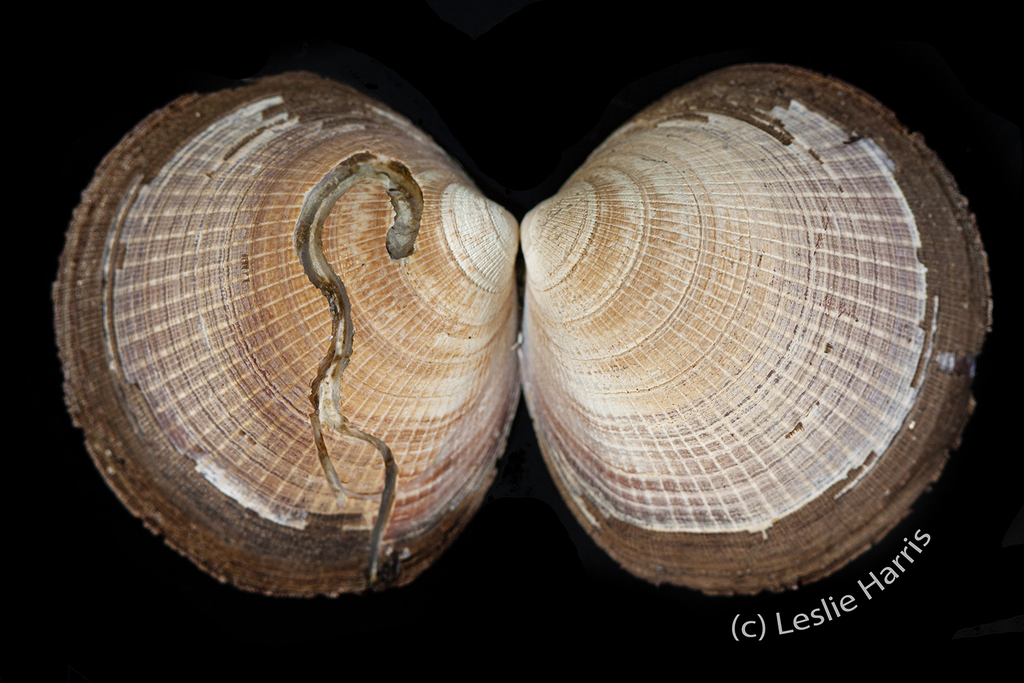
Hokkaido Bittersweet Clam
Glycymeris yessoensis
Glycymeris yessoensis is a species of bivalve mollusc in the family Glycymerididae. It can be found burrowing in soft sediment in shallow water in the Pacific Ocean around the coasts of China and Japan. It is often associated with a polychaete worm with which it forms a commensal relationship.
From the article Glycymeris yessoensis on Wikipedia (CC BY-SA), quoted section by section
Range & habitat
Glycymeris yessoensis is native to the north central Pacific Ocean where it occurs in the Yellow Sea and the Sea of Japan, its range extending as far north as the Kamchatka Peninsula. It is found burrowing in sand at depths ranging between the intertidal zone and 60 m (200 ft).
Wikipedia: “Distribution and habitat”
What it does
Glycymeris yessoensis can live for 45 years. It is a filter feeder, drawing water in through one siphon and expelling it through another. It often acts as a commensal host to the boring polychaete worm Polydora glycymerica. This worm burrows into the bivalve's shell creating a U-shaped burrow near the mollusc's siphon, intercepting some of the food particles from the feeding current created by the mollusc.
== References ==
Wikipedia: “Ecology”
Where it lives
Recorded sightings
—
geo-referenced records in GBIF, from museums, herbaria and field observers.
Drag the globe to turn it. Dots are where records exist, not a range map; darker means more records.
In the stacks
Searching the stacks…
Every page naming Glycymeris yessoensis in the Biodiversity Heritage Library →
This page is assembled live from iNaturalist, GBIF, Wikipedia, the Source Library and the Internet Archive. It is not yet part of the hand-edited codex. iNaturalist taxon 795319.