- Animals
- ›Arthropods
- ›Hexapods
- ›Insects
- ›Winged and Once-winged Insects
- ›Ants, Bees, Wasps, and Sawflies
- ›Narrow-waisted Wasps, Ants, and Bees
- ›Ants, Bees, and Stinging Wasps
- ›Bees and Apoid Wasps
- ›Bees
- ›Honey Bees, Bumble Bees, and Allies
- ›Apine Bees
- ›Digger Bees
- ›Amegilla
- ›Zonamegilla
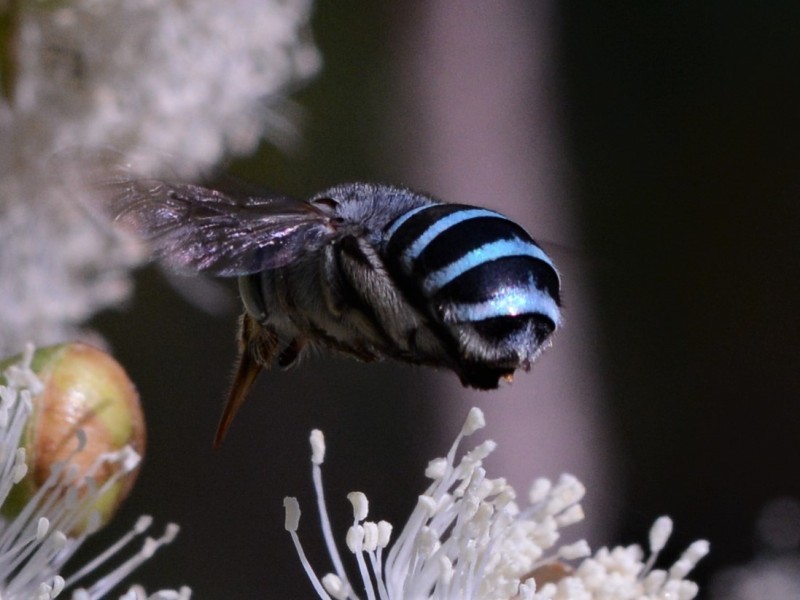
Amegilla walkeri
Amegilla walkeri or Amegilla (Zonamegilla) walkeri is a species of digger bee. It is endemic to Australia. It was described in 1905 by British-American entomologist Theodore Dru Alison Cockerell.
From the article Amegilla walkeri on Wikipedia (CC BY-SA), quoted section by section
Description
The body length is 10–12 mm, forewing length 7–8 mm. Both sexes have grey fur on the scutum, due to a mixture of black and white hairs, with metallic, blue, fur bands on the terga.
Range & habitat
The species occurs mainly in tropical areas of northern Australia, including the Kimberley region of Western Australia and the Top End of the Northern Territory. Type localities include Baudin Island on the Kimberley coast and Darwin.
Wikipedia: “Distribution and habitat”
Listen
Looking for field recordings…
Where it lives
Recorded sightings
—
geo-referenced records in GBIF, from museums, herbaria and field observers.
Drag the globe to turn it. Dots are where records exist, not a range map; darker means more records.
In the stacks
Searching the stacks…
Every page naming Amegilla walkeri in the Biodiversity Heritage Library →
This page is assembled live from iNaturalist, GBIF, Wikipedia, the Source Library and the Internet Archive. It is not yet part of the hand-edited codex. iNaturalist taxon 804271.