- Plants
- ›Vascular Plants
- ›flowering plants
- ›monocots
- ›Agaves, Orchids, Irises, and Allies
- ›Aloe family
- ›Aloes and allies
- ›Asphodelus
- ›Asphodelus
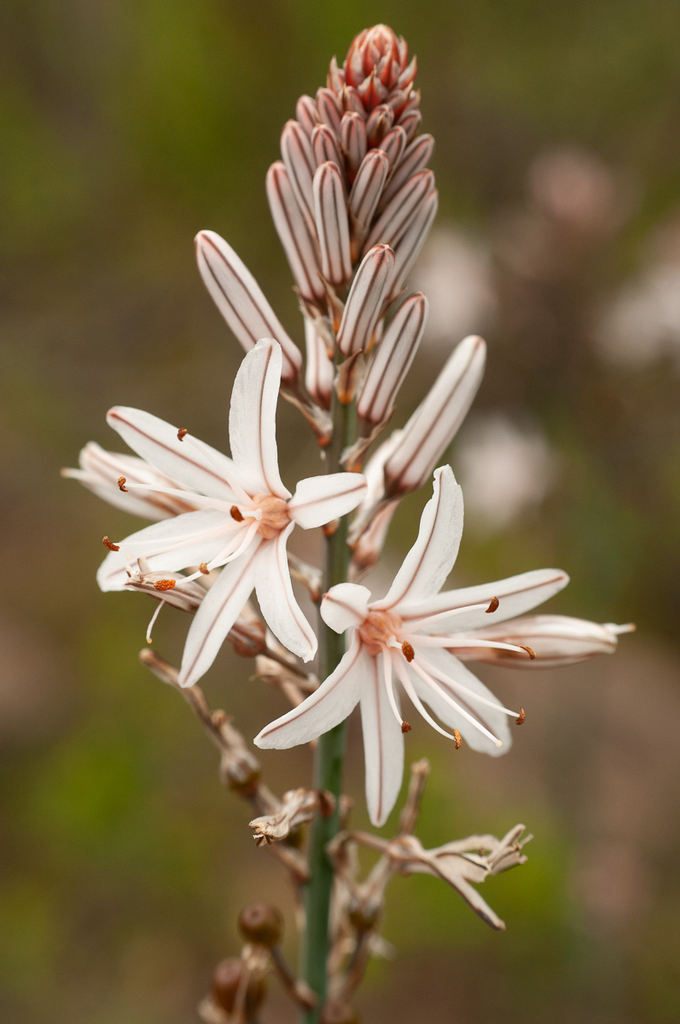
Branched Asphodel
Asphodelus ramosus
Asphodelus ramosus, the branched asphodel, is a perennial herbaceous plant in the order Asparagales. Similar in appearance to Asphodelus albus and particularly Asphodelus cerasiferus and Asphodelus aestivus, it may be distinguished by its highly branched stem and smaller fruits. There has been much confusion over the nomenclature and taxonomy of the species, owing to its similarity to Asphodelus aestivus.
Asphodelus ramosus is native to the Mediterranean region of southern Europe, northern Africa, and the Middle East. It can also be found in the Canary Islands. It is particularly common in coastal areas of the Mediterranean with intensive grazing and occasional fire. In some areas it shows an affinity for acidic soils, mainly schist. It can form abundant colonies, usually flowering in February to May. It has been thought to be Homer's asphodel of the underworld, but so has the closely related Asphodeline lutea. The branched asphodel is known to contain colchicine, a chemical used in the treatment of gout.
From the article Asphodelus ramosus on Wikipedia (CC BY-SA), quoted section by section
At the table
Some traditional folk usages of the plant have been to make a glue from the plant's root. A remedy against warts is also derived from its root. According to Dioscorides, a concoction made from its roots (mixed with wine) induces vomiting. Formerly, the entire plant was used in treating venomous snake bites (its efficacy yet to be proven scientifically).
== References ==
Wikipedia: “Uses”
Where it lives
Recorded sightings
—
geo-referenced records in GBIF, from museums, herbaria and field observers.
Drag the globe to turn it. Dots are where records exist, not a range map; darker means more records.
In the stacks
Searching the stacks…
Every page naming Asphodelus ramosus in the Biodiversity Heritage Library →
This page is assembled live from iNaturalist, GBIF, Wikipedia, the Source Library and the Internet Archive. It is not yet part of the hand-edited codex. iNaturalist taxon 82906.