Thrips
Thysanoptera
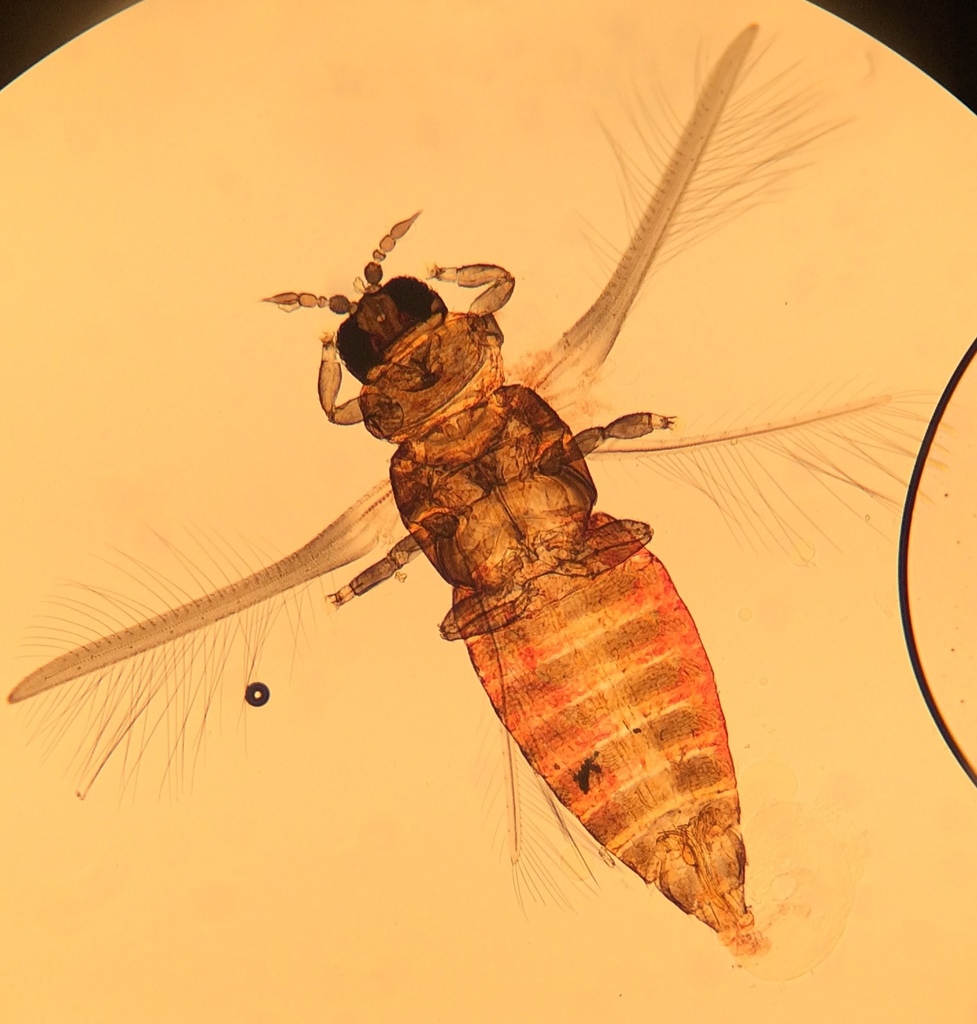
Thrips (singular: thrips; order Thysanoptera), commonly known as thunderflies or thunderbugs, are minute (mostly 1 mm (0.04 in) long or less), slender insects with fringed wings and unique asymmetrical mouthparts. Entomologists have described approximately 7,700 species; they are distributed globally with their food plants. They fly only weakly and their feathery wings are unsuitable for conventional flight; instead, thrips exploit an unusual mechanism, clap and fling, to create lift using an unsteady circulation pattern with transient vortices near the wings.
Thrips are a functionally diverse group; many of the known species are fungivorous. A small proportion of the species are serious pests of commercially important crops. Some of these serve as vectors for over 20 viruses that cause plant disease, especially the Tospoviruses. Many flower-dwelling species bring benefits as pollinators, with some predatory thrips feeding on small insects or mites. In the right conditions, such as in greenhouses, invasive species can exponentially increase in population size and form large swarms because of a lack of natural predators coupled with their ability to reproduce asexually, making them destructive to crops. Their identification to species by standard morphological characteristics is often challenging.
2 branches of this order, most-observed first
See this branch on the Wheel of Life →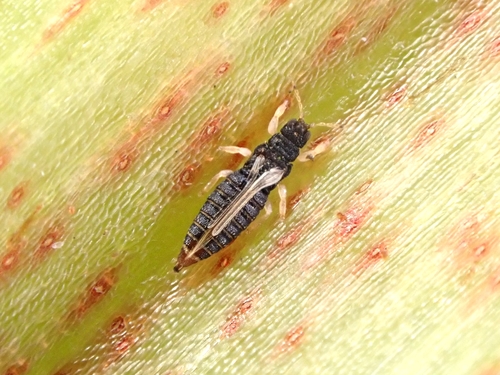

Where it lives
Recorded sightings
—
geo-referenced records in GBIF, from museums, herbaria and field observers.
Drag the globe to turn it. Dots are where records exist, not a range map; darker means more records.
In the stacks
Searching the stacks…
Every page naming Thysanoptera in the Biodiversity Heritage Library →
This page is assembled live from iNaturalist, GBIF, Wikipedia, the Source Library and the Internet Archive. It is not yet part of the hand-edited codex. iNaturalist taxon 83201.