- Plants
- ›Vascular Plants
- ›flowering plants
- ›Dicots
- ›Guinea-flowers and allies
- ›Guinea-flower family
- ›Hibbertia
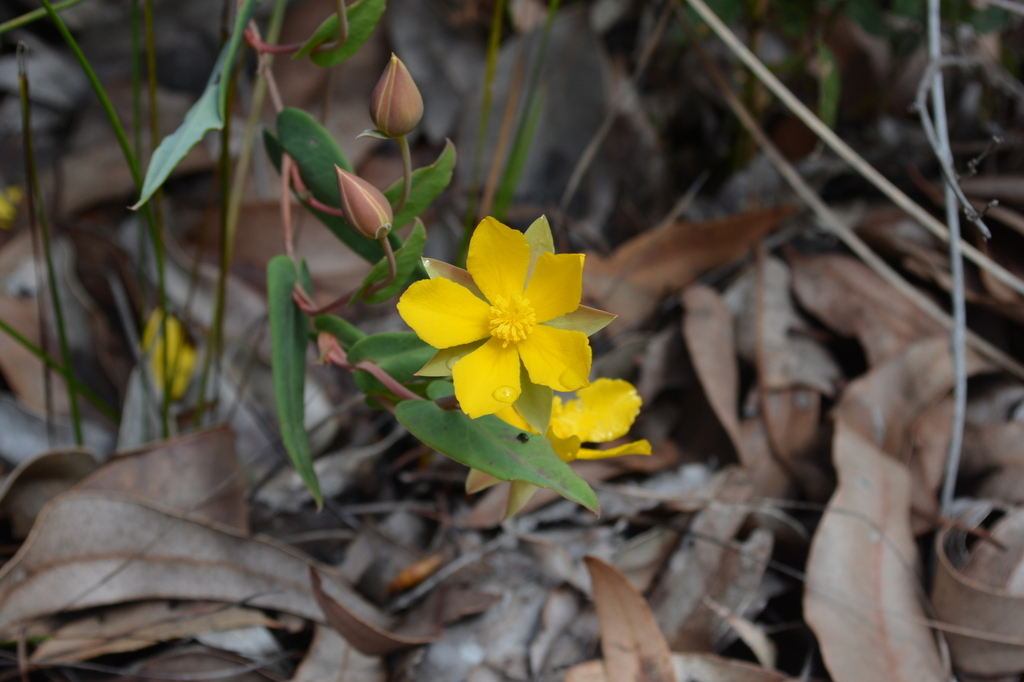
Hibbertia amplexicaulis
Hibbertia amplexicaulis is a species of flowering plant in the family Dilleniaceae and is endemic to Western Australia. It is a prostrate, sprawling, straggling or ascending shrub that typically grows to a height of 0.1–0.6 m (3.9 in – 1 ft 11.6 in), rarely as tall as 1 m (3 ft 3 in). It blooms between August and March producing yellow flowers. It was first formally described in 1845 by Ernst Gottlieb von Steudel in Lehmann's Plantae Preissianae. The specific epithet (amplexicaulis) means "stem-clasping", referring to the leaves.
This species is found throughout the Peel, southern Wheatbelt, South West and Great Southern regions of Western Australia in coastal areas, swamps and ridges where it grows in sandy lateritic or granitic soils, often over limestone.
Where it lives
Recorded sightings
—
geo-referenced records in GBIF, from museums, herbaria and field observers.
Drag the globe to turn it. Dots are where records exist, not a range map; darker means more records.
In the stacks
Searching the stacks…
Every page naming Hibbertia amplexicaulis in the Biodiversity Heritage Library →
This page is assembled live from iNaturalist, GBIF, Wikipedia, the Source Library and the Internet Archive. It is not yet part of the hand-edited codex. iNaturalist taxon 83597.