- Plants
- ›Vascular Plants
- ›flowering plants
- ›Dicots
- ›Mints, Plantains, Olives, and Allies
- ›bladderwort family
- ›Utricularia
- ›Utricularia
- ›Orchidioides
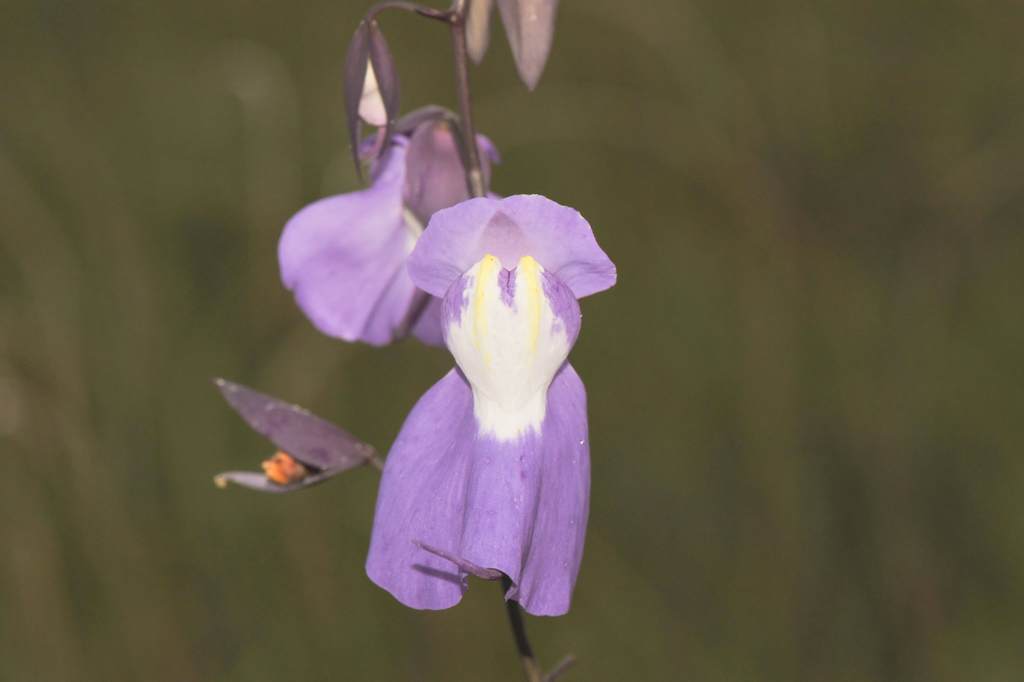
Utricularia humboldtii
Utricularia humboldtii is a large perennial carnivorous plant that belongs to the genus Utricularia. Peter Taylor lists it as either an "aquatic-epiphyte", a subaquatic or a terrestrial species. U. humboldtii is endemic to South America, where it is found in Brazil, Guyana, and Venezuela. It was originally published and described by Robert Hermann Schomburgk in 1840. It is usually found growing in the water-filled leaf axils of some species of bromeliad, including Brocchinia micrantha, B. tatei, and B. reducta and also plants in the genus Orectanthe. It also grows as an epiphyte on tree trunks or as a subaquatic or terrestrial species in shallow water or wet soil in open savanna. It is found mostly between altitudes of 1,200 m (3,937 ft) and 2,500 m (8,202 ft), though it has been found at altitudes as low as 300 m (984 ft). It has been collected in flower throughout every month of the year.
U. humboldtii possess the largest flower of the genus and most likely also the largest bladder traps. As it usually lives within the water-filled leaf axils of bromeliads, it occasionally needs to search for new pools of water, so it sends out upright stolons that find nearby bromeliads, descend into the water, and grow into a new plant.
Where it lives
Recorded sightings
—
geo-referenced records in GBIF, from museums, herbaria and field observers.
Drag the globe to turn it. Dots are where records exist, not a range map; darker means more records.
In the stacks
Searching the stacks…
Every page naming Utricularia humboldtii in the Biodiversity Heritage Library →
This page is assembled live from iNaturalist, GBIF, Wikipedia, the Source Library and the Internet Archive. It is not yet part of the hand-edited codex. iNaturalist taxon 840996.