- Plants
- ›Vascular Plants
- ›flowering plants
- ›monocots
- ›Agaves, Orchids, Irises, and Allies
- ›amaryllis, onions, and allies
- ›amaryllis subfamily
- ›Hippeastreae
- ›Hippeastrinae
- ›Hippeastrum
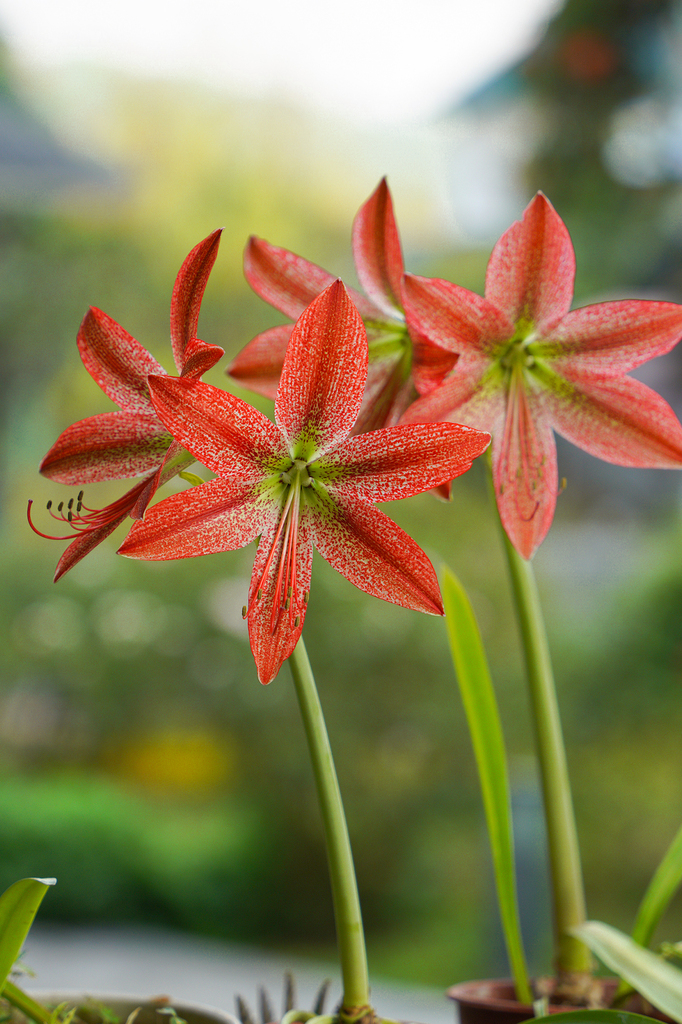
Hippeastrum pardinum
Hippeastrum pardinum is a flowering perennial herbaceous bulbous plant, in the Amaryllidaceae family, from Peru to Bolivia. Originally collected in 1866 by Richard Pearce, it was used in breeding programmes.
From the article Hippeastrum pardinum on Wikipedia (CC BY-SA), quoted section by section
Description
Vermilion spots on a yellowish background, resembling a leopard skin. Short or nearly absent flower tube, floral segments broad, recurved and spreading. Flowers 18 cm in diameter.
Where it lives
Recorded sightings
—
geo-referenced records in GBIF, from museums, herbaria and field observers.
Drag the globe to turn it. Dots are where records exist, not a range map; darker means more records.
In the stacks
Searching the stacks…
Every page naming Hippeastrum pardinum in the Biodiversity Heritage Library →
This page is assembled live from iNaturalist, GBIF, Wikipedia, the Source Library and the Internet Archive. It is not yet part of the hand-edited codex. iNaturalist taxon 841718.