- Fungi Including Lichens
- ›Basidiomycete Fungi
- ›Higher Basidiomycetes
- ›Mushrooms, Bracket Fungi, Puffballs, and Allies
- ›Agaricomycetidae
- ›Common Gilled Mushrooms and Allies
- ›Agaricineae
- ›Field Mushrooms and Allies
- ›Agariceae
- ›Agaricus
- ›Pseudochitonia
- ›Hondenses
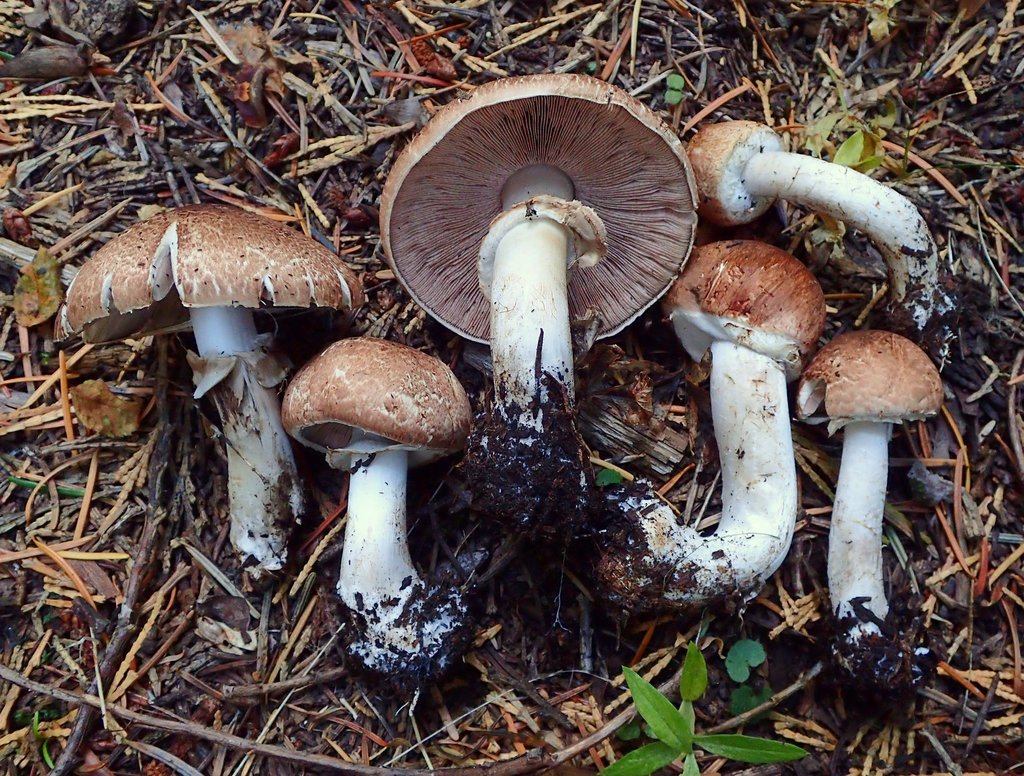
Agaricus subrufescentoides
Agaricus subrufescentoides is a species of mushroom in the family Agaricaceae. It was first described by William Murrill in 1912. Its edibility is unknown, but is suspected to be poisonous due to it being closely related to poisonous species of Agaricus.
From the article Agaricus subrufescentoides on Wikipedia (CC BY-SA), quoted section by section
Description
The cap of Agaricus subrufescentoides is 3–15 centimeters in diameter and tan in color with a reddish brown spot at the center. The cap starts out round, before becoming convex or flat. The stipe is 5–15 centimeters tall and 1.5-4 centimeters wide, with a ring around it. The gills are free and often start out whitish, before becoming pinkish tan and finally brown with age.
Range & habitat
Agaricus subrufescentoides is found in humus and leaf-litter in conifer forests. It fruits during the autumn season.
== References ==
Wikipedia: “Habitat and ecology”
Where it lives
Recorded sightings
—
geo-referenced records in GBIF, from museums, herbaria and field observers.
Drag the globe to turn it. Dots are where records exist, not a range map; darker means more records.
In the stacks
Searching the stacks…
Every page naming Agaricus subrufescentoides in the Biodiversity Heritage Library →
This page is assembled live from iNaturalist, GBIF, Wikipedia, the Source Library and the Internet Archive. It is not yet part of the hand-edited codex. iNaturalist taxon 847559.