- Animals
- ›Arthropods
- ›Hexapods
- ›Insects
- ›Winged and Once-winged Insects
- ›Grasshoppers, Crickets, and Katydids
- ›Katydids, Crickets, and Allies
- ›Katydids, wētā, and allies
- ›Camel Crickets, Cave Crickets, and Cave Wetas
- ›Camel Crickets, Cave Crickets, and Cave Wēta
- ›Cave Wētā
- ›Macropathini
- ›Insulanoplectron
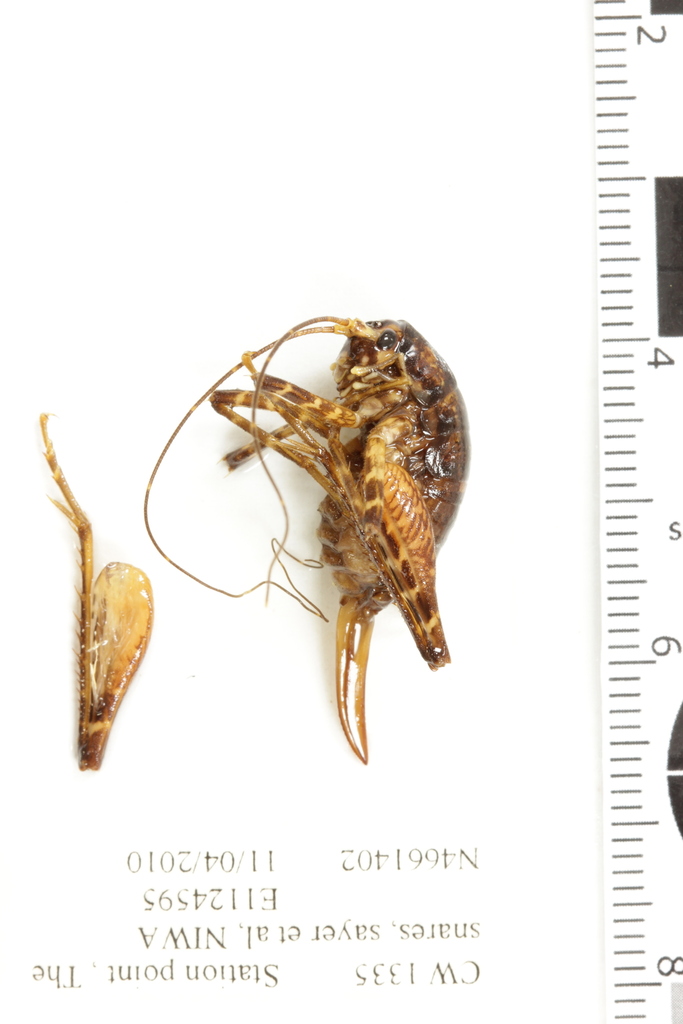
Snares Island wētā
Insulanoplectron spinosum
Insulanoplectron is a genus of cave wētā in the family Rhaphidophoridae, with just two species: the Snares Island Wētā and the Tin tokoriro from Rakiura. Insulanoplectron spinosum is endemic to the subantartic Snares Island where it is considered to be naturally uncommon. Insulanoplectron stanneum is known from a single disused mineshaft on Rakiura/Stewart Island, New Zealand. Rhaphidophoridae are nocturnal crickets often found in caves, all around the world. During the day on the Snares, wētā can be found hiding in seabird burrows.
From the article Insulanoplectron on Wikipedia (CC BY-SA), quoted section by section
Description
Although Insulanoplectron is distinct from other Rhaphidophoridae it has similarities in genital structure with Ischyroplectron hutton, another subantarctic weta. Insulanoplectron spinosum are dark brown in colour with light brown bands around the body, and an ovipositor that is reddish brown colour. Female Insulanoplectron spinosum adults are larger than males. Body length of adult males is around 14mm while female body length varies between 17 - 18mm. Between the beginning (egg) and final life stages (adult) there are several instar stages that individuals need to moult to allow for features to transition from being juvenile to those of an adult. Male I. spinosum have eight instar stages, while females have nine of these pre-adult instar stages.
Wikipedia: “Morphology”
Range & habitat
Insulanoplectron spinosum is restricted to the Snares Island which lies 105 km to the south of Stewart Island. Insulanoplectron stanneum is restricted to the Tin Range on Rakiura/Stewart Island, New Zealand
Wikipedia: “Distribution”
What it does
Analysis of I. spinosum diet found that individuals consumed a variety of plants, invertebrates and one vertebrate species. Plants found in the crop of male and female individuals of varying ages was determined to be a combination of algae, vascular plants, and fungi. While invertebrates detected in captured wētā include: Isopoda, Collembola, Tenebrionidae, Lepidoptera, Muscidae. In both male and female wētā Aves had been detected in all individuals regardless of age, this was determined to be seabird carcass. Individuals of I. spinosum have been observed to cannibalise other individuals who are smaller, lethargic, or are missing appendages.
== References ==
Wikipedia: “Diet”
Listen
Looking for field recordings…
Where it lives
Recorded sightings
—
geo-referenced records in GBIF, from museums, herbaria and field observers.
Drag the globe to turn it. Dots are where records exist, not a range map; darker means more records.
In the stacks
Searching the stacks…
Every page naming Insulanoplectron spinosum in the Biodiversity Heritage Library →
This page is assembled live from iNaturalist, GBIF, Wikipedia, the Source Library and the Internet Archive. It is not yet part of the hand-edited codex. iNaturalist taxon 85181.