- Animals
- ›Arthropods
- ›Hexapods
- ›Insects
- ›Winged and Once-winged Insects
- ›Ants, Bees, Wasps, and Sawflies
- ›Narrow-waisted Wasps, Ants, and Bees
- ›Ants, Bees, and Stinging Wasps
- ›Bees and Apoid Wasps
- ›Bees
- ›Honey Bees, Bumble Bees, and Allies
- ›Apine Bees
- ›Bombini
- ›Bombus
- ›Thoracobombus
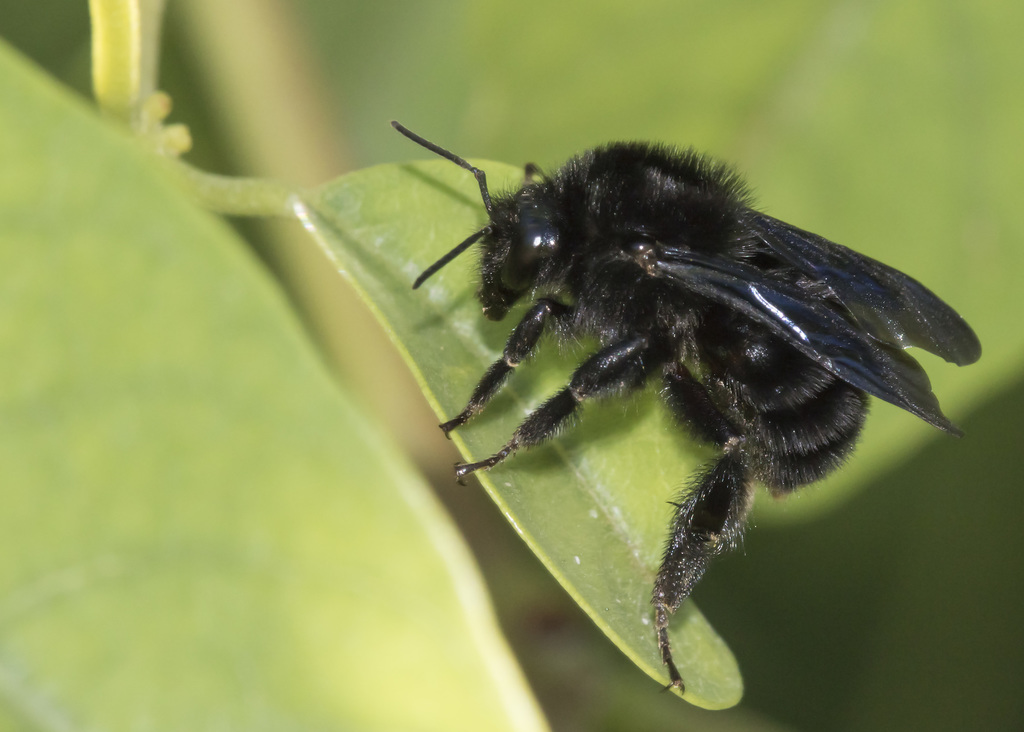
Paulista Bumble Bee
Bombus pauloensis
Bombus pauloensis is a neotropical bumblebee, formerly known as Bombus atratus, that is found throughout regions of South America, including Colombia, Ecuador, Brazil, Uruguay and Argentina. It lives in social colonies that include a founder queen/queens, workers and brood. B. pauloensis is somewhat unusual because of its potential to oscillate between polygynous (multiple queens) and monogynous (one queen) nesting cycles. Bombus pauloensis was the first species in the genus Bombus that was discovered to display such polygynous nesting patterns. The polygynous nesting cycles lead to certain specific types of behavior including queen-queen aggression. Nests can also be perennial, which is a characteristic rarely found in other bumblebees.
B. pauloensis can be helpful to agricultural because of their ability to pollinate different species of plants. B. pauloensis has been found to occupy a range of geographic areas and climates throughout South America. Colonies have the ability to thermoregulate nests and keep them a little bit warmer than the outside environment. Foraging workers use muscle contractions to maintain stable temperatures and coupe with seasonal and daily fluctuations in temperature.
From the article Bombus pauloensis on Wikipedia (CC BY-SA), quoted section by section
Description
B. pauloensis are predominantly black in color. The thorax of the bee is completely black while the abdomen is black with a small amount of paler hair towards the apex. B. pauloensis have a long tongue that facilitates the process of retrieving nectar from flowers with deep corollas. The antennae of B. pauloensis are also relatively long. Workers have a wing length that ranges between 4 and 10 mm. Queens are usually two to three times the mass of workers.
Wikipedia: “Description and identification”
Range & habitat
B. pauloensis nests are usually found above the ground. Nests have been found in an array of different locations, including warm, tropical areas and cold, high altitude environments. Such a diverse geographic distribution illustrates how B. pauloensis has the ability to adapt to a wide range of conditions and pollen sources. Although most nests are built on the ground, nests have been found elevated in trees above the ground. Research indicates that climate dictates whether a particular nest will oscillate between polygynous and monogynous cycles. B. pauloensis are found throughout South America, including Colombia, Ecuador, Brazil, and Argentina.
Wikipedia: “Distribution and habitat”
What it does
Agonistic behaviors have been recorded between B. pauloensis queens in colonies that are in polygynous phases. These interactions are mainly a result of queens establishing and maintaining specific territories within the brood clump. In such environments, queens guard their brood clump territories by lunging at other queens that may intrude into their territory. Conflicts between queens in such environments can lead to the death and expulsion of rival queens by the dominant queen. After all of the other queens are expelled, the dominant queen will take over the colony and initiate the monogynous phase of the colony life cycle. Relative levels of queen aggression and dominance correlate with a number of physical indicators including, ovary size, age.
Wikipedia: “Queen–queen interactions”
Listen
Looking for field recordings…
Where it lives
Recorded sightings
—
geo-referenced records in GBIF, from museums, herbaria and field observers.
Drag the globe to turn it. Dots are where records exist, not a range map; darker means more records.
In the stacks
Searching the stacks…
Every page naming Bombus pauloensis in the Biodiversity Heritage Library →
This page is assembled live from iNaturalist, GBIF, Wikipedia, the Source Library and the Internet Archive. It is not yet part of the hand-edited codex. iNaturalist taxon 856068.