- Animals
- ›Arthropods
- ›Hexapods
- ›Insects
- ›Winged and Once-winged Insects
- ›True Bugs, Hoppers, Aphids, and allies
- ›Plant-parasitic Hemipterans
- ›Scale Insects
- ›Soft scales
- ›Eulecaniinae
- ›Eulecanium
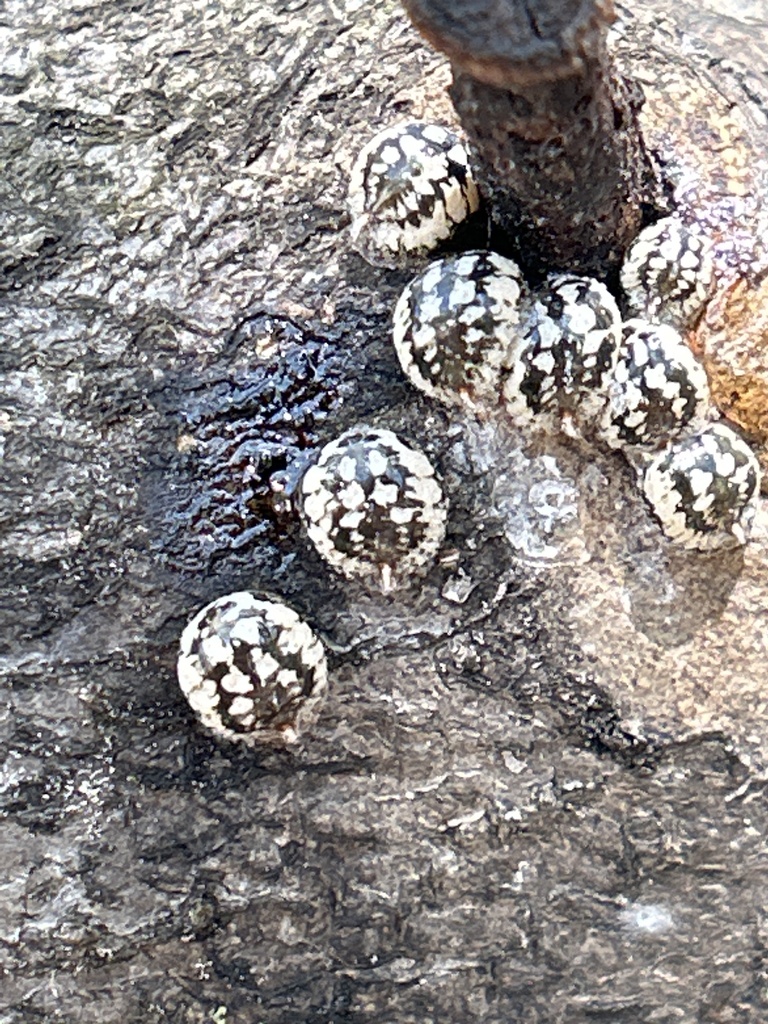
calico scale
Eulecanium cerasorum
Eulecanium cerasorum, the calico scale, is a species of scale insect. It can be identified by its white and brown color on its outer circular shell which will continuously darken over age. It is approximately one quarter of an inch in diameter. The Calico Scale is a pest to many trees in the United States, including dogwoods, honey locust, magnolias, maples, sweetgums and fruit trees. This pest typically attacks the branches which stresses the trees. Mature females produce honeydew, which promotes the growth of mold around the tree.
The nymph migrates along a tree branch, then settles down and creates a circular hardened shell or cap to be its protective coat against predators and pesticides. The typical female is known to lay around 4500 eggs inside its cap.
Listen
Looking for field recordings…
Where it lives
Recorded sightings
—
geo-referenced records in GBIF, from museums, herbaria and field observers.
Drag the globe to turn it. Dots are where records exist, not a range map; darker means more records.
In the stacks
Searching the stacks…
Every page naming Eulecanium cerasorum in the Biodiversity Heritage Library →
This page is assembled live from iNaturalist, GBIF, Wikipedia, the Source Library and the Internet Archive. It is not yet part of the hand-edited codex. iNaturalist taxon 882990.