- Plants
- ›Vascular Plants
- ›flowering plants
- ›Dicots
- ›Soapberries, Cashews, Mahoganies, and Allies
- ›Cashew Family
- ›cashews, sumacs, and allies
- ›Campnosperma
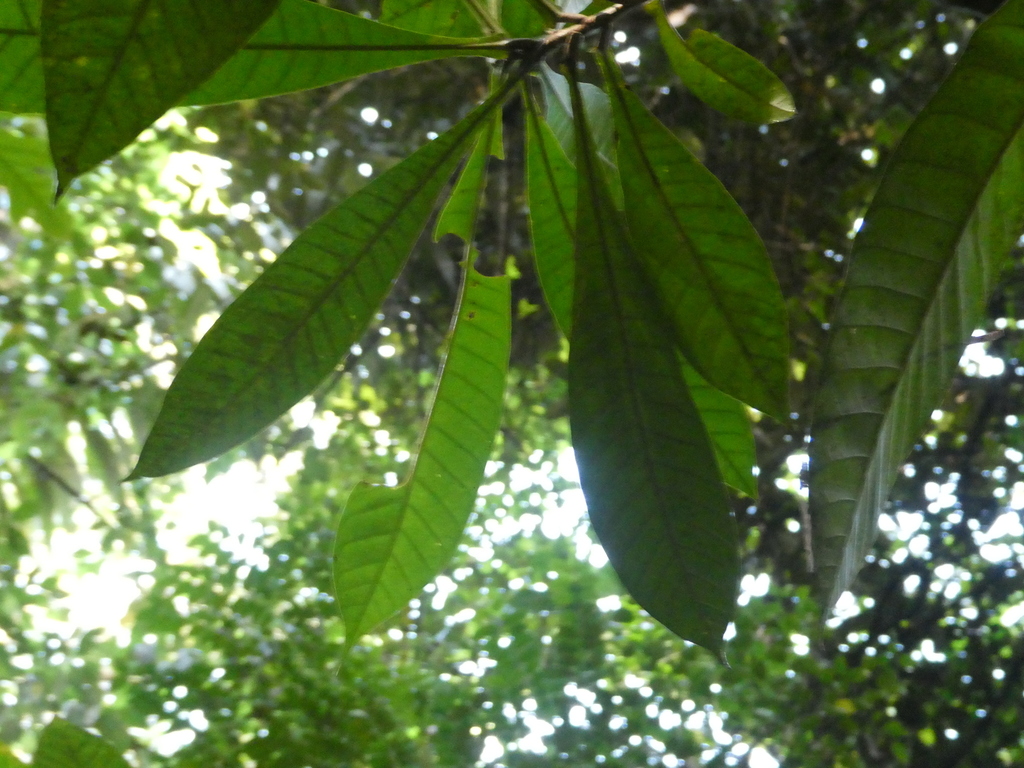
Campnosperma squamatum
Campnosperma squamatum is a tree in the cashew and sumac family Anacardiaceae. The specific epithet squamatum means 'scaly', referring to the leaf surface.
From the article Campnosperma squamatum on Wikipedia (CC BY-SA), quoted section by section
Description
Campnosperma squamatum grows as a tree up to 25 metres (80 ft) tall with a trunk diameter of up to 55 cm (22 in). Its yellowish-grey bark is smooth to scaly. The flowers are greenish yellow. The roundish fruits measure up to 1.7 cm (1 in) in diameter and are coloured green and white when fresh. The tree is a food source for gibbons in Sabangau National Park in Kalimantan.
Range & habitat
Campnosperma squamatum grows naturally in Peninsular Malaysia, Singapore and Borneo. Its habitat is in lowland areas: in swamps, kerangas forests and hill forests up to 600 m (2,000 ft) altitude.
== References ==
Wikipedia: “Distribution and habitat”
Where it lives
Recorded sightings
—
geo-referenced records in GBIF, from museums, herbaria and field observers.
Drag the globe to turn it. Dots are where records exist, not a range map; darker means more records.
In the stacks
Searching the stacks…
Every page naming Campnosperma squamatum in the Biodiversity Heritage Library →
This page is assembled live from iNaturalist, GBIF, Wikipedia, the Source Library and the Internet Archive. It is not yet part of the hand-edited codex. iNaturalist taxon 898197.