- Plants
- ›Vascular Plants
- ›flowering plants
- ›Dicots
- ›Soapberries, Cashews, Mahoganies, and Allies
- ›Cashew Family
- ›cashews, sumacs, and allies
- ›Gluta
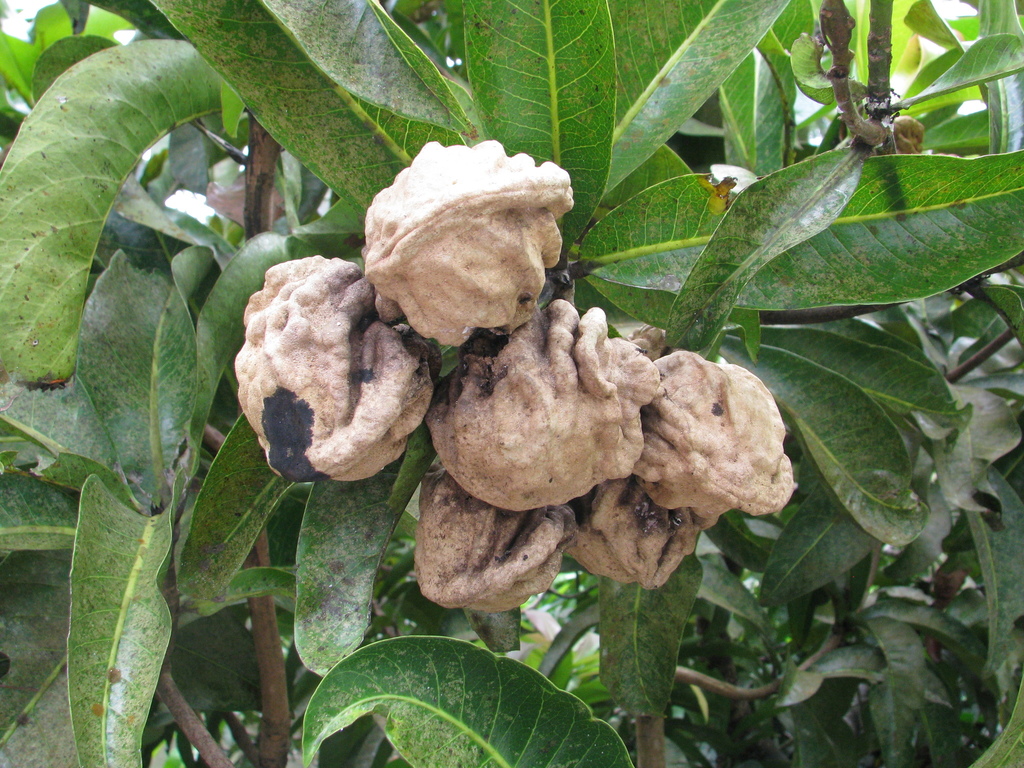
Gluta velutina
Gluta velutina is a plant of tropical Asia in the cashew and sumac family Anacardiaceae. The specific epithet velutina is from the Latin meaning 'velvety', referring to the inflorescences.
From the article Gluta velutina on Wikipedia (CC BY-SA), quoted section by section
Description
Gluta velutina grows as a shrub or tree up to 7 metres (20 ft) tall, with stilt-roots. Its smooth bark is brownish. The leaves measure up to 19 cm (7 in) long. The flowers are white. Its roundish, pale brown fruits measure up to 7.5 cm (3 in) in diameter. The wood can cause dermatitis and the fruit and leaves are poisonous.
Range & habitat
Gluta velutina grows naturally in Burma, Thailand, Vietnam, Sumatra, Peninsular Malaysia, Borneo and Java. Its habitat is tidal rivers and it is often found with the species Barringtonia conoidea and Pandanus helicopus.
== References ==
Wikipedia: “Distribution and habitat”
Where it lives
Recorded sightings
—
geo-referenced records in GBIF, from museums, herbaria and field observers.
Drag the globe to turn it. Dots are where records exist, not a range map; darker means more records.
In the stacks
Searching the stacks…
Every page naming Gluta velutina in the Biodiversity Heritage Library →
This page is assembled live from iNaturalist, GBIF, Wikipedia, the Source Library and the Internet Archive. It is not yet part of the hand-edited codex. iNaturalist taxon 898216.