- Plants
- ›Vascular Plants
- ›flowering plants
- ›Dicots
- ›Roses, Elms, Figs, and Allies
- ›rose family
- ›brambles, roses, strawberries, and allies
- ›agrimonies and burnets
- ›agrimony subtribe
- ›Spenceria
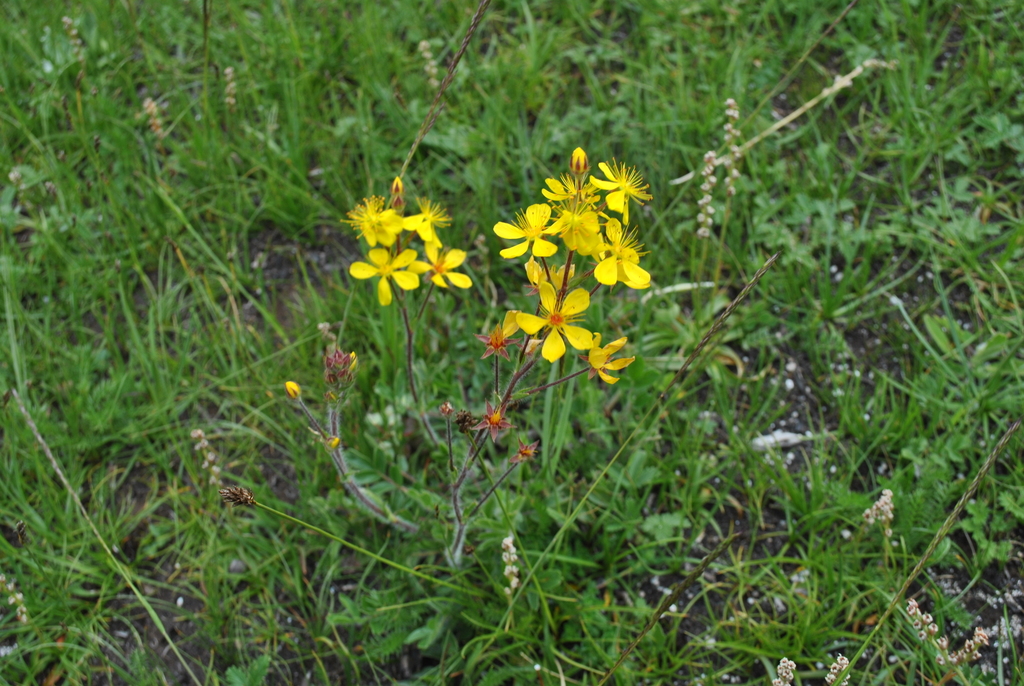
Spenceria ramalana
Spenceria ramalana is the lone species in the plant genus Spenceria, known by two varieties. S. ramalana grows from 18–32 cm. tall, and puts out yellow flowers from July through August; bearing fruit (yellowish-brown achenes) from September to October. The Chinese name, ma ti huang [马蹄黄], can be translated to mean "yellow horseshoe".
From the article Spenceria on Wikipedia (CC BY-SA), quoted section by section
Range & habitat
Spenceria ramalana is native to Bhutan and China (in the provinces of Sichuan, Tibet, and Yunnan).
Wikipedia: “Distribution”
At the table
Both varieties of S. ramalana have been used locally in traditional folk medicine.
Wikipedia: “Uses”
In human culture
Henry Trimen, both the genus, and binomial authority of Spenceria, and S. ramalana, respectively, gave an explanation of how he arrived at these names: the genus name was given in honour of Trimen's friend, and fellow botanist, Spencer Moore, who was employed at the Kew Herbarium. Trimen thought about choosing a name commemorating the collector of the species, one Captain Gill, R.E., but decided against it, as there already was a genus Gilia (Polemoniaceae), and he wished to avoid, in his words, "the formation of another of precisely similar sound." As the species was collected from a mountain named Ra-Ma-La, it is likely that the specific epithet "ramalana" was chosen as a toponym (the suffix "-ana" meaning "belonging to", hence "from Ra-Ma-La").
Wikipedia: “Etymology”
Where it lives
Recorded sightings
—
geo-referenced records in GBIF, from museums, herbaria and field observers.
Drag the globe to turn it. Dots are where records exist, not a range map; darker means more records.
In the stacks
Searching the stacks…
Every page naming Spenceria ramalana in the Biodiversity Heritage Library →
This page is assembled live from iNaturalist, GBIF, Wikipedia, the Source Library and the Internet Archive. It is not yet part of the hand-edited codex. iNaturalist taxon 915548.