- Plants
- ›Vascular Plants
- ›flowering plants
- ›Dicots
- ›Mints, Plantains, Olives, and Allies
- ›Mint Family
- ›Nepetoideae
- ›Ocimeae
- ›Lavandulinae
- ›Lavandula
- ›Fabricia
- ›Pterostoechas
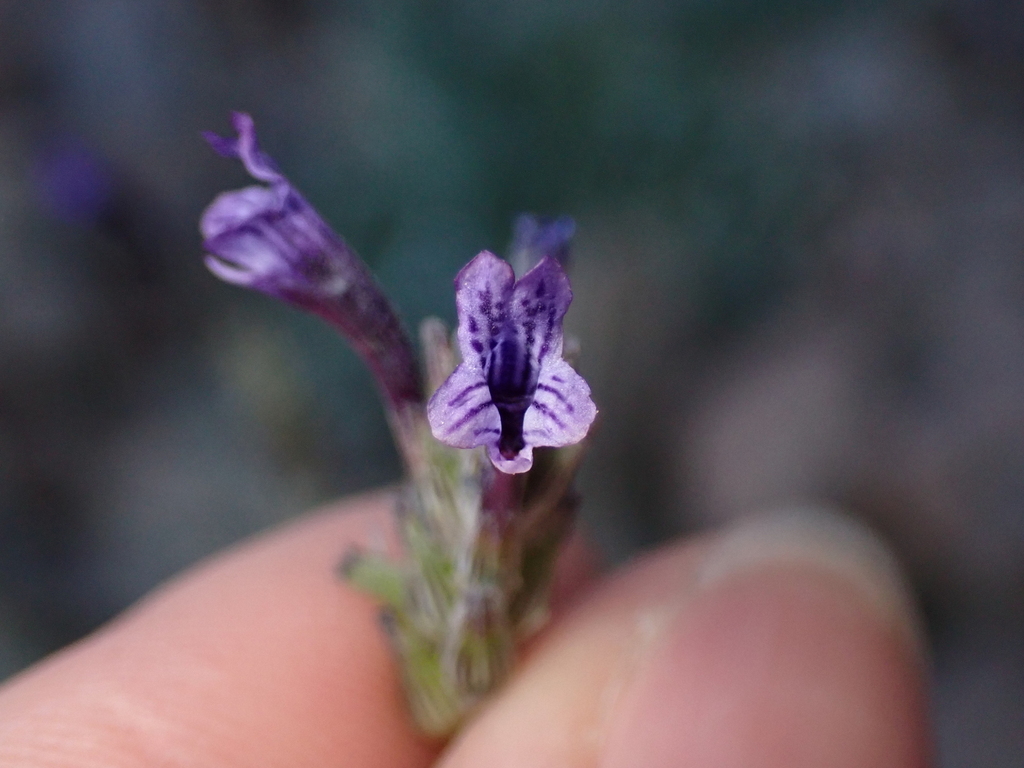
Moroccan Lavender
Lavandula maroccana
Lavandula maroccana, or Moroccan lavender, is a species of herbaceous flowering plant in the family Lamiaceae. It is endemic to Morocco.
From the article Lavandula maroccana on Wikipedia (CC BY-SA), quoted section by section
Description
L. maroccana is a perennial shrub with erect, sparsely glabrescent stems measuring between 50 and 80 cm (20 and 31 in) in height, and long, rather bare, sprawling stems. Leaves are pinnate.The spike is short, stout and compact, with fragrant, dark violet flowers.
Range & habitat
Lavandula maroccana is a very local species, limited to the High Atlas, Anti Atlas and Middle Atlantic Morocco. Populations show a varied abundance, with very rare occurrences in some locations. The species appears to be of frequent occurrence in the western High Atlas where it occurs from almost sea level (Cap Rhir, North of Agadir) to about 1,700 m (5,580 ft) in arid and semi-arid bio-climate. Most of the subpopulations are isolated, and the species is considered vulnerable.
Wikipedia: “Habitat”
In medicine
Lavandula maroccana is widely used in traditional medicine. It has antifungal and antimicrobial properties. It is used locally to treat general pain, stomach ache, and menstrual cramps by adding it to tea or an infusion. It is also used in infusion, decoction or powder to treat digestions, diarrhoea, and fever. L. maroccana is also commonly used as flavouring for tea and coffee.
== References ==
Wikipedia: “Medicinal use”
Where it lives
Recorded sightings
—
geo-referenced records in GBIF, from museums, herbaria and field observers.
Drag the globe to turn it. Dots are where records exist, not a range map; darker means more records.
In the stacks
Searching the stacks…
Every page naming Lavandula maroccana in the Biodiversity Heritage Library →
This page is assembled live from iNaturalist, GBIF, Wikipedia, the Source Library and the Internet Archive. It is not yet part of the hand-edited codex. iNaturalist taxon 919807.