- Animals
- ›Arthropods
- ›Hexapods
- ›Insects
- ›Winged and Once-winged Insects
- ›Dragonflies and Damselflies
- ›Dragonflies
- ›Aeshnoidea
- ›Darners
- ›Aeshna
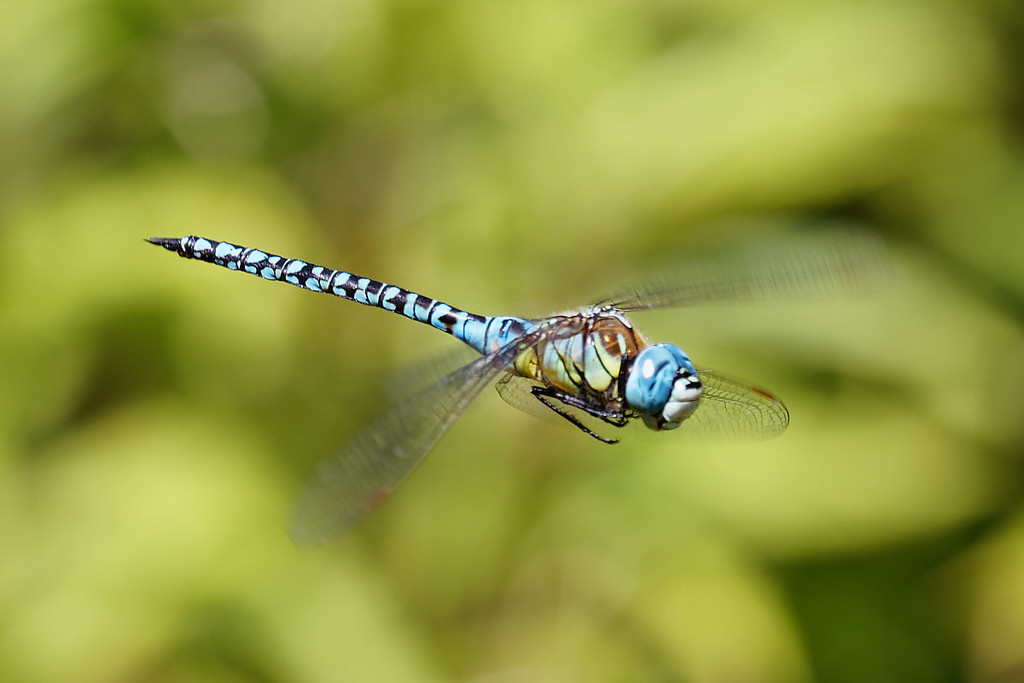
Southern Migrant Hawker
Aeshna affinis
Aeshna affinis, the southern migrant hawker or blue-eyed hawker, is a dragonfly found in southern Europe and Asia. It is in the family Aeshnidae and is very similar in appearance to A. mixta.
From the article Aeshna affinis on Wikipedia (CC BY-SA), quoted section by section
Range & habitat
Aeshna affinis is found in southern and central Europe and all around the Mediterranean, in North Africa and the Middle East and across Asia to China. It is found on many Mediterranean islands including Menorca, Corsica, and Sicily. Where it occurs with A. mixta, which has a more northerly distribution, it is less common. It is a migrant species and so is found further northwards in good years.
Wikipedia: “Distribution and habitat”
What it does
Adults emerge in May and are on the wing until September. After emergence the immature adults move away from water and spend a time feeding and becoming sexually mature. This period will last 10 days to many weeks. Males are often seen patrolling low down whereas A. mixta tends to patrol higher up in the trees. After maturation the males patrol well vegetated ponds and lakes looking for females. The female will be grabbed and the pair will copulate. After sperm is transferred the male A. affinis stays with the female for egg laying which is usually in vegetation. A. affinis is the only European Aeshna to lay its eggs in tandem; the only other European hawker to lay eggs in tandem is Anax parthenope. The larval stage usually lasts two years.
Wikipedia: “Behaviour”
Listen
Looking for field recordings…
Where it lives
Recorded sightings
—
geo-referenced records in GBIF, from museums, herbaria and field observers.
Drag the globe to turn it. Dots are where records exist, not a range map; darker means more records.
In the stacks
Searching the stacks…
Every page naming Aeshna affinis in the Biodiversity Heritage Library →
This page is assembled live from iNaturalist, GBIF, Wikipedia, the Source Library and the Internet Archive. It is not yet part of the hand-edited codex. iNaturalist taxon 93426.