 NL·0271
Herbarium of the Nature Library
- Name
- Arapaima gigas
- Family
- Arapaimidae
- Native to
- Amazon basin floodplains of Brazil, Peru, Colombia and Ecuador, and the Essequibo (Guyana); introduced to Bolivia and parts of Asia
- Habitat
- Floodplain lakes (várzea), Flooded forest, Slow rivers
Arapaima (pirarucu)
Arapaima gigas
Also calledPirarucu (Portuguese, from Tupi 'red fish') · Paiche (Spanish, Peru/Bolivia) · Warapaima (Guyana)
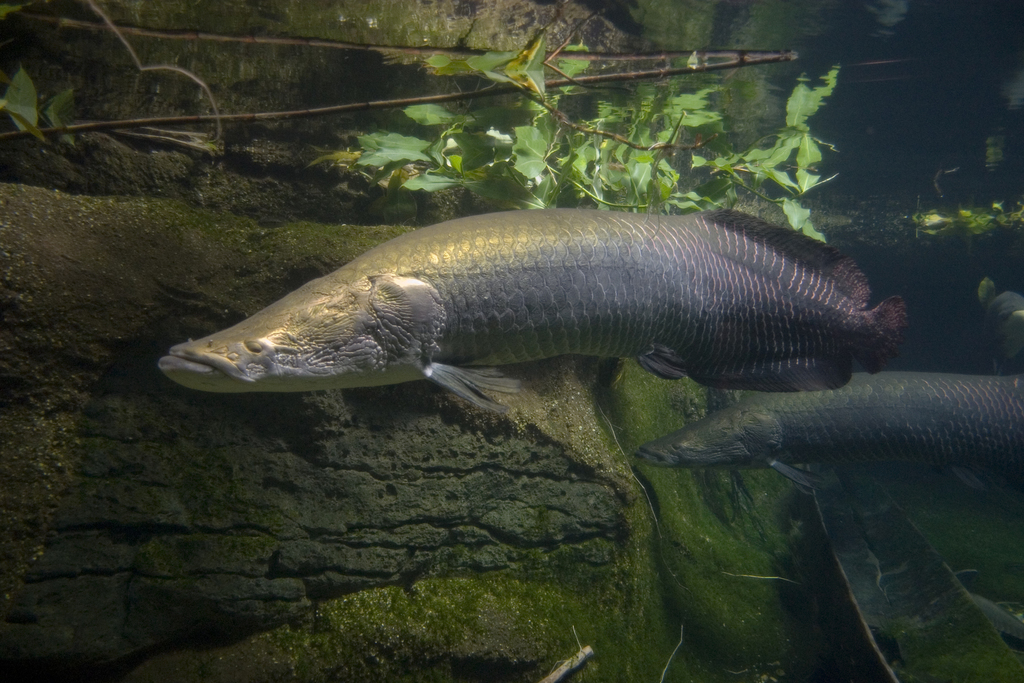
One of the largest scaled freshwater fish in the world, a red-tailed giant of Amazonian floodplain lakes that must rise to gulp air every few minutes. Overfishing almost wiped it out, and community-managed lakes have brought it back.
Arapaima gigas, also known simply as Arapaima, pirarucu, or paiche, is a species of arapaima native to the basin of the Amazon River. Once believed to be the sole species in the genus, it is among the largest freshwater fish. It is the best-known species of Arapaimas. Wikipedia
What it can do
- iObligate air-breather: it gulps air into a lung-like swim bladder and drowns if kept from the surface
- iiHas layered, mineralised scales that resist piranha bites, a structure studied by materials scientists
- iiiThe male guards the young, which school around his head, and is thought to release substances from his head that nourish or signal to them
- ivGrows to about 3 m and over 200 kg
In the field
Field marks
- aHuge, elongate cylindrical body with a flattened, bony head
- bVery large scales; rear body and tail flushed bright red, especially in breeding season
- cDorsal and anal fins set far back near the rounded tail
- dUpturned mouth
- Not to be confused with
- Silver arowana (Osteoglossum) is much smaller and flattened, with chin barbels and long dorsal and anal fins. Several other Arapaima species have been described (A. leptosoma, A. mapae and others); most wild fish of the central Amazon are A. gigas.
- Where to see it
- Mamirauá Sustainable Development Reserve (Amazonas, Brazil); Pacaya-Samiria National Reserve (Peru); Rupununi wetlands (Guyana)
- When
- Resident; nests during low and rising water, roughly September–February in the central Amazon
Life & habits
- Diet
- Carnivore: fish (especially catfish and characins), crustaceans, and occasionally birds and small animals at the surface
- Habitat
- Calm floodplain lakes, oxbows and flooded forest of whitewater and clearwater rivers
- Size
- Commonly 2 m and 100 kg; up to about 3 m and 200 kg
- Lifespan
- Around 15–20 years in the wild
Surfaces every 5–15 minutes with a loud gulp, which fishermen use to count fish. Pairs dig nests in sandy lake beds at low water, and the male guards the fry for months.
Where it lives
Recorded sightings
—
geo-referenced records in GBIF, from museums, herbaria and field observers.
Native range
Amazon basin floodplains of Brazil, Peru, Colombia and Ecuador, and the Essequibo (Guyana); introduced to Bolivia and parts of Asia
Drag the globe to turn it. Dots are where records exist, not a range map; darker means more records.
In the stacks
Searching the stacks…
Every page naming Arapaima gigas in the Biodiversity Heritage Library →
Marginalia
In Mamirauá, Brazil, from 1999 local fishers began counting pirarucu by their breaths at the surface and setting their own quotas. Fish numbers in managed lakes rose several-fold, and the method has spread across the Amazon.
Curiosity
The arapaima's tongue is bony and toothed. Amazonian people traditionally dried it to use as a rasp for grating guaraná seeds.
Kinship



Photographs: iNaturalist contributors under the licences shown. Records: GBIF.org. Historical plates: Source Library (CC BY-SA 4.0; originals public domain). Summary text: Nature Library editors and Wikipedia (CC BY-SA). Medicinal and edibility notes are historical and educational, not advice. iNaturalist taxon 94494.