- Animals
- ›Arthropods
- ›Hexapods
- ›Insects
- ›Winged and Once-winged Insects
- ›Ants, Bees, Wasps, and Sawflies
- ›Narrow-waisted Wasps, Ants, and Bees
- ›Ants, Bees, and Stinging Wasps
- ›Vespoid Wasps
- ›Hornets, Paper Wasps, Potter Wasps, and Allies
- ›Hornets and Yellowjackets
- ›Vespa
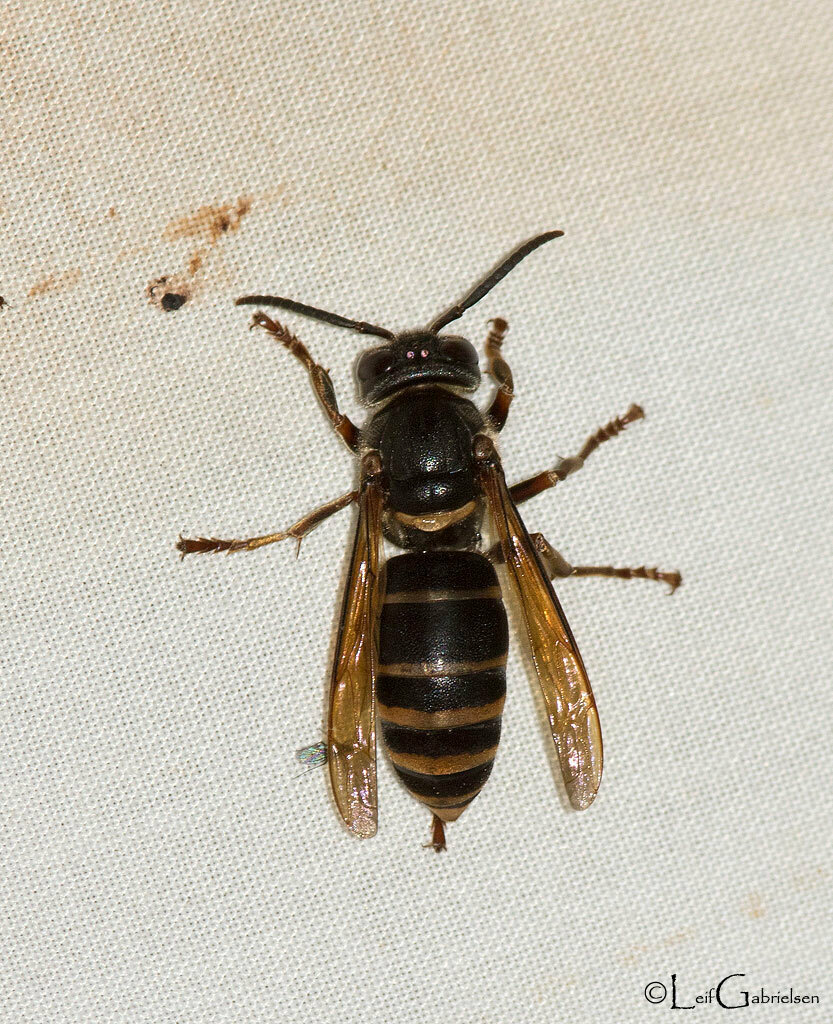
Philippine Hornet
Vespa luctuosa
Vespa luctuosa is a species of hornet which is endemic to the Philippines. The main subspecies is Vespa luctuosa luctuosa (primarily native to Luzon island). Other known subspecies include Vespa luctuosa luzonensis (primarily native to the Visayas, including Leyte island and Samar Island) and Vespa luctuosa negrosensis (native to Negros island). Vespa luctuosa is best known for its potent venom.
From the article Vespa luctuosa on Wikipedia (CC BY-SA), quoted section by section
Toxicity
The venom of Vespa luctuosa has the highest recorded toxicity to mice of any wasp species tested. The LD50 of the venom is 1.6 mg/kg. The toxicity (measured against mice) per weight of Vespa luctuosa venom is higher than that of the larger Asian giant hornet (Vespa mandarinia), which has an LD50 of 4.0 mg/kg, but which is responsible for many more human deaths than Vespa luctuosa due to the considerably larger volume of venom injected per sting. In addition to being the most venomous known wasp, Vespa luctuosa has one of the highest recorded toxicities of any known insect venom. Only harvester ant venom from the genus Pogonomyrmex (especially Pogonomyrmex maricopa), as well as the unrelated ant species Ectatomma tuberculatum, are known to be more toxic. In addition to pain at the sting site(s), symptoms of severe Vespa luctuosa envenomation include convulsions, cyanosis, and hematuria.
Wikipedia: “Venom characteristics”
Listen
Looking for field recordings…
Where it lives
Recorded sightings
—
geo-referenced records in GBIF, from museums, herbaria and field observers.
Drag the globe to turn it. Dots are where records exist, not a range map; darker means more records.
In the stacks
Searching the stacks…
Every page naming Vespa luctuosa in the Biodiversity Heritage Library →
This page is assembled live from iNaturalist, GBIF, Wikipedia, the Source Library and the Internet Archive. It is not yet part of the hand-edited codex. iNaturalist taxon 954067.