- Animals
- ›Arthropods
- ›Crustaceans
- ›Branchiopods
- ›Fairy Shrimps
- ›Brine Shrimp and Fairy Shrimp
- ›Fairy Shrimps
- ›Branchinectidae
- ›Branchinecta
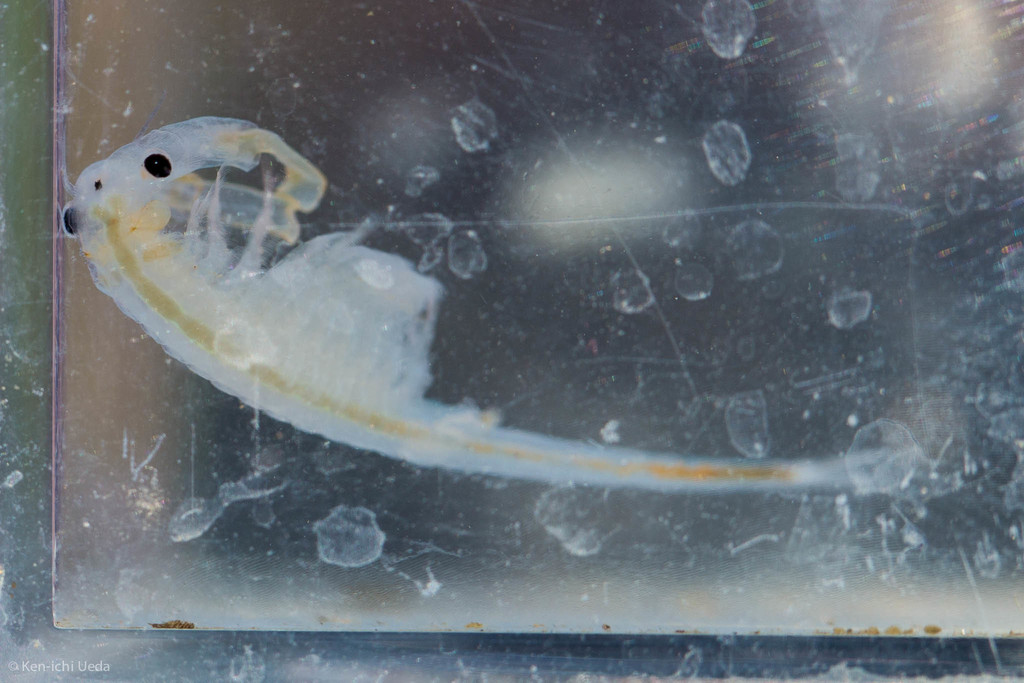
Conservancy Fairy Shrimp
Branchinecta conservatio
The conservancy fairy shrimp (Branchinecta conservatio) is an endangered small crustacean in the family Branchinectidae. It ranges in size from about 1.25 centimetres (0.49 in) to 2.5 centimetres (0.98 in) long. This species is endemic to California in the United States.
Fairy shrimp are aquatic species in the order Anostraca. They have delicate elongate bodies, large stalked compound eyes, no carapaces, and eleven pairs of swimming legs. They glide gracefully upside down, swimming by beating their legs in a complex, wavelike movement that passes from front to back. Fairy shrimp feed on algae, bacteria, protozoa, rotifers and detritus.
From the article Conservancy fairy shrimp on Wikipedia (CC BY-SA), quoted section by section
Range & habitat
The historical distribution of the conservancy fairy shrimp is not known. However, the distribution of vernal pool habitats in the areas where the species is now known to occur were once more continuous and larger in area than they are today. It is likely the conservancy fairy shrimp once occupied suitable vernal pool habitats throughout a large portion of the Central Valley and southern coastal regions of California. It may still exist in unsurveyed pools within this region. The species is currently known from several disjunct populations: Montgomery Field Vernal Pools in San Diego County the Vina Plains in Tehama County, south of Chico in Butte County, the Jepson Prairie Preserve and surrounding area in Solano County, the Sacramento National Wildlife Refuge Complex in Glenn County, Mapes Ranch west of Modesto, San Luis National Wildlife Refuge and the Haystack Mountain/Yosemite Lake area in Merced County, and two locations on the Los Padres National Forest in Ventura County. Known to be found in Minnesota. (Metropolitan Mosquito Control District, special study 2014)
Wikipedia: “Distribution”
What it does
Conservancy fairy shrimp inhabit rather large, moderately turbid cool-water vernal pools which fill with water in the rainy season, then slowly dry up from their outer, more shallow edges to their deeper areas in the center. However, the shrimp are gone long before the pool finally dries up. The fairy shrimp have been spotted and collected in vernal pools from early November to early April. Female fairy shrimp carry their eggs in a ventral brood sac. The eggs are either dropped to the pool bottom or remain in the brood sac until the mother dies and sinks. When the pool dries out, so do the eggs. They remain in the dry pool bed until rains and other environmental stimuli hatch them. Resting fairy shrimp eggs are known as cysts. They are capable of withstanding heat, cold and prolonged desiccation. When the pools refill, some, but not all, of the cysts may hatch. The cyst bank in the soil may contain cysts from several years of breeding. Hatching can begin within the same week that a pool starts to fill. Average time to maturity is forty-nine days. In warmer pools, it can be as few as nineteen.
Wikipedia: “Ecology”
Where it lives
Recorded sightings
—
geo-referenced records in GBIF, from museums, herbaria and field observers.
Drag the globe to turn it. Dots are where records exist, not a range map; darker means more records.
In the stacks
Searching the stacks…
Every page naming Branchinecta conservatio in the Biodiversity Heritage Library →
This page is assembled live from iNaturalist, GBIF, Wikipedia, the Source Library and the Internet Archive. It is not yet part of the hand-edited codex. iNaturalist taxon 96013.