- Animals
- ›Arthropods
- ›Crustaceans
- ›Branchiopods
- ›Fairy Shrimps
- ›Brine Shrimp and Fairy Shrimp
- ›Fairy Shrimps
- ›Branchinectidae
- ›Branchinecta
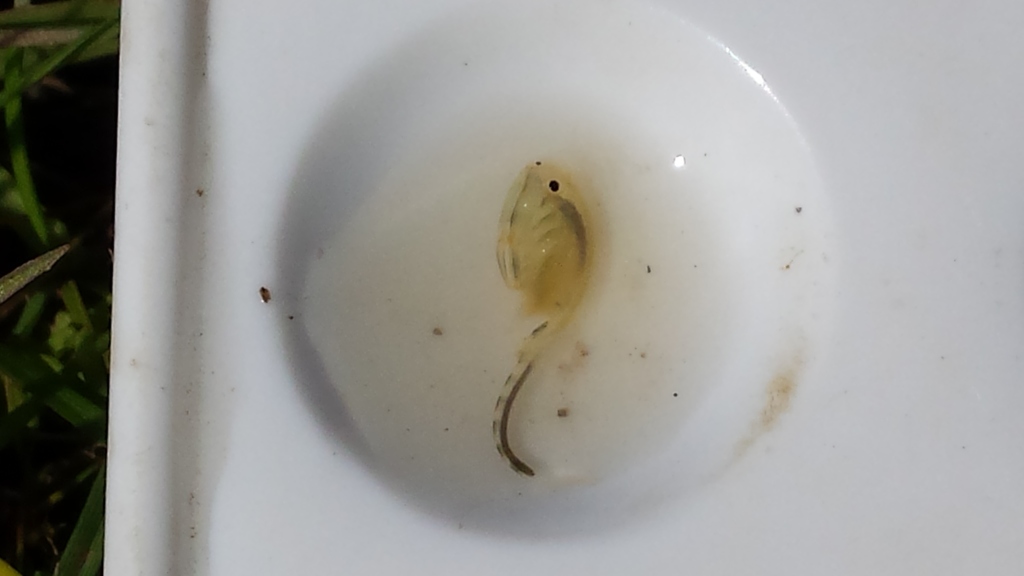
Vernal Pool Fairy Shrimp
Branchinecta lynchi
The vernal pool fairy shrimp, Branchinecta lynchi, is a species of freshwater crustacean in the family Branchinectidae. It is endemic to the U.S. states of Oregon and California, living in vernal pools as well as non-vernal pool habitat. They range in size from 0.43 to 0.98 inches (11 to 25 mm) long. Vernal pool fairy shrimp are listed as a vulnerable species on the IUCN Red List, and has been listed as Federally Threatened species since 1994.
From the article Branchinecta lynchi on Wikipedia (CC BY-SA), quoted section by section
Description
Vernal pool fairy shrimp are usually translucent, however some have been observed to be white or orange. They feature stalked compound eyes, no carapace, and eleven pairs of legs. Male fairy shrimp can be identified by large antennae called claspers, which distinguish them from their female counterparts. The fairy shrimp swim by moving their legs from front to back in a wave-like motion. They are known for their unique swimming orientation, as they swim "upside down." Vernal pool fairy shrimp require cooler water with low alkalinity and low total dissolved solids that can often be found in smaller pools about six inches deep. The vernal pool fairy shrimp's natural predators include the vernal pool tadpole shrimp, or Lepidurus packardi, salamanders, and beetle larvae. Vernal pools are the ideal habitat for vernal pool fairy shrimp, as they typically cannot sustain larger aquatic predators that may pose a threat to the shrimp due to their drying tendencies.
Range & habitat
As suggested by their name, vernal pool fairy shrimp live in vernal pools vernal pools which are seasonal wetlands. These pools form when shallow basins are filled with seasonal precipitation, creating a short term habitat for fairy shrimp and other species that call vernal pools their home. Eventually, the vernal pools dry up and the habitat disappears until the next precipitation season. Vernal pool fairy shrimp have been found in southern Oregon, and parts of California. They can survive if the pool's temperature is between 43 °F (6 °C) and 68 °F (20 °C). In Oregon, they have been discovered in the Agate Desert, around Agate Lake, and on the Upper and Lower Table Rocks. In California, fairy shrimp have been found in 33 locations in the Central Valley from Shasta County to Tulare County, and in the Coast Range from Solano County to San Benito County. They have also been found near Soda Lake, Santa Barbara County, the Santa Rosa Plateau, San Diego County and Riverside County. Branchinecta lynchi can live in groups within the vernal pools of densities up to 200 shrimp per liter of water.
Wikipedia: “Habitat”
What it does
Vernal pool fairy shrimp eat algae, bacteria, protozoa, rotifers, and detritus. The fairy shrimp uses its legs to scrape food from hard surfaces. To help them digest their meals, they create a thick, glue-like substance to mix with their food.
Wikipedia: “Diet”
Where it lives
Recorded sightings
—
geo-referenced records in GBIF, from museums, herbaria and field observers.
Drag the globe to turn it. Dots are where records exist, not a range map; darker means more records.
In the stacks
Searching the stacks…
Every page naming Branchinecta lynchi in the Biodiversity Heritage Library →
This page is assembled live from iNaturalist, GBIF, Wikipedia, the Source Library and the Internet Archive. It is not yet part of the hand-edited codex. iNaturalist taxon 96016.