- Plants
- ›Vascular Plants
- ›flowering plants
- ›Dicots
- ›Mints, Plantains, Olives, and Allies
- ›Mint Family
- ›Nepetoideae
- ›Mentheae
- ›balms, mints, and thymes
- ›Mentha
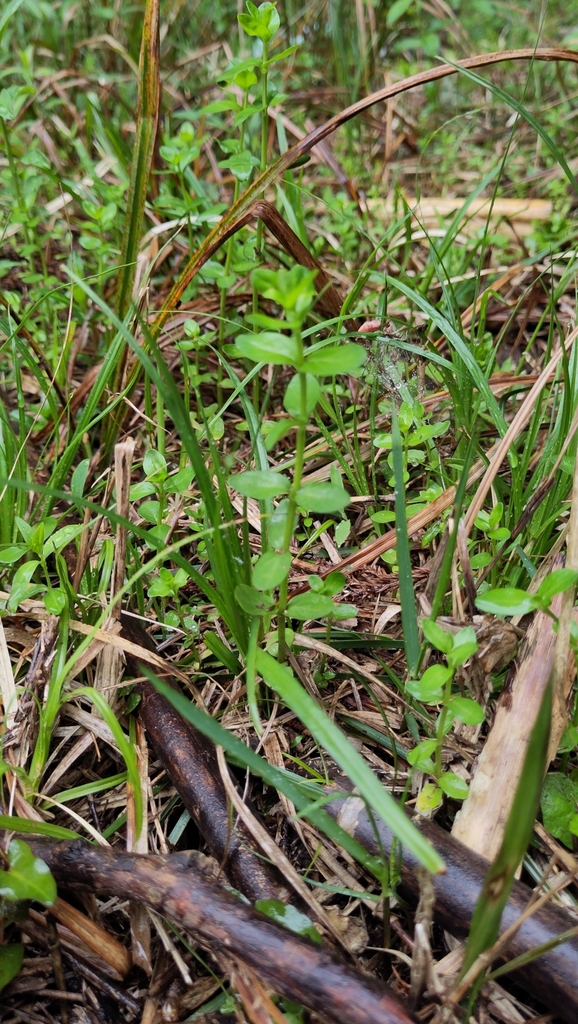
Mentha japonica
Mentha japonica is a species of plant in the family Lamiaceae, endemic to the islands of Hokkaido and Honshu, Japan. Initially described as Micromeria japonica by Friedrich Anton Wilhelm Miquel, it was first identified under its present name by Japanese botanist Tomitaro Makino in 1906. A relatively rare plant, it is classified by the Japanese Ministry of Environment as a Near Threatened species.
From the article Mentha japonica on Wikipedia (CC BY-SA), quoted section by section
Description
Mentha japonica is a perennial plant which grows to a height of 20-40 centimeters. It spreads and reproduces clonally via thin rhizomes. Its leaves are oblong with entire margins, and its flowers vary from white to pale violet. It has an odor similar to pennyroyal (m. pulegium). The essential oil components of M. japonica appear to be variable. One 1970 survey found the primary constituents to be menthone (50.8%), isomenthone (18.6%) and pulegone (12.6%). Other chemical constituents identified in smaller amounts include 3-Octanone, 3-Octonal, d-Limonene, alpha-Pinene, beta-Pinene, Menthyl acetate and Piperitone. These numbers were broadly confirmed by a follow-up survey, but an analysis shortly after (1978) found a significantly higher pulegone content (50%) and lower menthone content (27.9%). A study of wild plants in Hokkaido recorded pulegone content as high as 64.3 to 68%, while experimentally-grown plants in Fukushima Prefecture yielded only between 24.8 and 33.9% depending on soil conditions. At least one named variation exists, a long stem variety, form. prostrata Sugimoto. This variant grows its stem more than one meter and tends to fall to the ground.
Range & habitat
Mentha japonica is endemic to the islands of Hokkaido and Honshu within its native range. It occupies lowland & mountain wetlands, and blooms from August to October in Japan. It is considered a rare plant in its native distribution. According to the Threatened Wildlife of Japan Red Data Book, published by Japan's Ministry of Environment, Mentha japonica is classified as Near Threatened. This is an upgrade from its 2004 classification, which had listed it as Vulnerable. Documented there in the 1940s and 1950s, it is now considered extinct within Aichi Prefecture, due to loss of its preferred habitat.
Wikipedia: “Distribution”
Where it lives
Recorded sightings
—
geo-referenced records in GBIF, from museums, herbaria and field observers.
Drag the globe to turn it. Dots are where records exist, not a range map; darker means more records.
In the stacks
Searching the stacks…
Every page naming Mentha japonica in the Biodiversity Heritage Library →
This page is assembled live from iNaturalist, GBIF, Wikipedia, the Source Library and the Internet Archive. It is not yet part of the hand-edited codex. iNaturalist taxon 965077.