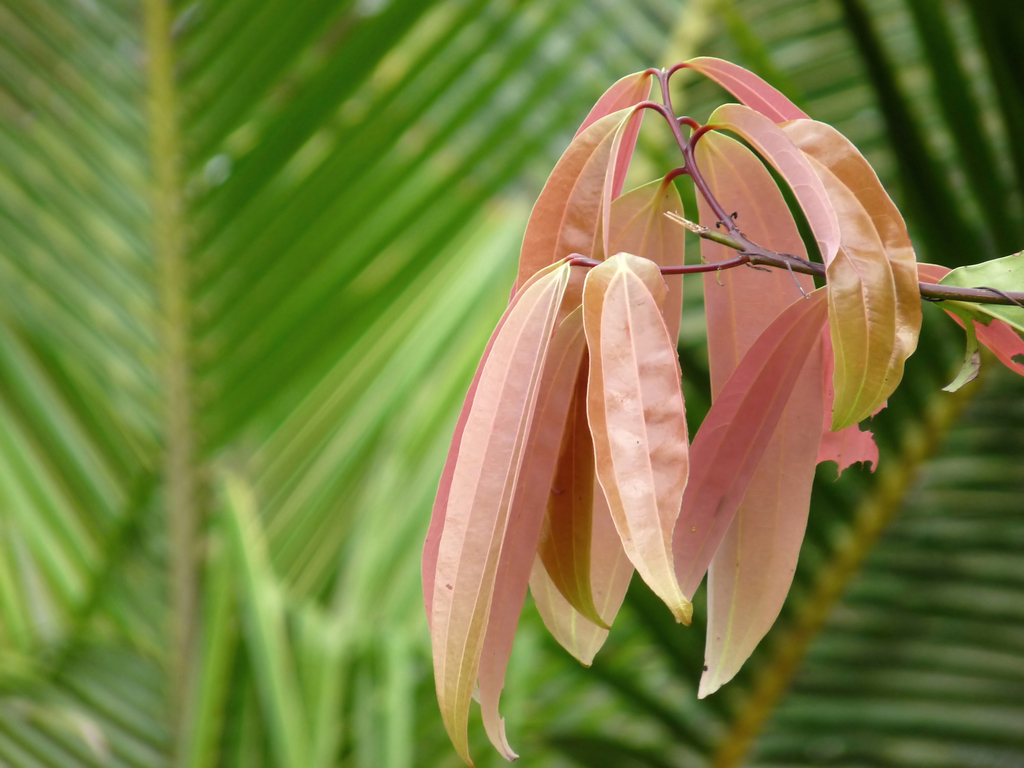
Country Cinnamon
Cinnamomum malabatrum
Cinnamomum malabatrum, wild cinnamon, country cinnamon also known as malabathrum, is a tree in the family Lauraceae that is endemic to Western Ghats of India. It can grow up to 15 m (49 ft) tall. It has aromatic leaves that are used for culinary and medicinal purposes. It is thought to have been one of the major sources of the medicinal plant leaves known in classic and medieval times as malabathrum (or malobathrum). It is locally known as Edana, Therali or Vazhana in Kerala.
From the article Cinnamomum malabatrum on Wikipedia (CC BY-SA), quoted section by section
At the table
The bark is sometimes used for cooking, although it is regarded as inferior to true cinnamon or cassia. Thorough macroscopic and microscopic investigations revealed that Cinnamomum malabatrum is mixed with Cinnamomum tamala as an adulterant in 'Tamalapatra', a highly reputed commodity in drug and spice trade. It is often used in kumbilappam or chakka-ada, an authentic sweet from Kerala, infusing its characteristic flavor to the dumplings.
Wikipedia: “Uses”
In human culture
Malabar had been traditionally used to denote the west coast of Southern India that forms the present-day state of Kerala and adjoining areas. The word mala or malaya means "mountain" in the Tamil and Malayalam languages, as also in Sanskrit. The word "malabathrum" is thought to have been derived from the Sanskrit tamālapattram (तमालपत्त्रम्), literally meaning "dark-tree leaves".
Wikipedia: “Etymology”
Where it lives
Recorded sightings
—
geo-referenced records in GBIF, from museums, herbaria and field observers.
Drag the globe to turn it. Dots are where records exist, not a range map; darker means more records.
In the stacks
Searching the stacks…
Every page naming Cinnamomum malabatrum in the Biodiversity Heritage Library →
This page is assembled live from iNaturalist, GBIF, Wikipedia, the Source Library and the Internet Archive. It is not yet part of the hand-edited codex. iNaturalist taxon 966835.