- Plants
- ›Vascular Plants
- ›flowering plants
- ›Dicots
- ›Legumes, Milkworts, and Allies
- ›Legumes
- ›Faboideae
- ›Trifolieae
- ›Trifolium
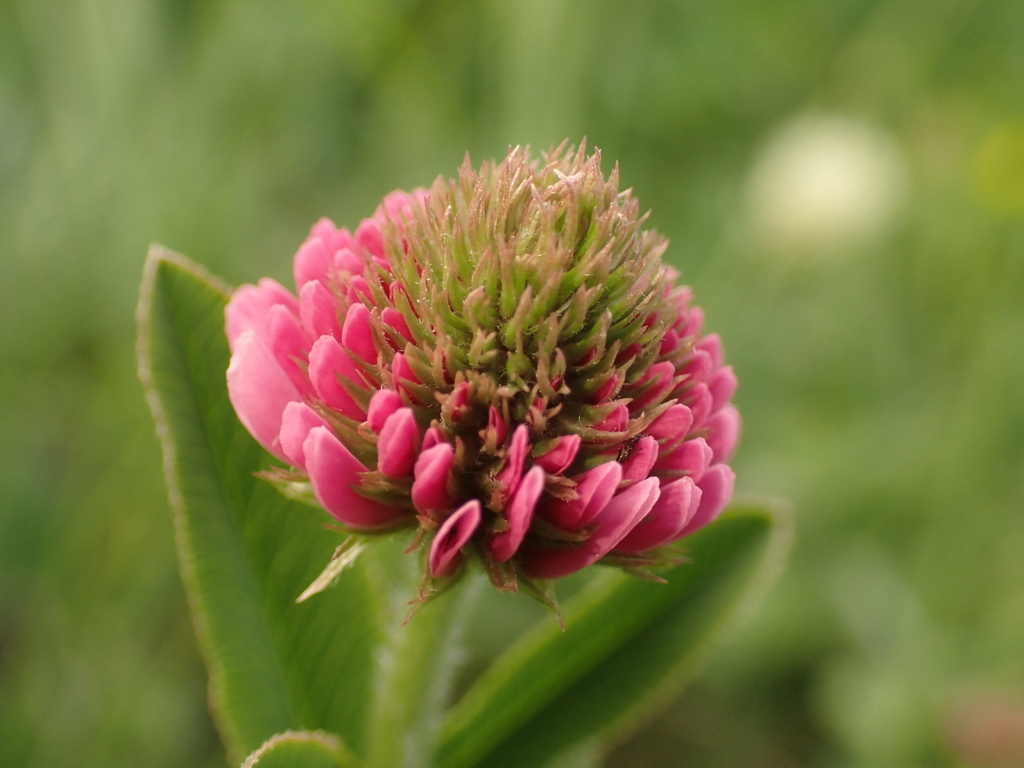
Trifolium
Clovers, also called trefoils, are plants of the genus Trifolium (from Latin tres 'three' and folium 'leaf'). They are herbaceous plants growing up to 30 cm (12 in) tall. The leaves are usually trifoliate and the small flowers are reddish to white or yellow. Related genera with similar common names include Melilotus (sweet clover) and Medicago (burclover).
The genus consists of about 300 species in the legume family, Fabaceae. Originating in Europe, the genus has a cosmopolitan distribution. A number of wild and domestic animals consume the plants. Clovers have been cultivated by humans for over 1,000 years, valued for their nitrogen fixation, which fertilizes the soil and bolsters the productivity of rotated crops.
11 branches of this group, most-observed first
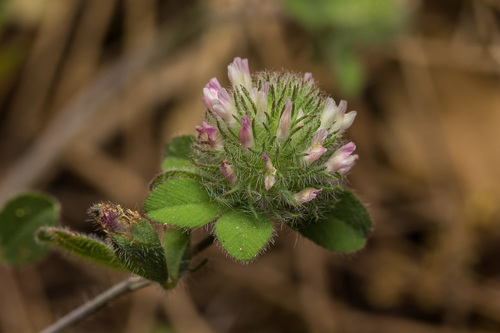
Trifolium
sectionTrifolium
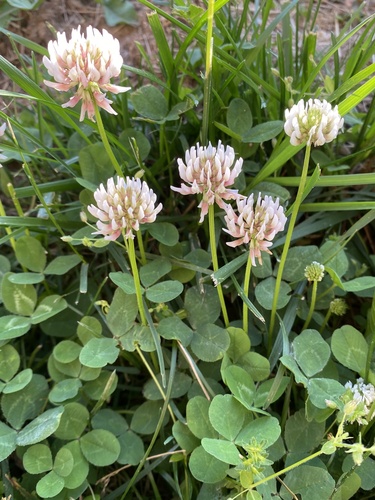
Trifoliastrum
sectionTrifoliastrum
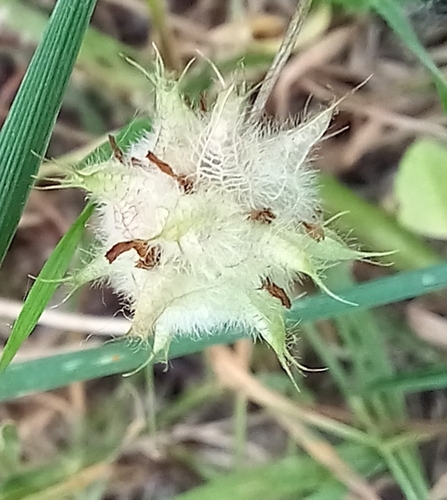
Vesicastrum
sectionVesicastrum
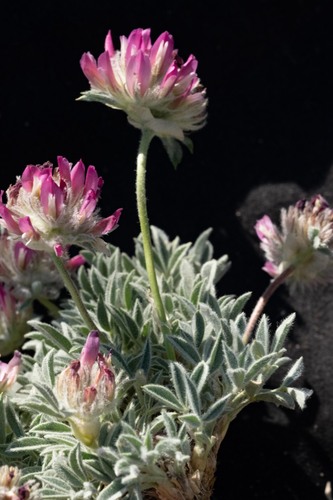
Involucrarium
sectionInvolucrarium
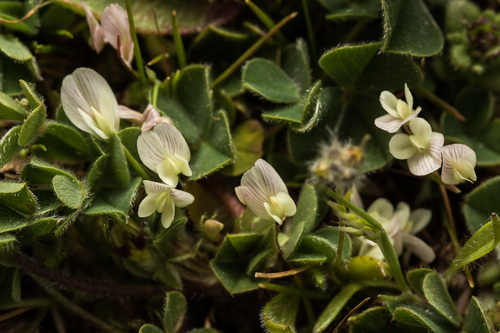
Trichocephalum
sectionTrichocephalum
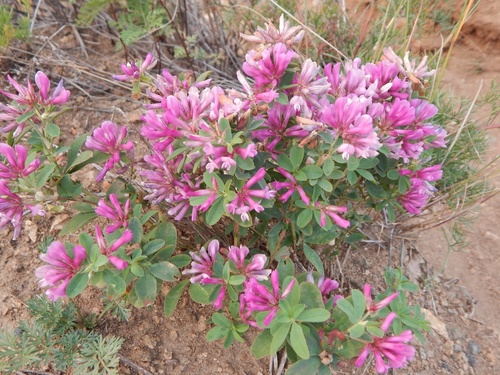
Lupinaster
sectionLupinaster

Glycyrrhizum
sectionGlycyrrhizum
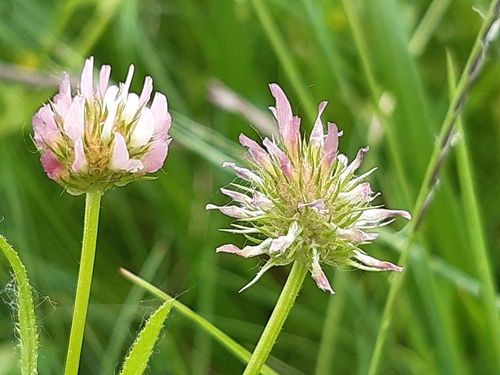
Paramesus
sectionParamesus
Trifolium × neyrautii
hybridTrifolium × neyrautii
Trifolium acutiflorum
speciesTrifolium acutiflorum
Trifolium sannineum
speciesTrifolium sannineum
Where it lives
Recorded sightings
—
geo-referenced records in GBIF, from museums, herbaria and field observers.
Drag the globe to turn it. Dots are where records exist, not a range map; darker means more records.
In the old herbals & bestiaries

Oxford Universal History of Plants, Part Two
Robert Morison · 1669 · p.667

Hortus Eystettensis
Basilius Besler · 1640 · p.120

Introductio Generalis in Rem Herbariam
Augustus Quirinus Rivinus · 1690 · p.255

Introductio Generalis in Rem Herbariam
Augustus Quirinus Rivinus · 1690 · p.254

History of Rare Plants
Carolus Clusius · 1601 · p.621

Introductio Generalis in Rem Herbariam
Augustus Quirinus Rivinus · 1690 · p.256

Introductio Generalis in Rem Herbariam
Augustus Quirinus Rivinus · 1690 · p.257

Ortus sanitatis
1491 · p.455

Garden of Health (Hortus Sanitatis)
Jacob Meydenbach · 1491 · p.369

The Book of Health: The Art of Distillation
Brunschwig, Hieronymus · 1505 · p.166

Garden of Health
1507 · p.367

Notable Commentaries on the History of Plants
Leonhart Fuchs · 1542 · p.851
In the stacks
Searching the stacks…
Every page naming Trifolium in the Biodiversity Heritage Library →
This page is assembled live from iNaturalist, GBIF, Wikipedia, the Source Library and the Internet Archive. It is not yet part of the hand-edited codex. iNaturalist taxon 967289.