- Plants
- ›Vascular Plants
- ›flowering plants
- ›Dicots
- ›Roses, Elms, Figs, and Allies
- ›rose family
- ›Amygdaloideae
- ›Maleae
- ›Macromeles
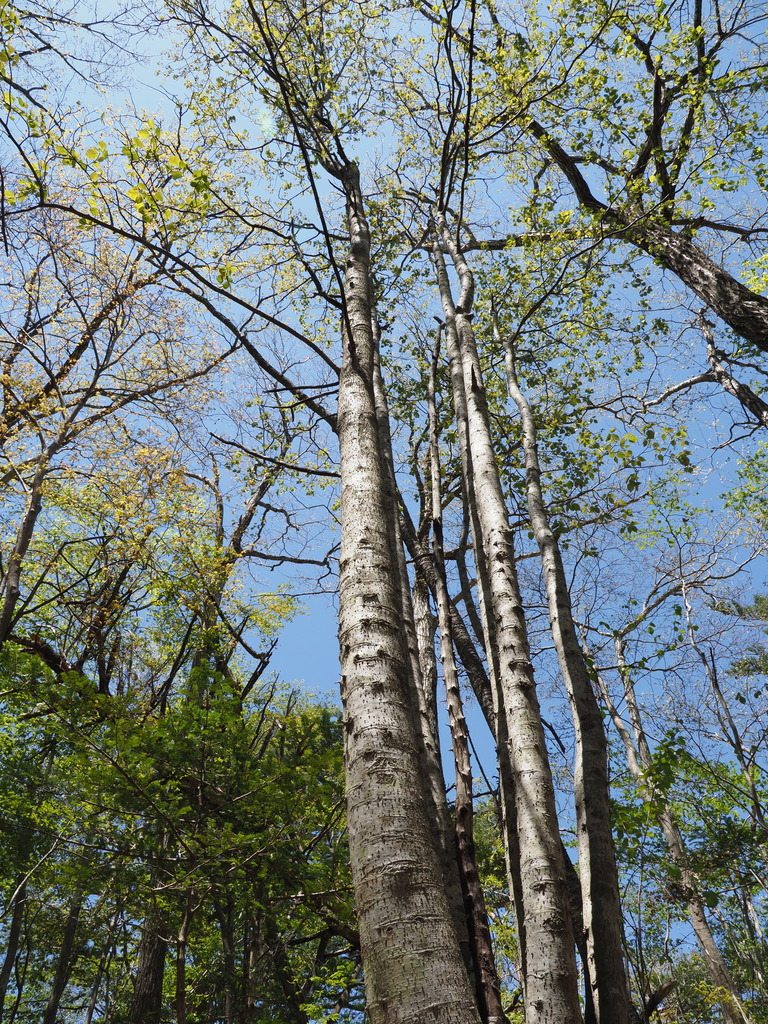
Pillar Apple
Macromeles tschonoskii
Macromeles tschonoskii (common names Chonosuki crab and pillar apple) is a species of flowering plant in the family Rosaceae. It is a tree endemic to Japan.
The specific epithet tschonoskii refers to the 19th century Japanese botanist Sugawa Tschonoski.
From the article Macromeles tschonoskii on Wikipedia (CC BY-SA), quoted section by section
Description
Macromeles tschonoskii is a strong-growing deciduous tree, it has a distinctive columnar habit and is particularly noted for its autumn colouring, when the glossy mid-green leaves turn to brilliant shades of yellow, orange, purple and scarlet. Single white flowers, tinged pink, appear in May and are followed by rounded red-flushed yellow-green crabapples. It can grow to 9 metres (30 feet) tall by 1.8 m (6 ft) broad in 20 years, with an ultimate height of 12 m (39 ft).
Range & habitat
The species grows well in many soil types, doing best in moist, well-drained soil.
Wikipedia: “Habitat”
At the table
It is cultivated as an ornamental tree, for planting in gardens.
== References ==
Wikipedia: “Uses”
Where it lives
Recorded sightings
—
geo-referenced records in GBIF, from museums, herbaria and field observers.
Drag the globe to turn it. Dots are where records exist, not a range map; darker means more records.
In the stacks
Searching the stacks…
Every page naming Macromeles tschonoskii in the Biodiversity Heritage Library →
This page is assembled live from iNaturalist, GBIF, Wikipedia, the Source Library and the Internet Archive. It is not yet part of the hand-edited codex. iNaturalist taxon 984352.