- Plants
- ›Vascular Plants
- ›flowering plants
- ›Dicots
- ›Roses, Elms, Figs, and Allies
- ›rose family
- ›Amygdaloideae
- ›Maleae
- ›Pyrus
Pyrus regelii
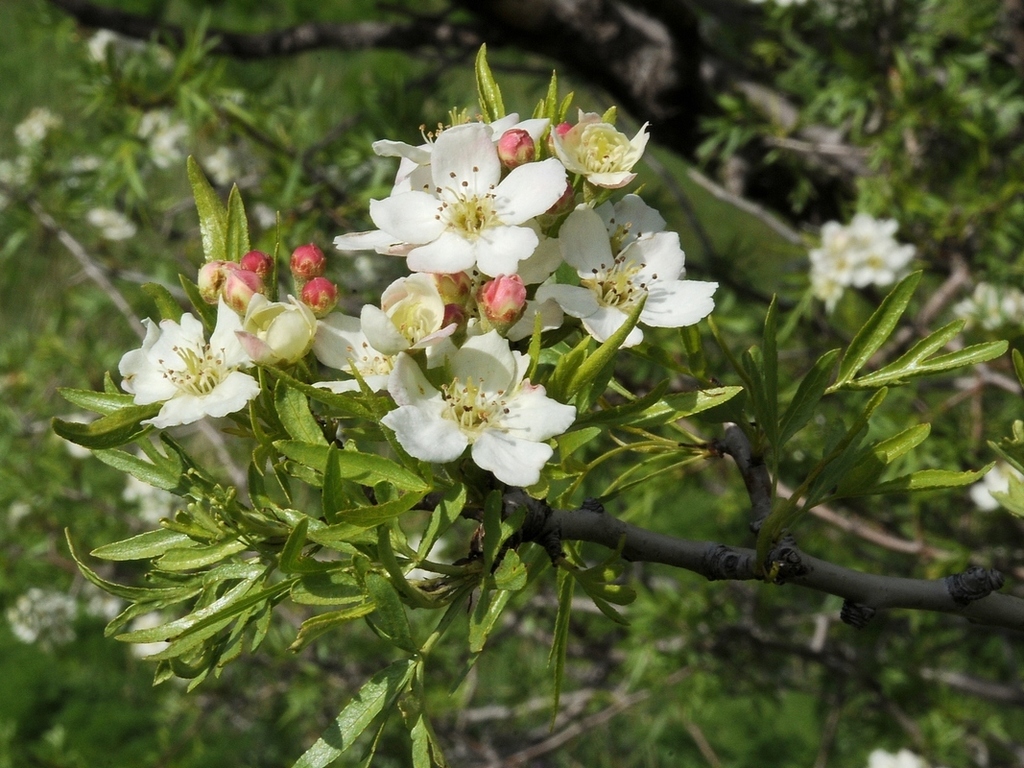
Pyrus regelii is a species of wild pear in the family Rosaceae, native to Central Asia (except Uzbekistan, where it occurs but is considered introduced). A small tree usually 6 m (20 ft) tall, but reaching 9 m (30 ft), its young branches are cloaked in a grey down, which provides visual interest when it is planted as an ornamental. Its leaves, which are also downy when young, are exceptionally variable in shape, sometimes even on the same individual. The fruit are small but typical pears, and are collected and eaten by local peoples. The most xerophytic member of its genus, it is occasionally used as a rootstock for cultivated pear trees, as a garden ornamental, and for reforestation projects, all in dry areas.
== References ==
Where it lives
Recorded sightings
—
geo-referenced records in GBIF, from museums, herbaria and field observers.
Drag the globe to turn it. Dots are where records exist, not a range map; darker means more records.
In the stacks
Searching the stacks…
Every page naming Pyrus regelii in the Biodiversity Heritage Library →
This page is assembled live from iNaturalist, GBIF, Wikipedia, the Source Library and the Internet Archive. It is not yet part of the hand-edited codex. iNaturalist taxon 994426.