- Animals
- ›Chordates
- ›Vertebrates
- ›Reptiles
- ›Snakes and Lizards
- ›Snakes
- ›Elapid Snakes
- ›Australian Elapids (inc. Sea Snakes)
- ›Drysdalia
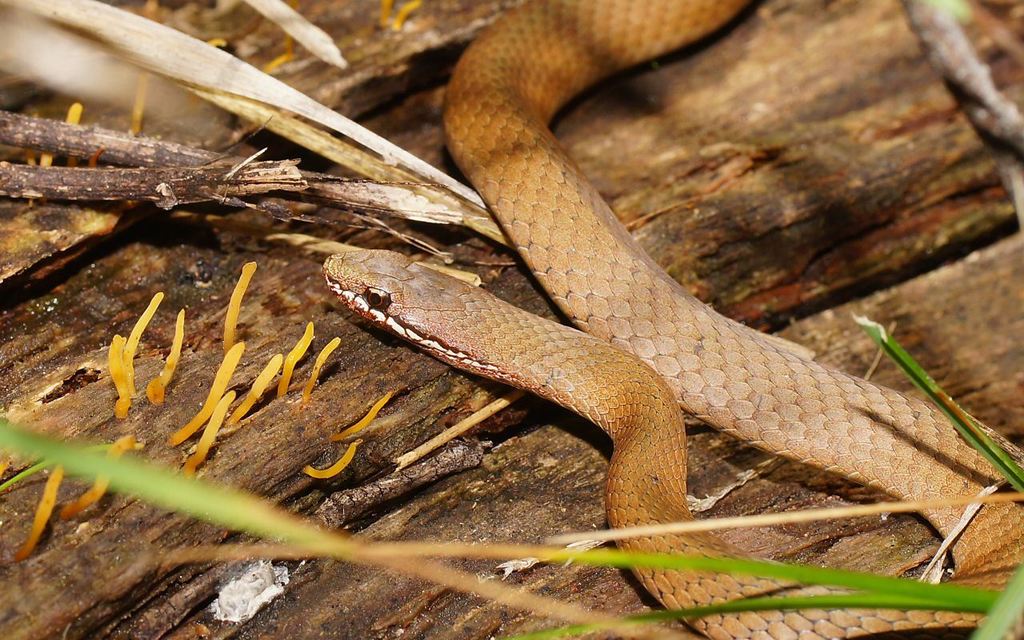
White-lipped Snake
Drysdalia coronoides
The white-lipped snake (Drysdalia coronoides) is a small species of elapid snake that is endemic to south-eastern mainland Australia and Tasmania. It is the smallest of three species of snake found in Tasmania and is Australia's most cold-tolerant snake, even inhabiting areas on Mount Kosciuszko above the snow line. Growing to only about 40 cm (16 in) in length, this snake feeds almost exclusively on skinks. It belongs to the genus Drysdalia, and is often referred to as...
From the article White-lipped snake on Wikipedia (CC BY-SA), quoted section by section
Description
D. coronoides is the smallest of three species of snake found in Tasmania, and is Australia's most cold-tolerant snake, even inhabiting areas on Mount Kosciuszko above the snow line. Growing to only about 40 cm (16 in) in length (including tail), it feeds almost exclusively on skinks. It belongs to the genus Drysdalia, and is often referred to as the whip snake in Tasmania (whip snake in mainland Australia usually refers to snakes from the genus Demansia which are only found on the mainland). The species gets its common name from a thin, white line that runs along the upper lip, bordered above by a narrow black line. D. coronoides is viviparous.
Where it lives
Recorded sightings
—
geo-referenced records in GBIF, from museums, herbaria and field observers.
Drag the globe to turn it. Dots are where records exist, not a range map; darker means more records.
In the stacks
Searching the stacks…
Every page naming Drysdalia coronoides in the Biodiversity Heritage Library →
This page is assembled live from iNaturalist, GBIF, Wikipedia, the Source Library and the Internet Archive. It is not yet part of the hand-edited codex. iNaturalist taxon 99620.