- Animals
- ›Chordates
- ›Vertebrates
- ›Reptiles
- ›Snakes and Lizards
- ›Snakes
- ›Elapid Snakes
- ›Australian Elapids (inc. Sea Snakes)
- ›Drysdalia
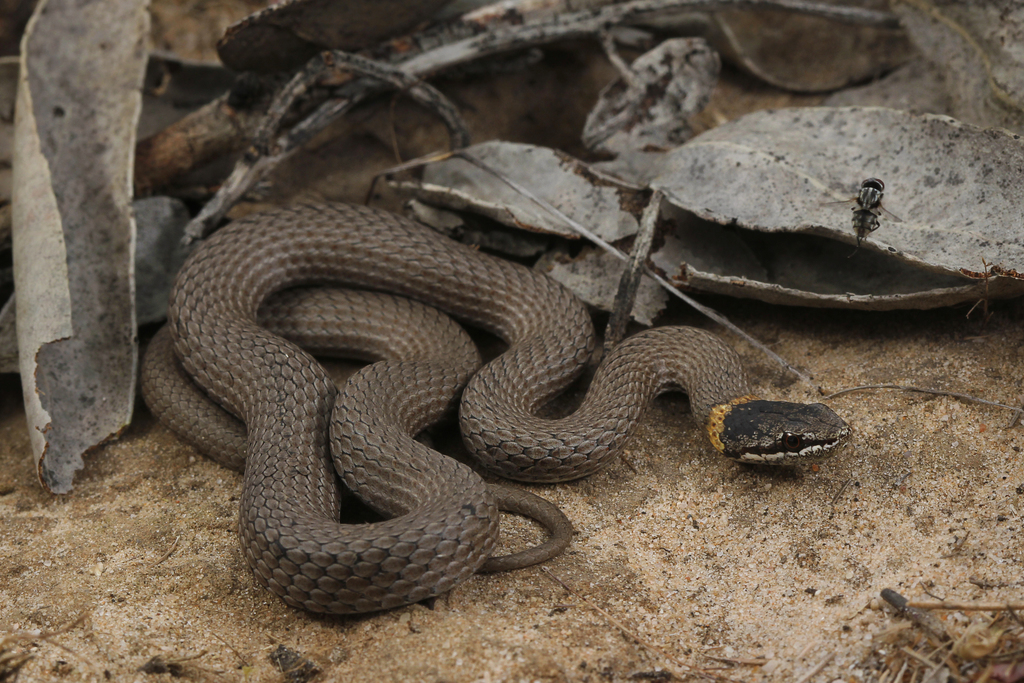
Masters' Snake
Drysdalia mastersii
Drysdalia mastersii, also known as Masters's snake, is a species of venomous snake endemic to southern Australia. The specific epithet mastersii honours Australian zoologist George Masters who collected specimens for Gerard Krefft.
From the article Drysdalia mastersii on Wikipedia (CC BY-SA), quoted section by section
Description
Drysdalia mastersii grows to an average total length (tail included) of about 40 cm (16 in). The upper body is light brown to dark grey, with a pale band over the nape and a white stripe extending from the upper lip to the neck.
Range & habitat
The geographic distribution of Drysdalia mastersii extends eastwards from near Esperance in Western Australia into coastal and subcoastal South Australia, as well as into south-eastern South Australia and western Victoria. The type locality is the Flinders Ranges of South Australia.
Wikipedia: “Geographic distribution”
In human culture
The specific epithet mastersii is in honour of Australian entomologist George Masters who collected specimens for Gerard Krefft.
Wikipedia: “Etymology”
Where it lives
Recorded sightings
—
geo-referenced records in GBIF, from museums, herbaria and field observers.
Drag the globe to turn it. Dots are where records exist, not a range map; darker means more records.
In the stacks
Searching the stacks…
Every page naming Drysdalia mastersii in the Biodiversity Heritage Library →
This page is assembled live from iNaturalist, GBIF, Wikipedia, the Source Library and the Internet Archive. It is not yet part of the hand-edited codex. iNaturalist taxon 99621.