- Animals
- ›Arthropods
- ›Hexapods
- ›Insects
- ›Winged and Once-winged Insects
- ›Butterflies and Moths
- ›Butterflies
- ›Brush-footed Butterflies
- ›Satyrs, Morphos, and Allies
- ›Alpines, Arctics, Nymphs and Satyrs
- ›Coenonymphina
- ›Coenonympha
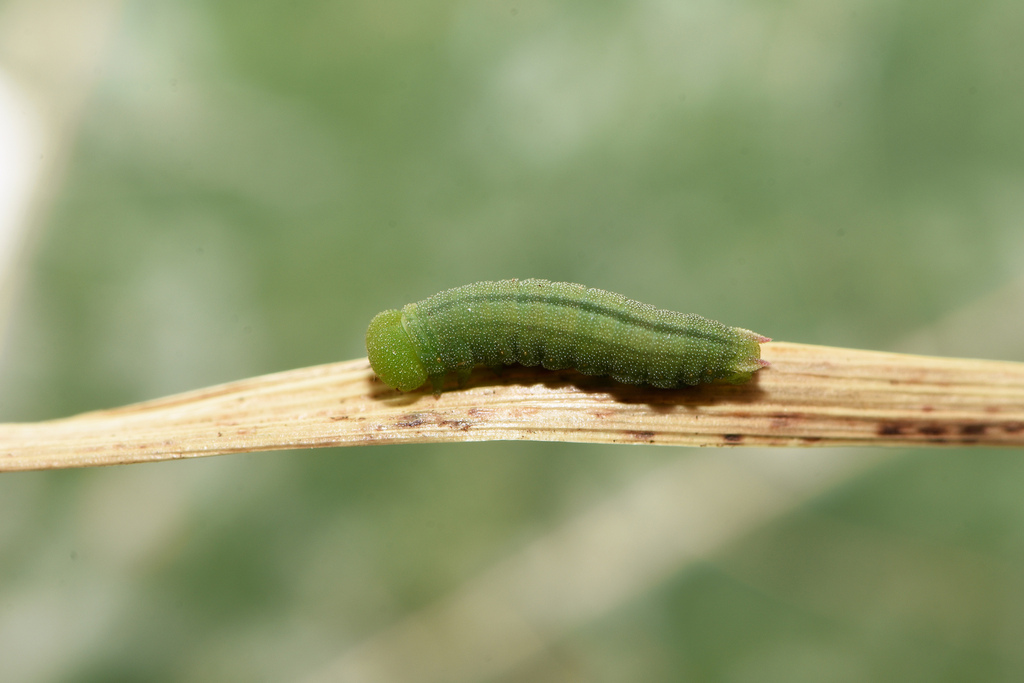
Small Heath
Coenonympha pamphilus
The small heath (Coenonympha pamphilus) is a butterfly species belonging to the family Nymphalidae, classified within the subfamily Satyrinae (commonly known as "the browns"). It is the smallest butterfly in this subfamily. The small heath is diurnal and flies with a noticeable fluttering flight pattern near the ground. It rests with closed wings when not in flight. It is widespread in colonies throughout the grasslands of Eurasia and north-western Africa, preferring drier habitats than other Coenonympha, such as salt marshes, alpine meadows, wetlands, and grasslands near water (i.e. streams). However, habitat loss caused by human activities has led to a decline in populations in some locations.
The larval host plants are grasses, found in various habitats, while adult butterflies feed on nectar from flowers. The males of this species are territorial, which plays a large role in obtaining a female mate. To establish dominance, they partake in lekking, a mating display in which males aggregate in a competitive display to attract passing females.
From the article Small heath (butterfly) on Wikipedia (CC BY-SA), quoted section by section
Description
C. pamphilus. Small butterflies which on the upper side are the colour of reddish yellow sand. Forewing beneath reddish yellow, bordered with grey and bearing a small pupilled apical ocellus; hindwing diluted with grey, with a shortened, curved, whitish median band shaded with brown. The ocelli are generally completely absent or only indicated by faint and indistinct vestiges of dots or rings. — The ground-colour of the hindwing of the Northern form, pamphilus L. (= nephele Hbn., menaleas Poda, gardetta Loche) (48 g) is mouse grey beneath; it is the only form in the North, and extends throughout North and Central Europe to Anterior Asia, Turkestan, Ferghana and Persia. — In ab. bipupillata Cosm. the apical ocellus is greatly enlarged and doubly pupilled. — marginata Stgr. (48 g) has a very broad dark distal margin on all the wings, but its underside resembles that of lyllus. (A broadening of the blackish distal margin occurs in the summer brood in many localities.) — lyllus Esp. is the summer form from Southern Europe, North Africa and the southern part of Anterior Asia. In this form the wings are broader, the apex of the forewing is more rounded, the margin of the hindwing often undulating, the underside of the hindwing not mouse-grey but also sandy yellow with a fine, curved, median line. — In Thyrsides Stgr. …
Wikipedia: “Description in Seitz”
Range & habitat
The small heath is spread throughout the Western Palearctic, particularly in Europe where it has been reported in at least 40 different countries since 2002. It is commonly found in the United Kingdom, largely in England and Wales. Populations are also found in southwest Siberia, regions of Asia, and north Africa. As a grasslands species, the small heath prefers open habitats with shorter grass compared to other related species. It is also found in an extensive range of environments including meadows, heaths, mountains (in the subalpine zone), and alongside railways. It has been sighted in calcareous grasslands throughout nineteen countries in Europe. For mating and oviposition, small heath butterflies prefer territories that are close to vegetation over areas that are open and clear. The small heath also resides in biodiverse patches of green habitats (i.e. greenways, gardens, and parks) in urban areas. These fragments create less-isolated corridors throughout cities, which help butterflies disperse throughout this habitat.
Wikipedia: “Distribution and habitat”
What it does
As a grassland species, the effects of intense, widespread agriculture is a concern for the welfare of the small heath. Grassland management through periodic ecological disturbances (i.e. mowing) is considered necessary to maintain "semi-natural" grasslands. Negative effects of mowing include the loss of biodiversity, the conversion of natural grasslands into agricultural fields, mortality, and loss of nectar resources. However, a study shows that such disturbances of these habitats may actually lead to an increase in the population of grassland butterflies including the small heath.
Wikipedia: “Interactions with humans”
Listen
Looking for field recordings…
Where it lives
Recorded sightings
—
geo-referenced records in GBIF, from museums, herbaria and field observers.
Drag the globe to turn it. Dots are where records exist, not a range map; darker means more records.
In the old herbals & bestiaries


In the stacks
Searching the stacks…
Every page naming Coenonympha pamphilus in the Biodiversity Heritage Library →
This page is assembled live from iNaturalist, GBIF, Wikipedia, the Source Library and the Internet Archive. It is not yet part of the hand-edited codex. iNaturalist taxon 52589.